
Reviewed · SCAVENGER HUNTS & URBAN GAMES
e-Scavenger hunt Aachen: Explore the city at your own pace
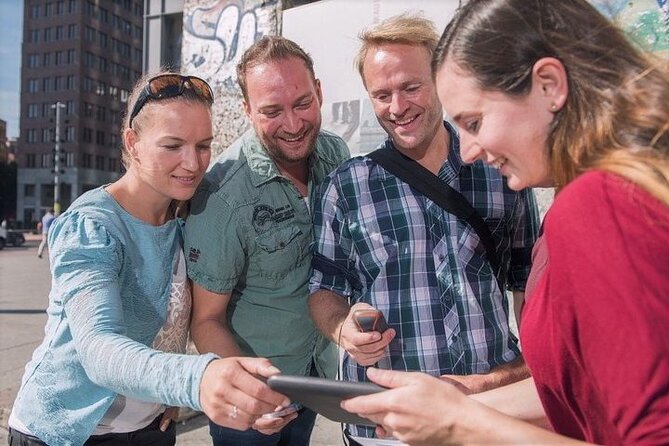
Follow clues, walk Aachen, skip the rigid schedule. This e-Scavenger hunt is a smartphone-run city game that turns sightseeing into small wins, with you moving through key landmarks across the old center. You get a self-paced format, so you can slow down for photos, pause for a snack, or speed up when you feel like it.
My favorite part is how it mixes famous stops with the kind of detail you might otherwise miss. I like that you hit anchors like Aachen Cathedral and the town hall area, then you also land on smaller, very local sights like the doll fountain and the Elisenbrunnen hot springs.
One thing to watch: this is built around your phone, and smartphone plus data are not included. If your battery is low or the signal is weak, the experience can feel more like a chore than a game.
In This Review
- What makes this Aachen self-guided hunt work
- How the smartphone scavenger hunt keeps you in motion
- Aachen Cathedral and Charlemagne: the first wow moment
- Market in Aachen and the town hall that reaches back to the Carolingians
- Doll fountain near the Dom: the playful pause you’ll remember
- Elisenbrunnen and Aachen’s hot springs in the city center
- Ponttor city gate: outer walls, city defenses, and name trivia
- Klenkes greeting: a small “human” landmark
- Saint Nicholas Church and the Franciscan story going back to 1005
- Granusturm and the town hall complex connection
- Katschhof Square: cathedral on one side, town hall on the other
- Regenschirmdamen, or the Weather of Aachen, in bronze
- Grashaus built around 1260: Aachen’s first town hall
- Archaeological finds: what’s in the ground tells the real story
- Price and timing: value for $37.33 per group
- Who should book this Aachen e-Scavenger hunt
- Should you book it? My practical verdict
- FAQ
- Where does the hunt start and where does it end?
- Do I have to follow a fixed schedule?
- What language is the experience offered in?
- How long does the experience take?
- What is included, and what do I need to bring?
- Can I cancel for a full refund?
What makes this Aachen self-guided hunt work
- Start when you want: no fixed schedule, you control the pacing
- App access, mobile ticket: play directly on your phone as you walk
- City-game plus walking tour: landmarks come with prompts that keep you moving
- Top sights in a tight loop: cathedral, market, city gate, and spa springs
- A mix of big and quirky: from Charlemagne-era architecture to the Regenschirmdamen statue
- Private group experience: only your group participates
How the smartphone scavenger hunt keeps you in motion
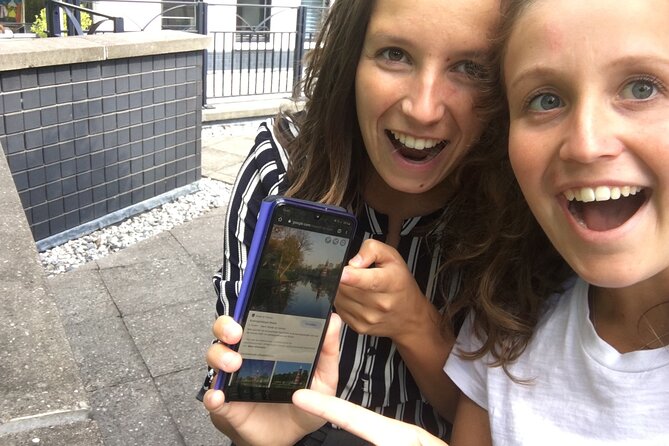
This is not a sit-and-listen tour. It is a walking route you play through with your phone, and that changes the vibe right away. Instead of marking time until the next stop, you work through the city at your own speed, one clue and landmark at a time.
The format also helps with decision fatigue. Aachen can feel a bit “you should see that, and also that” when you have only a day or two. Here, the app keeps you anchored with a sequence of highlights, so you do not have to plan every turn in advance.
Practical tip: charge your phone fully before you start. Also bring a light way to carry it, like a small crossbody or daypack. You will be glancing at the screen often, and you do not want to do it while juggling bags.
One more practical note: the experience is offered in English, and it is described as user-friendly for people with hearing impairment. That is a good fit if you want a route-based experience instead of relying on live spoken narration.
More Scavenger Hunts in Cologne
- Cologne: Scavenger Hunt Self-Guided Tour
★ 4.3 · 78 reviews - Cologne Old Town: Outdoor Escape Game
★ 4.2 · 19 reviews - Cologne Scavenger Hunt and Highlights Self Guided Audio Tour
★ 4.5 · 18 reviews
Aachen Cathedral and Charlemagne: the first wow moment
Your hunt begins in the old city, with Aachen Cathedral as a key early stop. This is one of the main attractions for good reason: its architecture and features still signal the building’s importance, and it was completed at the request of Emperor Charlemagne at the end of the 8th century.
When you see this in person, the scale and age hit harder than in photos. Even if you do not know every term, you can still feel what the place was meant to communicate: power, permanence, and status.
What I like about hitting the cathedral early is that you establish the “why” before you move into surrounding streets. Once you’ve seen that, the next stops feel more connected, not random.
Watch-out consideration: plan for time to look up and around. Cathedral visits can turn into rushed sightseeing if you keep your pace too fast.
Market in Aachen and the town hall that reaches back to the Carolingians
Next up is the market area, the central point of Aachen. This is where the city’s day-to-day energy makes sense historically too. The town hall here is the headline building, and part of it dates to the Carolingian period.
The idea is simple: you are standing where civic life has mattered for a long time. If you like architecture, this is a satisfying stop because the place you meet daily is also the place that carries earlier layers.
If you’re the kind of person who likes to read buildings, you will probably enjoy taking a slow loop around the town hall side you can reach from the square. If you’re more photo-and-go, it still works, because it is a landmark that’s hard to miss.
Doll fountain near the Dom: the playful pause you’ll remember
Then the route shifts gears to something much smaller and more whimsical: a beautiful fountain, the doll fountain. It is located in the historic part near the Dom.
This is the kind of stop that makes a city game fun. You are not just collecting the biggest names. You’re also noticing character. A doll fountain does not compete with the cathedral for sheer drama, but it gives you a different texture for the walk.
I recommend treating this as a reset moment. Take a minute, snap a photo, and check your phone once more so you can keep the pace without getting lost. These short stops keep you from feeling like you are marching nonstop.
Elisenbrunnen and Aachen’s hot springs in the city center
Elisenbrunnen is a real star for anyone who likes to connect a destination to a specific idea. In Aachen, it is a symbol of the spa and bathing city, because hot springs emerge at the earth’s surface right in the middle of the center.
The Roman connection is part of what makes this feel believable and layered: ancient Romans appreciated these sources, and Charlemagne is also linked to the appeal.
What makes this stop meaningful for your walk is that it shifts you from politics and power into daily life, health, and urban rhythms. You are seeing why a city would build and grow around a natural feature.
Practical tip: if you want to linger, linger here. The whole point of a self-paced hunt is that you get to choose when a stop deserves your time. This one often does.
More city puzzles solved on foot:




Ponttor city gate: outer walls, city defenses, and name trivia
The Ponttor, also called Brückenpforte or Brückentor in earlier centuries, is a city gate built in the 14th century. It is part of Aachen’s outer city walls.
City gates are underrated when you rush. But gates tell you how a city thought about boundaries, protection, and movement. Even if you only spend a few minutes here, you can usually see how the gate fits into the bigger shape of the old town.
If you enjoy learning names, this is a fun moment because the gate has carried more than one name over time. That kind of detail is exactly what city games are good at, they help you remember specifics.
Klenkes greeting: a small “human” landmark
Then you hit something that is less about stone and more about local identity: the Klenkes. It is described as a typical greeting from Aachen inhabitants and a landmark for Aachen residents worldwide.
This is a good reminder that a city isn’t only monuments. Language, greetings, and everyday culture are part of the experience, even when you are following a route of buildings.
If you like to understand what locals feel proud of, you’ll probably enjoy this stop because it gives you a handle for the city beyond tourist landmarks.
Saint Nicholas Church and the Franciscan story going back to 1005
The hunt moves to Saint Nicholas Church, a former Franciscan monastery church in Aachen. Its history goes back to 1005.
This stop rewards a slower look. Monastery churches tend to feel quiet in a way that big civic squares do not. Even when you are on a timeline, try to take a moment to notice the overall mood and layout from where you are standing.
Also, the “former Franciscan monastery” detail matters. It tells you the building has had different roles over time, and that it wasn’t always a public-facing stop in the way you might encounter it today.
Granusturm and the town hall complex connection
Next is the Granusturm, described as a monumental tower in Aachen. The tower originally belonged to the Aachen royal palace and is part of the town hall.
If you like “spot the connection” moments, this is one of them. You start thinking about how royal power and civic power overlap in the built environment. A palace element attached to the town hall complex is not random. It’s a sign of how authority was housed and displayed.
You’ll likely find yourself checking views between buildings too. Because the tower is part of a cluster of major structures, it helps you re-orient the walk and understand the layout around key squares.
Katschhof Square: cathedral on one side, town hall on the other
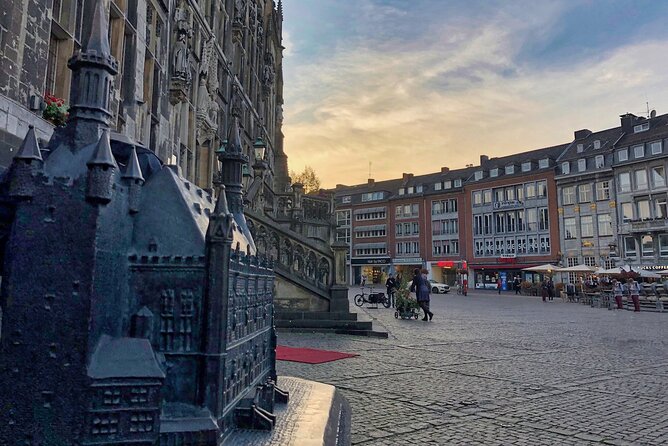
This is the kind of square that makes you look up. The cathedral and the city hall tower over Katschhof square on opposite sides. The area is also brought to life with numerous events.
Even if you are walking on a normal day with no major happening, the geography still works. The contrast between the big religious structure and the civic complex gives the square a built-in story.
Treat this as a photo and planning stop. Check your phone, make sure you are aligned with the next prompt, then decide if you want to wander one or two side streets before continuing.
Regenschirmdamen, or the Weather of Aachen, in bronze
Then you meet Bronze sculpture Regenschirmdamen, also described as the Weather of Aachen. It adds color to the route and gives you something visual that feels contemporary even though you’re in a medieval setting.
This is one of those stops that works especially well for groups. If you’re with friends, it’s an easy moment to coordinate photos and jokes, without needing to read a sign for every last detail.
Even solo, it breaks up the heavier architecture focus. In a self-paced hunt, variety keeps it fun.
Grashaus built around 1260: Aachen’s first town hall
Now the walk heads to Grashaus, built around 1260 and noted as Aachen’s first town hall. The description also ties it to the self-consciousness of the citizens.
That phrase matters because it shifts the meaning from building as object to building as statement. This is about what citizens wanted to show and how they wanted to be seen.
If you like to connect architecture to mindset, you’ll probably enjoy this stop. And if you do not, it still works because the building’s date and civic purpose make it easy to understand quickly.
Archaeological finds: what’s in the ground tells the real story
The last stop in the set focuses on archaeological finds from Aachen, which can be admired on 60 m². Finds cover a broad time range from the Neolithic to the late Middle Ages.
This is a smart ending point, because it brings everything down to a shared foundation: the ground beneath the city. After you walk centuries of architecture, you get to see the longer timeline in a more direct way.
Practical suggestion: if you’re short on time, you can spend less time here. But if you are the type who likes to understand how a city grew, give it a fair look. It can turn your whole walk into a more coherent story.
Price and timing: value for $37.33 per group
The price is $37.33 per group, up to 6 people. That is the key value driver here. For 6 people, you are effectively paying about $6.22 per person. For 2 people, it’s more like $18.67 per person.
The duration is 2 to 4 hours, which is a comfortable window for a self-guided city game. You will not feel trapped for half a day, but you also have enough time to take breaks without rushing.
Averages matter too: it is booked about 17 days in advance. That suggests this is a popular format, which usually means it is worth planning around if your trip is tight.
One more cost reality: the game is accessed on your phone, but smartphone and data are not included. If you already travel with a charged phone and a data plan, you are fine. If you do not, consider downloading offline maps for your general area before you start, and keep your phone battery top priority.
Who should book this Aachen e-Scavenger hunt
This fits you if:
- You want flexibility more than you want a fixed group schedule
- You like turning sightseeing into a game with clear checkpoints
- You want a route that hits major landmarks plus a few quirky locals sights
- You are traveling with a small group, since the price is per group up to 6
It might be less ideal if:
- You know you will struggle with phone use outdoors
- Your phone battery is unreliable
- You hate anything that requires tech to function smoothly
It is also described as user-friendly for hearing impairment, and service animals are allowed. If you prefer a self-guided flow with less spoken pressure, this can be a good match.
Should you book it? My practical verdict
I’d book this if you’re spending time in Aachen and you want a straightforward way to see the key highlights without hiring a live guide who expects you to keep up. The best part is the mix: you get the big hitters like Aachen Cathedral, then you also get spa culture at Elisenbrunnen, old city walls at Ponttor, and local identity moments like Klenkes.
The only reason not to is tech risk. If you are confident your phone will work and you can handle using it for the game, you will likely enjoy the pace and the sense of progression. If not, you can still enjoy Aachen, but you might feel the experience depends too much on your screen.
If your goal is to walk smart, take your time, and leave with a stack of specific memories from cathedral to springs, this is a strong pick.
FAQ
Where does the hunt start and where does it end?
The start point is Friedrich-Wilhelm-Platz, 52062 Aachen, Germany. The activity ends back at the meeting point.
Do I have to follow a fixed schedule?
No. The experience is designed so you can start the game whenever you like.
What language is the experience offered in?
The e-Scavenger hunt is offered in English.
How long does the experience take?
Plan for about 2 to 4 hours.
What is included, and what do I need to bring?
Included: the online app to play the game on your phone. Not included: the use of smartphone and data. You should bring and use your own phone.
Can I cancel for a full refund?
Yes, you can cancel for a full refund if you cancel at least 24 hours before the experience starts. If you cancel less than 24 hours before, you do not get a refund.
More Self-Guided Tours in Cologne
- Cologne Haunted Quest: The Witch Self-Guided Tour
★ 3.0 · 38 reviews - Cologne Cathedral tour audio guide with mobile phone
★ 3.0 · 29 reviews - Roman Cologne: A Self-Guided Audio Tour
★ 4.0 · 15 reviews - Private audio book city rally around Cologne Cathedral and the Old Town
★ 3.5 · 5 reviews
Fresh on the arrivals board for Cologne

Scavenger Hunts & Urban Games, compared.

Escape Room Adventure in Berlin Solve the Mystery
Read our review →


Self-Guided Family and School Class Scavenger Hunt
Read our review →
Escaping and spying on the Berlin Wall Scavenger hunt
Read our review →Browse the lists this tour appears in