
Reviewed · AUDIO TOURS
Roman Cologne: A Self-Guided Audio Tour
Rome shows up in Cologne. This self-guided VoiceMap walk turns everyday streets into Roman Cologne’s story, stop by stop. You get an English narration that’s triggered by where you are, so the city feels like it has a guide built in.
I especially love the lifetime access and offline-ready setup, so you can download once and use it at your pace later. You’ll also like that it’s flexible, you can pause, restart, and walk without syncing to anyone else’s schedule.
One thing to consider: the tour expects you to start at the designated point, and it is not really meant to be walked in reverse. If you wander off and try to reverse-engineer the route, GPS triggering can get confusing, and the narrative won’t feel as smooth.
In This Review
- Key things you will like about Roman Cologne
- What this tour is, and why it works in Cologne
- Price and time: the sweet spot for a low-pressure plan
- Starting at Domkloster 4: how to avoid the one common frustration
- Stop by stop: how the Roman story unfolds across the city
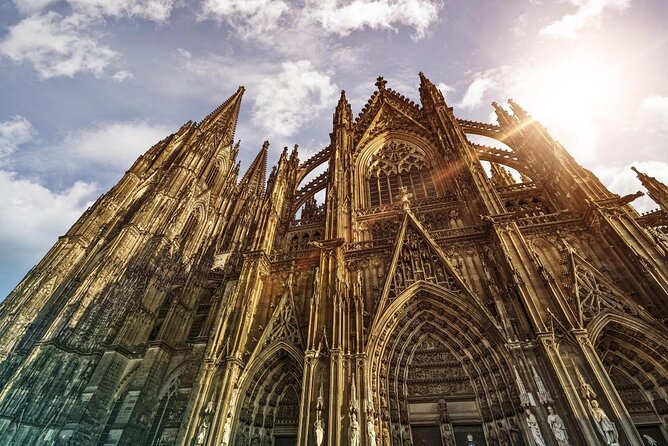
- Cologne Cathedral: the modern giant, built on deeper layers
- Roman Northern Gate: a boundary you can still picture
- Roman-Germanic Museum mosaic: the “look through the window” moment
- Die Römische Hafenstraße and Kurt Hackenberg Platz: why rebuilding can be messy
- Romisches Praetorium: the Rhineland’s biggest Roman palace idea
- Alter Markt: the old market keeps echoing
- Great St Martin Church: Roman foundations under medieval stone
- Schmitz Saule and the 1969 moon landing link: history that doesn’t stay old
- Gürzenich Köln facade: spotting Marsilius and Agrippa
- St Maria im Kapitol: in the former Roman temple district
- Finish near the Ubii Monument: an ending that feels like an anchor
- What the app feels like on the ground (VoiceMap tips that matter)
- How to plan your day around the walk
- Who this tour fits best, and who might not love it
- Should you book Roman Cologne with VoiceMap?
- FAQ
- What language is the Roman Cologne audio tour in?
- How long does the tour take?
- Where does the tour start and end?
- Is the tour available offline?
- Do I need internet during the tour?
- Are tickets or museum entry included?
- What do I need to bring with me?
- Is this tour private for my group?
- Can I cancel and get a refund?
Key things you will like about Roman Cologne
- GPS-triggered narration that helps you keep your phone in pocket and just listen.
- Offline audio, maps, and geodata for roaming without relying on mobile data.
- Roman landmarks with practical context, from the cathedral area to the Ubii Monument.
- View-through stops, like seeing a major Roman mosaic from the Roman-Germanic Museum windows.
- Surprising connections to modern history, including the 1969 moon landing link at Schmitz Saule.
- A walk built for your pace, because you control when you move on.
What this tour is, and why it works in Cologne
This is a self-guided audio walk built for a single goal: help you read Cologne’s layers, where Roman foundations sit under medieval and modern streets. You’re not herded between attractions. Instead, you follow a set route while the app talks when you reach each spot.
The price, $11.99 per person, is reasonable for what you get because it is not ticket-based. There’s no required museum entry tied to the narration. You’re buying the story, and you get lifetime access to that story once you’ve downloaded it to your account.
If you’ve ever walked past something big in Cologne, then later wondered what you were looking at, you’ll likely appreciate this format. It gives you names and connections, not just general impressions.
Also holding a platform in Cologne
- Cologne Cathedral tour audio guide with mobile phone
★ 3.0 · 29 reviews - Cologne Scavenger Hunt and Highlights Self Guided Audio Tour
★ 4.5 · 18 reviews - Aachen Scavenger Hunt and Highlights Self Guided Audio Tour
★ 4.0 · 17 reviews
Price and time: the sweet spot for a low-pressure plan
The tour runs about 1 hour to 1.5 hours, depending on how often you pause for photos or linger. That time window is handy. It’s long enough to feel like a real activity, but short enough that you can still plan dinner or a second walk the same day.
At $11.99, you can also think of this as a “Roman Cologne primer.” It helps you make sense of major sites you would likely pass anyway. For me, the value is strongest when you want context without paying for multiple timed tickets.
You’ll want to plan a comfortable walking pace. This is a city center route, so good shoes matter more than anything else on the ground.
Starting at Domkloster 4: how to avoid the one common frustration
The tour starts in front of the Kreuzblume, and your guided start location is listed as Cologne Cathedral, Domkloster 4, 50667 Köln. That matters more than it sounds, because the audio is tied to your location.
In plain terms: start where the app tells you, and you’ll have an easier time. One downside people run into is trying to begin elsewhere, then figuring out how to walk in reverse. The app can still work, but the narrative and GPS triggering won’t feel as tidy.
Tip: when you arrive, open the tour and stand still for a moment. Let the app lock onto your position before you start walking.
Stop by stop: how the Roman story unfolds across the city
The route is designed like a “read the city” walk. Each stop adds a new layer: Roman civil life, Roman power, and the way later builders reused Roman bones.
Cologne Cathedral: the modern giant, built on deeper layers
You’ll get narration as you pass Cologne Cathedral. Even if you already know the cathedral, the tour’s angle is what’s underneath the modern streets and why this area kept mattering across centuries.
What you gain here is orientation. The cathedral area becomes a reference point, so the Roman stops later feel connected rather than random.
Possible drawback: cathedral views can be crowded and busy. If you’re expecting quiet, your experience may depend on the time of day.
Onward connections from Cologne:


Roman Northern Gate: a boundary you can still picture
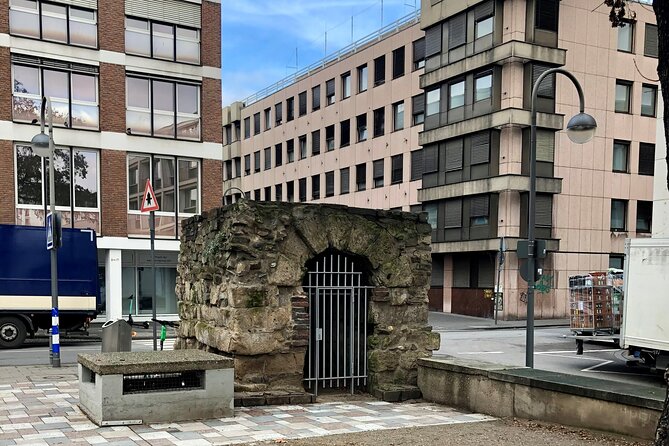
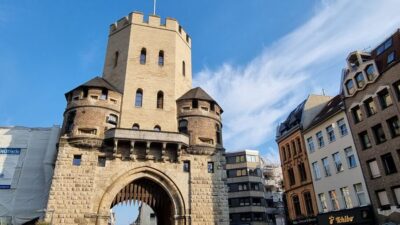
Next comes the Roman Northern Gate, presented while you walk past. Gates are useful for learning because they help you imagine the city as a defended place, not just a collection of buildings.
You won’t be standing in a museum room. You’re learning from the street setting, and that helps the mental map stick.
Roman-Germanic Museum mosaic: the “look through the window” moment
You’ll peer through the window of the Roman-Germanic Museum to see one of the world’s largest and best-preserved Roman mosaics. This is one of the most memorable formats in the whole tour: you get a big visual payoff without needing to buy an entry ticket.
Keep expectations realistic. Since museum tickets are not included, you’re likely not walking inside with full access. You’re using the outside view and the narration to understand what you’re looking at.
If you like mosaics and Roman art, this stop can become your photo highlight.
Die Römische Hafenstraße and Kurt Hackenberg Platz: why rebuilding can be messy
The tour takes you down Die Römische Hafestrasse in KöL n, and you’ll hear about why the Roman harbor road, Die Römische Hafenstraße in Köln, was only imperfectly rebuilt in Kurt Hackenberg Platz.
This stop is smart because it moves beyond “look at old stuff” and gets into how cities evolve. Even when later planners try to restore the past, details shift.
It’s also a reminder that what you see on today’s streets is often a compromise between old layouts and new needs.
Romisches Praetorium: the Rhineland’s biggest Roman palace idea
Next is the Romisches Praetorium, described as the largest Roman palace in the Rhineland. You’ll pass by it, while the narration frames its role and scale.
Why this matters: palaces explain power. Temples explain belief. But palaces explain who ran the place, and why Roman Cologne wasn’t just a trading stop.
A downside to note: this is still a street pass. If you want a full, hands-on experience, you may have to pair the audio walk with additional museum time elsewhere. Tickets are not included here.
Alter Markt: the old market keeps echoing
Then you pass through Alter Markt, the old market of Cologne. Markets are a perfect bridge between Roman and later urban life because trading patterns survive even when architecture changes.
You’ll likely get the feeling that Cologne’s public life kept moving through the same general area, even as centuries flipped.
Great St Martin Church: Roman foundations under medieval stone
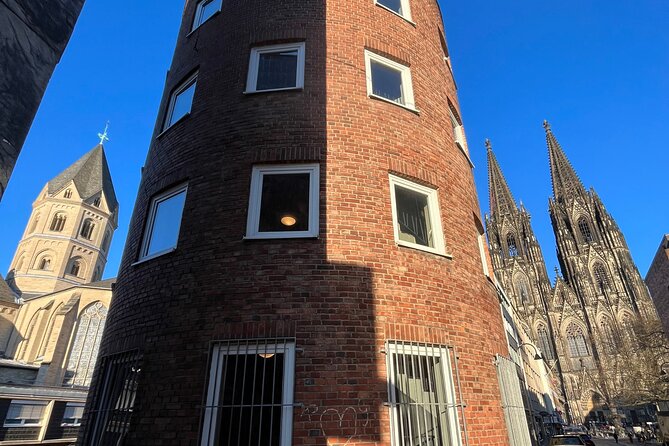
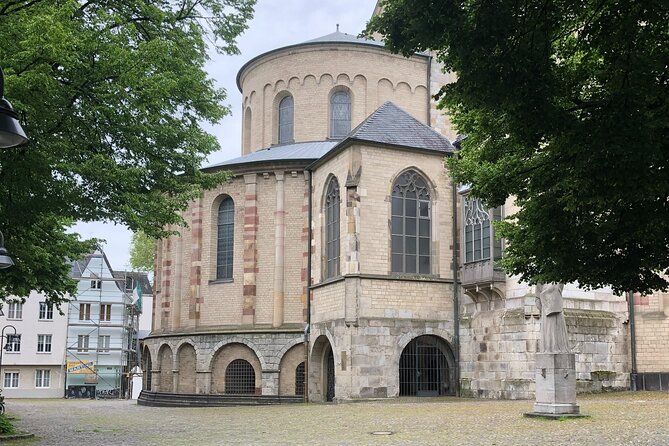
You’ll pass by Great St Martin Church, which was built in the Middle Ages on foundations of a Roman warehouse. That type of reuse is one of the biggest reasons Roman layers feel so close in Cologne.
This is where the tour’s value really clicks. You start seeing buildings not as isolated monuments, but as stacked solutions. Later builders kept using what worked.
Schmitz Saule and the 1969 moon landing link: history that doesn’t stay old
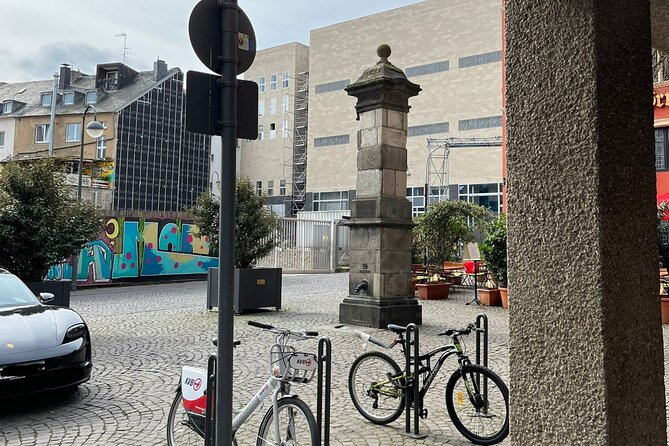
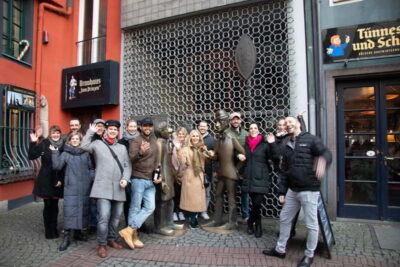
The route continues past Schmitz Saule, and you’ll learn what the 1969 moon landing has to do with ancient Romans in Cologne. That modern-to-ancient connection is a great break from “Roman facts only.”
I like stops like this because they make you pay attention while walking, and they prevent the story from feeling like a lecture.
Gürzenich Köln facade: spotting Marsilius and Agrippa
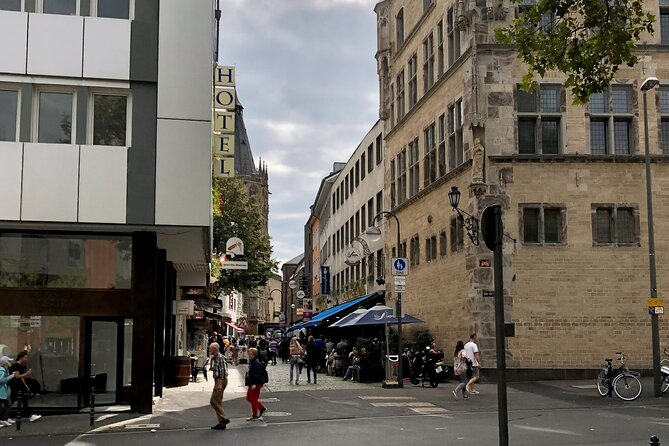
You’ll pass the imposing Gothic facade of Gürzenich Köln, and the narration tells you how to spot celebrated Roman soldiers, Marsilius and Agrippa. This is the kind of tip that turns an exterior wall into a puzzle you can solve.
If you enjoy architectural details, you’ll probably slow down here.
If you do not, the narration still helps. It gives meaning even when you skip the visual hunt.
St Maria im Kapitol: in the former Roman temple district
The tour then takes you through the former Roman temple district and to St Maria im Kapitol. The Roman-to-Church connection is exactly the kind of layered story this walk does well.
This stop helps you see how religious space can evolve without disappearing. You’re listening for continuity, not just change.
Finish near the Ubii Monument: an ending that feels like an anchor
The tour ends near the Ubii Monument, described as Germany’s oldest stone tower. The listed end point is Mühlenbach 35, 50676 Köln, and the narration winds down as you approach.
I like ending on something specific because it turns the last segment into a payoff. Even if you do not know the monument yet, the audio wraps things into a final “you made it” moment.
What the app feels like on the ground (VoiceMap tips that matter)
This tour uses the VoiceMap app for Android and iOS, and it includes offline access to audio, maps, and geodata. It’s designed so you can follow along without constantly interacting with the phone.
In practice, I recommend you treat the download like a chore you do once, not a thing you try on the spot. Make sure the tour content is fully on your device before you go out. One issue people reported was assuming internet was not needed after download, then having the experience fail when their phone still needed connectivity. The app’s offline design is supposed to prevent that, but your real-world outcome depends on whether your device has the files ready and your settings are cooperating.
Headphones are not included, so you’ll want to bring your own. If you plan to use one earbud, you’ll still hear street noise, which can be helpful for safety.
Also, keep expectations realistic about “no tickets.” The tour’s narration may point you toward museums or iconic buildings, but entrances are not part of the deal. You are walking, listening, and looking at what’s available from the street.
How to plan your day around the walk
This is great for days when you want something useful even if big institutions have limited hours. One of the strengths of an audio walk is that you can still see, learn, and move even when specific museums are closed.
I also think it pairs well with a longer self-paced afternoon. Use it early, then go back later to linger at the spots that grabbed you. The cathedral and Roman-Germanic Museum mosaic stop are good candidates to revisit.
If you’re visiting during a busy season, consider going in the late morning or early evening when you can still walk comfortably and capture photos without fighting crowds too much.
Who this tour fits best, and who might not love it
You’ll probably enjoy this most if you like:
- walking at your own pace
- learning how cities layer over time
- spotting details on buildings while you pass them
It can feel less satisfying if you want a guided group style with discussion and inside access. Since tickets are not included, you may wish you could go deeper at certain stops. That’s normal, just plan for it.
If you get bored easily on straight city walks, you’ll want to engage actively. Pick one or two stops as your “focus points,” like the mosaic or the Gürzenich facade soldier markers, and treat the rest as supporting context.
Also, if you dislike following a GPS narrative, you might prefer a traditional map-based walking route where you read everything manually. Here, the app does the storytelling for you.
Should you book Roman Cologne with VoiceMap?
Book it if you want a low-cost Roman Cologne primer you can use whenever you like, with offline maps and audio and the freedom to stop and restart. At $11.99, it’s hard to beat for the amount of named context you get across central landmarks.
Skip or reconsider if you need inside access to museums, or if you strongly dislike GPS-triggered audio that expects a specific start point. In that case, the pacing can feel like it depends too much on the app doing its job.
My call: if you’re the type who enjoys connecting street-level sights to deeper history, this is an easy yes. It turns a simple walk into a layered read of Cologne, from Roman edges to medieval overlays, and it ends with a payoff you can point to afterward.
FAQ
What language is the Roman Cologne audio tour in?
The tour narration is offered in English.
How long does the tour take?
The duration is listed as about 1 hour to 1 hour 30 minutes.
Where does the tour start and end?
It starts in front of the Kreuzblume, with the start location listed as Cologne Cathedral, Domkloster 4, 50667 Köln. The tour ends near the Ubii Monument, with the end location listed as Mühlenbach 35, 50676 Köln.
Is the tour available offline?
Yes. Once you download using the VoiceMap app, the audio, maps, and geodata are stored on your device for offline use.
Do I need internet during the tour?
The tour is designed to work offline after download, but you should make sure the tour content is downloaded to your phone before you start.
Are tickets or museum entry included?
No. Tickets or entrance fees are not included for any museums or attractions en route.
What do I need to bring with me?
You’ll need your smartphone and (if you want to listen privately) headphones. Food, drinks, and transportation are also not included.
Is this tour private for my group?
Yes. It’s described as a private tour or activity, with only your group participating.
Can I cancel and get a refund?
No. The experience is non-refundable and cannot be changed for any reason.
Fresh on the arrivals board for Cologne

Audio Tours, compared.
Neuschwanstein Castle Skip-the-Line Ticket with Audio Guide
Read our review →
Solar Powered Sunset Catamaran Cruise & Audio Guide
Read our review →
Füssen: Neuschwanstein Castle Express Ticket and Audio Guide
Read our review →
Neuschwanstein Castle Ticket With Audio Guided Tour
Read our review →
Spicy’s Gewürzmuseum Entry Ticket and Audio Guide
Read our review →
Französischer Dom Viewing Platform with Audio Guide
Read our review →
Lübeck Scavenger Hunt and Highlights Self Guided Audio Tour
Read our review →Cologne Cathedral tour audio guide with mobile phone
Read our review →Browse the lists this tour appears in