
Reviewed · HAMBURG TOURS & ACTIVITIES
Down Town to Speicherstadt, HafenCity and Elbphilharmonie
Hamburg changes fast on foot, and this route makes that clear. I love how the walk threads together port commerce, rebuilt streets, and big modern planning in just two hours. I also like that you end with the Elbphilharmonie area and get a practical chance to look out over the harbor. One thing to consider: it is an outdoor walking tour, so you will want comfortable shoes and weather-ready layers.
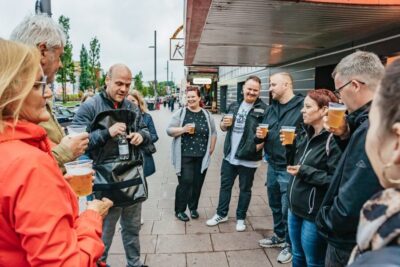
The good news is that the pace is manageable, the group stays small, and the tour is in English. You start at Rathausmarkt and finish at Elbphilharmonie HamburgPlatz d. Deutschen Einheit 4, with a mobile ticket and a professional guide. I especially like the vibe when the guide brings humor and clear local context, and guides such as Jutta have been singled out for being funny, knowledgeable, and great company.
In This Review
- Key Things You Should Know Before You Go
- Why This Hamburg Walk Works So Well in Two Hours
- Rathausmarkt To Hygieia-Brunnen: Where Trade Power Starts
- Trostbrücke And Deichstraße: The Port Before Containers
- St. Nikolai Memorial And Operation Gomorrha: History With Weight
- HafenCity’s 157 Hectares: Regeneration You Can Read On The Ground
- Speicherstadt’s Wooden Piles And UNESCO Red Brick Warehouses
- Elbphilharmonie Ending With Port Views And Acoustic Pride
- Value And Practicalities For A $30.04 Walking Tour
- Should You Book This Down Town To Speicherstadt HafenCity And Elbphilharmonie Tour?
- FAQ
- How long is the Hamburg walking tour?
- Where does the tour start and end?
- Is the tour in English?
- What is included in the price?
- Is the tour ticket mobile?
- Does the tour run in bad weather?
- How many people are on the tour?
- What about refunds if plans change?
Key Things You Should Know Before You Go
- Small-group feel (up to 15 people) so you can actually hear the guide and follow the story.
- A compact two-hour route from Rathausmarkt all the way to the Elbphilharmonie.
- Speicherstadt on wooden piles and UNESCO status, explained in plain language.
- HafenCity’s regeneration over 157 hectares, with context for what used to be there.
- WWII memory at St. Nikolai, including the Operation Gomorrha exhibition under the ruined church.
- Finish with a harbor view opportunity near the Elbphilharmonie platform.
Why This Hamburg Walk Works So Well in Two Hours
If you only have a half day, you usually end up with a long list of “must sees” and a sore neck. This tour solves that problem by pairing nearby stops into a single story about how Hamburg became what it is today. You start where city power was displayed, then you move to the places tied to trade and ship arrivals, and later you see how the city rebuilt after war and reimagined whole industrial areas.
The length matters. About two hours keeps you moving, but it is long enough for a guide to explain why each location matters, not just point at buildings. You also get a logical geography lesson: Hamburg’s identity is tied to the water and the merchants, and you see that pattern play out in street form, architecture, and city planning.
One more plus: the tour runs in all weather, so you are not stuck hunting for an indoor backup plan if the forecast is messy. Dress for the outdoors, and you will be fine.
Also holding a platform in Hamburg
- Hamburg: Sex and Crime in St. Pauli Tour for Ages 18 +
★ 4.7 · 17,793 reviews - Hamburg: 1.5-Hour Harbor and Speicherstadt Day Cruise
★ 4.6 · 14,200 reviews - Hamburg: 90-Minute Evening Lights Harbor Cruise
★ 4.5 · 7,728 reviews
Rathausmarkt To Hygieia-Brunnen: Where Trade Power Starts
Your first stop is Hamburg Town Hall at Rathausmarkt, a Neorenaissance building dating to 1897. Even if you are not an architecture person, the point here is simple: this facade was built to communicate the confidence of a trader city. Hamburg has always been about connections, goods, and influence, and starting here sets the tone for everything you see after.
Right behind the city hall is the Hygieia-Brunnen. It is a beautiful fountain, but it is also a message. It represents how essential fresh water is, and in a port city, that practical reality sits under the postcard scenes. When your guide mentions why a fountain ends up in such a symbolic position, you start noticing how often Hamburg mixes daily life and civic pride in the same spot.
Expect around 10 minutes near Town Hall and a quick stop near the fountain. It is enough time to take photos, orient yourself in the square, and understand the city’s “why” before you head toward the waterfront.
Tip for you: arrive with a little curiosity. If you know the difference between a port story and a city governance story, the guide’s explanations will click faster.
Trostbrücke And Deichstraße: The Port Before Containers
Next comes Trostbrücke, known as the Consolation Bridge. This is one of those names that sounds poetic until you learn the function. Trostbrücke sits where the port’s story connects directly to the city center. The key idea is that sailing ships once brought goods into central Hamburg, close enough that merchants could meet the arriving cargo quickly.
Your guide then connects that era to a bigger turning point. Steam ships and later container vessels changed how the port worked, and that shift forced the city to adapt. You are not just walking across a bridge, you are walking across a timeline.
A few minutes later you reach Deichstrasse, where the mood turns quieter and older. This is a historic street with houses from the 17th century, built around a world where merchants did multiple jobs in one place. In other words, you can picture storage, daily living, and work happening under the same roof.
Two big survival facts make Deichstrasse worth the stop. It survived a major fire in 1842 and the devastation of WWII. That gives the street a rare kind of credibility. When a place like this remains standing, it is not just scenery, it is physical continuity through catastrophe.
Expect about 5 minutes for Trostbrücke and around 10 minutes on Deichstrasse. If you like street-level history, this is one of the most rewarding parts of the route.
St. Nikolai Memorial And Operation Gomorrha: History With Weight
Not every stop in Hamburg is meant to feel pretty. The Mahnmal St. Nikolai is a memorial tied to WWII victims, and the church steeple dates to 1874. Your guide points out that what you see is not a full rebuild fantasy. The ruin is part of the message, keeping the memory of destruction visible.
Underneath this ruined setting is an exhibition about Operation Gomorrha. That name matters because it points to a specific WWII campaign, and the exhibition helps you understand what happened beyond the general “war damage” framing you might hear elsewhere. This is the stop where the tour shifts from trade and architecture into something heavier.
A memorial stop can feel awkward if it is rushed. The route gives you about 10 minutes, which is usually enough to read key information without turning it into a checklist. If you want a moment of quiet, you can take it here. If you prefer a fact-first approach, your guide can fill in context.
Consideration for you: if WWII history is hard to sit with, pace yourself on this segment. It is brief by design, but it carries real emotion.
HafenCity’s 157 Hectares: Regeneration You Can Read On The Ground
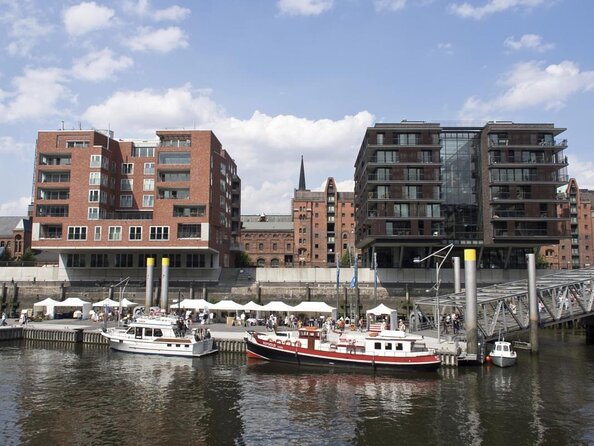
After the memory stop, HafenCity feels like a different chapter. This is where you see Hamburg trying to reinvent itself at a city-scale level. HafenCity is described as Europe’s largest city planning project, and you get the key number: 157 hectares of former industrial area transformed into a new district.
That is a lot of change to fit into one walking tour, so the guide’s role becomes important. Instead of making it sound like a marketing brochure, the story connects what used to be there to what exists now. You can stand on a sidewalk and start noticing that regeneration is not just “new buildings,” it is the redesign of how people move, live, and work in space that was once functional and industrial.
You will pass through HafenCity rather than spending a long time stopped at one building, which fits the tour’s concept. It is a moving lesson in scale. You get roughly 10 minutes, enough to understand the transformation concept and identify the district’s biggest visual signals.
If you like cities that actively repair and re-plan, this is one of the more satisfying sections. You do not have to read planning documents, because the tour turns “157 hectares” into something you can feel while walking.
Onward connections from Hamburg:

Speicherstadt’s Wooden Piles And UNESCO Red Brick Warehouses
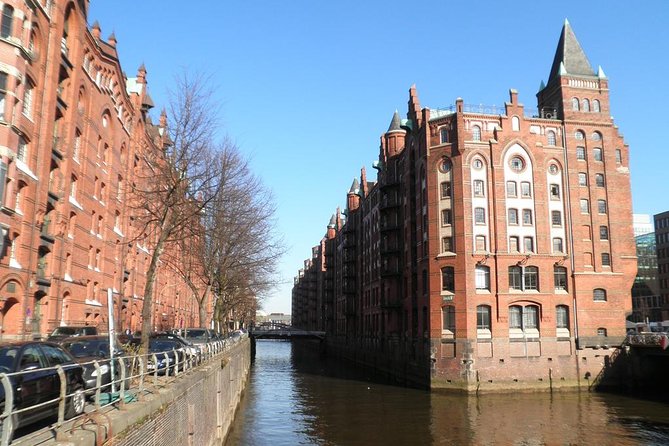
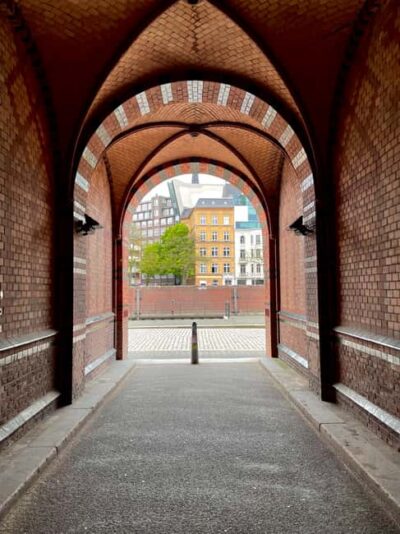
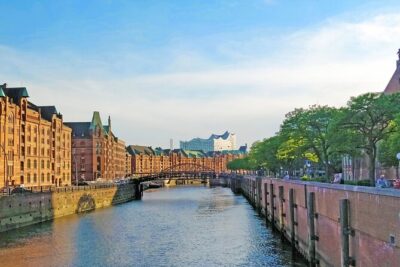
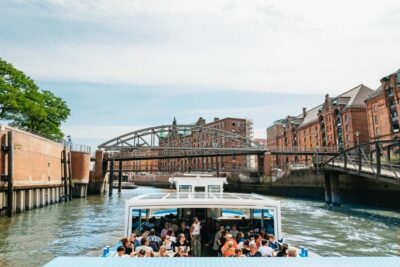
Then you hit Speicherstadt, and it is the stop that makes a lot of first-time Hamburg visitors smile. This is the world’s largest warehouse district, built from red brick warehouses sitting on wooden piles. Those two details, warehouse district and wooden piles, are the real hook.
The area was inaugurated in 1888 and was restored after WWII. That restoration detail matters because it connects back to the WWII theme from St. Nikolai. Hamburg is not only remembering loss, it is also rebuilding identity with the help of what survived.
Even better, Speicherstadt is part of UNESCO World Heritage. Your guide uses that status to frame why it has international importance, not just local charm. You see how a working trade landscape became a heritage landscape, and how conservation can keep city character intact.
You get about 15 minutes here, which is a good amount of time to look at the brick, soak in the canal-like setting, and notice how warehouses function differently from museums. It can feel like you are looking at a city that still understands goods, even if the goods have changed over time.
Tip for you: take a slow walk inside the district borders. The story works best when you let your eyes trace the edges and not just the big photos.
Elbphilharmonie Ending With Port Views And Acoustic Pride
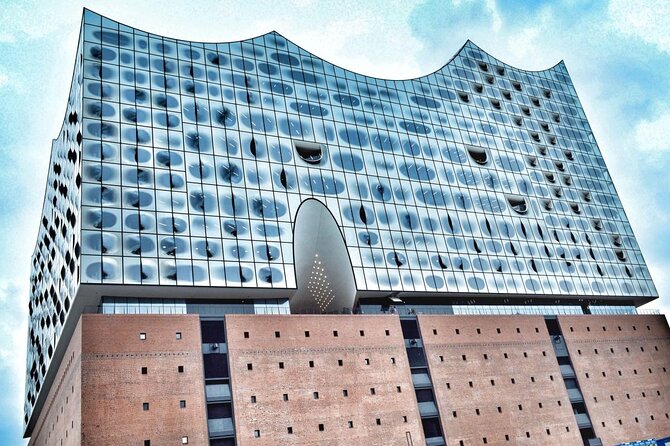
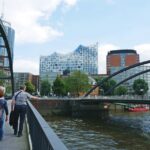
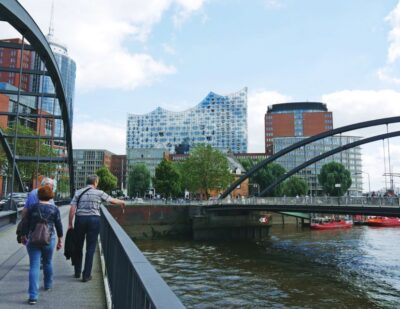
The tour finishes in front of the Elbphilharmonie, the concert hall inaugurated in 2016. The first concert took place on 11 January 2017, and your guide shares why the building became such a talking point so quickly.
One reason is the acoustics. The Elbphilharmonie is famous for how well it carries sound, described on this tour as nearly perfect. Even if you are not a concert person, it helps to understand that a building can change a city’s image just by how it performs.
Most tours stop and move on. This one does the better thing: you end at a location where you can take in the view over the port area and, importantly, have the opportunity to visit the platform. That makes the ending feel like a reward for walking through the city’s layers all morning or afternoon.
Expect about 10 minutes at the final stop. Use that time to look back at the harbor, connect it to the earlier port story, and notice how far the city’s relationship to shipping has come.
Practical note: the platform view is a key moment. If you want photos, decide early where you want to stand so you are not scrambling at the end.
Value And Practicalities For A $30.04 Walking Tour
At $30.04 per person for about two hours, this is priced like a solid city orientation plus targeted highlights. You are paying for a professional guide and a route that covers several major Hamburg districts without needing extra transport between far-flung areas.
The small-group size helps justify the cost. Maximum 15 people means your guide can keep everyone together and still respond to questions. There is also a minimum group size, so if the booking does not meet that number, you are offered another date or a full refund. That keeps the experience from turning into a ghost tour.
You also get a mobile ticket, which is a small detail but a real convenience in a city where you might be navigating multiple points on foot. The tour is offered in English, so you do not have to manage a translation app mid-walk.
Weather is covered too. The tour runs in all weather conditions, so bring layers, a hat, or rain protection as needed. The stops are mostly outdoors, so your comfort directly affects how much you enjoy the stories.
If you are traveling with someone who prefers a plan but hates rigid schedules, this fits. You can follow along for the full route, or at least use it to get your bearings fast.
Should You Book This Down Town To Speicherstadt HafenCity And Elbphilharmonie Tour?
Book it if you want a compact Hamburg sampler that actually explains what you are seeing. This tour shines when you care about the “how did Hamburg become Hamburg” angle, because it connects the Town Hall power symbol, merchant streets, WWII remembrance, and then modern planning at HafenCity and heritage warehouses at Speicherstadt. It also ends in a strong visual location near the port, so you finish with a satisfying sense of place.
Skip it only if you want a museum-heavy day or you are uncomfortable with WWII memorial content. The tour includes a memorial and an exhibition topic, and while the stop is timed, it is still emotionally weighty.
If you enjoy guides who mix facts with personality, you are in luck. A guide named Jutta has been highlighted for being funny, knowledgeable, and genuinely good company, and that style is exactly what makes a walking history tour feel effortless.
FAQ
How long is the Hamburg walking tour?
It lasts about 2 hours.
Where does the tour start and end?
It starts at Rathausmarkt, 20095 Hamburg, Germany and ends at Elbphilharmonie (HamburgPlatz d. Deutschen Einheit 4, 20457 Hamburg, Germany).
Is the tour in English?
Yes, it is offered in English.
What is included in the price?
A professional guide is included.
Is the tour ticket mobile?
Yes, it uses a mobile ticket.
Does the tour run in bad weather?
It operates in all weather conditions, so dress appropriately.
How many people are on the tour?
There is a maximum of 15 travelers per tour, with a minimum of 8 people required per booking.
What about refunds if plans change?
You can cancel for a full refund up to 24 hours in advance of the experience start time.
If you want, tell me your travel dates and what you like most (architecture, history, photos, or food). I can suggest a smart half-day pairing before or after this walk.
Fresh on the arrivals board for Hamburg

Hamburg Tours & Activities, compared.
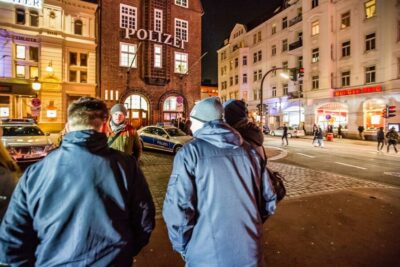
Sex and Crime in St. Pauli Tour for Ages 18 +
Read our review →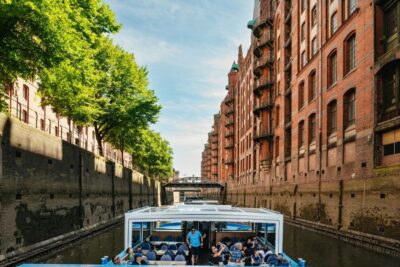
1.5-Hour Harbor and Speicherstadt Day Cruise
Read our review →
Reeperbahn Lust & Laster Tour for Adults Only
Read our review →Browse the lists this tour appears in