
Reviewed · HAMBURG TOURS & ACTIVITIES
Dialogue in the Dark (English Tour)
Total darkness turns everyday life upside down, because Dialogue in the Dark Hamburg has you move through real situations guided by a blind host. What I like most is the way you keep hearing, touching, and smelling details you normally ignore, which makes the whole hour feel new and honest.
My second favorite part is the end stop at the Dark Bar, where you can compare notes and ask questions while the experience is still fresh. The main drawback to plan for is that total darkness can feel overwhelming at first, even with a guide there to keep things safe and clear.
In This Review
- Key things that make Dialogue in the Dark Hamburg different
- Where Dialogue in the Dark fits in Hamburg (Dialoghaus Hamburg basics)
- Getting oriented: your first moments in the darkness
- Your 60-minute itinerary: everyday scenes without your eyes
- City crossing and street sounds
- A park stroll through textures
- Simple errands, like buying something
- Walking through several settings
- How your guide keeps the experience safe and doable
- What you actually learn: hearing, touch, and smell do the heavy lifting
- Hearing becomes location
- Touch teaches shape and spacing
- Smell adds another layer of awareness
- You gain empathy that feels earned
- The Dark Bar: why the drink and chat are part of the design
- Price and value: is $30 for an hour worth it?
- Who should book this in Hamburg, and who should think twice
- Practical tips before you go into total darkness
- Wear comfortable shoes
- Listen carefully in the beginning
- Don’t rely on flash photos
- Go with a curious mindset
- Remember, you cannot explore it alone
- Should you book Dialogue in the Dark Hamburg?
- FAQ
- How long is the Dialogue in the Dark tour in Hamburg?
- Is the tour in English?
- How big is the group?
- Where do I meet the tour before it starts?
- What should I bring?
- Are photos allowed?
- Are drinks included with the tour?
- Can I explore Dialogue in the Dark on my own?
- What is the cancellation policy?
Key things that make Dialogue in the Dark Hamburg different
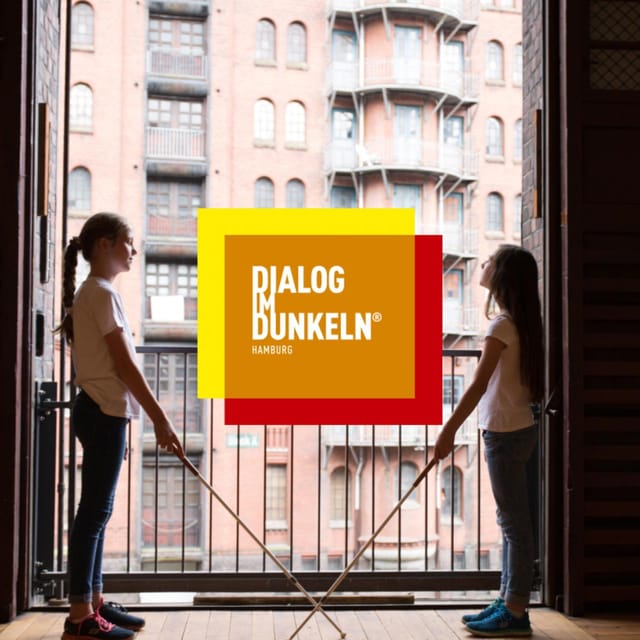
- A blind or visually impaired guide leads your small group, so you’re not doing this on your own
- Complete darkness turns everyday tasks into a lesson about how you rely on sight
- Up to 8 people keeps the coaching personal and the atmosphere calm
- Multiple everyday settings help you practice “getting around” without visual cues
- The Dark Bar chat gives you space to process what you learned over a drink
Where Dialogue in the Dark fits in Hamburg (Dialoghaus Hamburg basics)
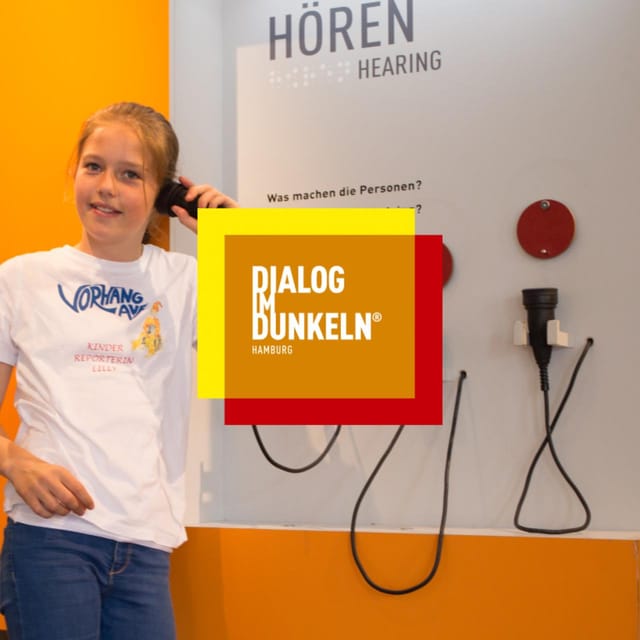
Dialogue in the Dark takes place at Dialoghaus Hamburg, in Northern Germany’s Hamburg area. The tour is in English and runs about 60 minutes, which makes it an easy add-on to a day of sightseeing, even if you are not trying to pack your schedule tight.
Before you go in, you swap your voucher at the ticket counter. This matters because Dialogue in the Dark is designed as a guided experience in total darkness, and you cannot meaningfully do it independently. So treat the start time and check-in as part of the experience, not just paperwork.
Two practical things I suggest from the start. Wear comfortable shoes (you’ll be moving around), and plan to go in with your phone tucked away, since flash photography is not allowed. If you’re the kind of person who hates feeling out of control, you might find it helps to accept that this is not a photo stop. It’s a perception stop.
Also holding a platform in Hamburg
- Hamburg: Sex and Crime in St. Pauli Tour for Ages 18 +
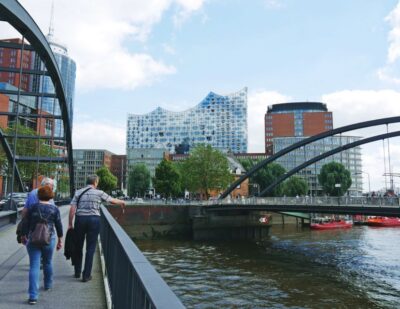
★ 4.7 · 17,793 reviews - Hamburg: 1.5-Hour Harbor and Speicherstadt Day Cruise
★ 4.6 · 14,200 reviews - Hamburg: 90-Minute Evening Lights Harbor Cruise
★ 4.5 · 7,728 reviews
Getting oriented: your first moments in the darkness
The best part of Dialogue in the Dark Hamburg is also the most challenging at the beginning. The lights go down, and your brain immediately tries to fall back on sight habits that simply do not work.
That’s why the guide’s opening instructions matter so much. You’ll be given clear cues on how to move and what to expect, and many guides set a welcoming tone right away. Some English tours have been led by people like Jeremy, Jens, and Klaus, and the common thread in the experience is the same, friendly, practical guidance that keeps you from feeling lost.
In the first stretch, your job is not to “perform” right. Your job is to listen and follow. If you can let yourself be a beginner, the dark quickly becomes less scary and more fascinating. The moment you stop fighting the darkness is often when hearing and touch start taking over.
Your 60-minute itinerary: everyday scenes without your eyes

Within the hour, you move through a sequence of everyday situations. You will not just sit in darkness. You’ll navigate like a person without sight, using a blind cane and your guide’s direction.
Here’s what that looks like in practice:
City crossing and street sounds
You’ll experience the soundscape of a city street, including the feel of crossing and moving through traffic-like motion without relying on visual markers. The point is not to recreate driving, it’s to show how sound, timing, and guidance replace the information you usually get from seeing.
When you lose visuals, your hearing becomes more detailed. You may notice that you can track where things are coming from, even if you cannot identify what they look like. That shift is often what people describe as eye-opening.
A park stroll through textures
A park scene is a classic example of tactile navigation. You may feel gravel or other ground textures underfoot and learn how the environment carries information you can’t see.
This is where the guide’s pacing matters. The goal is safe movement, not speed. If you start paying attention to texture and spacing, you start building a “map” in your head that doesn’t require sight.
Onward connections from Hamburg:




Simple errands, like buying something
You may also handle situations that look ordinary in daylight, like making a purchase. In the dark, the simple parts become clear lessons about attention, communication, and trust.
This is one of the most valuable parts for me conceptually, because it turns abstract empathy into something concrete. You learn how much your confidence depends on visual confirmation, and you feel how that confidence changes when it’s removed.
Walking through several settings
People often describe the tour as several room-like or scene-like stops, often around 4 or 5. You don’t need to know the exact layout to get value from it, but it helps to understand the hour is structured, so you’re not wandering randomly.
If you go in expecting a long theater segment, you may be surprised. Dialogue in the Dark is more like guided practice: move, listen, touch, and react.
How your guide keeps the experience safe and doable
Dialogue in the Dark is built on trust between you and your blind or visually impaired host. The guide uses a combination of verbal cues and physical guidance so you know what to do next.
The cane is key here. You’ll use one to help with contact and orientation. You’ll also rely on your sense of touch, including the feeling of obstacles and the rhythm of walking cues. The cane is not just a prop, it’s your way of “reading” the space.
What makes the biggest difference is the way guides set expectations early. In multiple experiences, guides were described as encouraging, funny, and extremely helpful, which sounds like personality trivia but it actually affects your comfort level. When someone keeps you calm, you stop panicking and start noticing details.
You should still plan for nerves. Several people have said the first minutes can feel overwhelming, but the general pattern is that it gets easier once you realize the guide is actively managing safety and flow.
What you actually learn: hearing, touch, and smell do the heavy lifting
The core lesson of Dialogue in the Dark Hamburg is not that sight is important. It’s that humans are adaptable, and your other senses can become powerful when sight is removed.
Here’s how that shows up during the tour:
Hearing becomes location
In darkness, sounds stop being background noise. They become direction, distance, and movement cues. You might hear footsteps changing as someone turns, or you might pick up subtle changes in where voices are coming from. This is why the city-street part tends to stick in people’s minds.
Touch teaches shape and spacing
Touch becomes your reality check. You learn what different materials feel like, how objects differ in texture, and how your body naturally measures space when sight is gone.
This also makes the experience feel practical, not just emotional. You’re literally doing tactile problem-solving.
Smell adds another layer of awareness
The experience highlights smell as part of the non-visual world. Even if smell is subtle compared with sound and touch, it’s another reminder that the world has channels you usually ignore.
That matters because it changes how you think about everyday life after you leave. You start eating, walking, and commuting with more attention.
You gain empathy that feels earned
Empathy is often a buzzword, but here it’s earned through effort. You’re the one doing the hard part. You’re the one learning that independence looks different when sight is not available.
People often leave feeling humble, grateful, or more respectful toward visual impairments. The best part is that the perspective doesn’t feel like a lecture. It feels like experience-based knowledge.
The Dark Bar: why the drink and chat are part of the design
The tour ends at the Dark Bar, where you reunite with your group and guides. This is where the experience shifts from sensory challenge to reflection.
You’ll have time to unwind and share what you noticed. More importantly, you can ask questions that came up during the hour, when everything might have felt too fast to process.
The Dark Bar is also where you learn that your group’s reactions were different, sometimes wildly different. One person might have been most affected by street sounds, while another remembers a tactile moment with an object. That compare-and-contrast conversation is a big reason people say the whole experience lingers.
A note on drinks: drinks are not included in the ticket price. So plan to budget for a drink if you want to do the full ritual. One tip from experiences shared is to have cash ready, in case that’s how the bar operates.
Price and value: is $30 for an hour worth it?
At around $30 per person for a 60 minute English tour, the price is not just “for a story.” You’re paying for a highly controlled environment: full darkness, guided safety, and interaction with a small group.
Here’s where the value shows up:
- Small group size (up to 8) keeps the interaction real, not like a mass event
- Live English guide means you can ask questions and get support
- Guided full-dark navigation is hard to replicate outside this setting
- The Dark Bar conversation extends the value beyond the sensory portion
Also, this is one of those activities where the ticket cost can feel small compared with what you take away. People describe feeling grateful for what they have, understanding visually impaired family members better, and realizing how much sighted people rely on sight without noticing.
Is it worth it for everyone? If you hate feeling out of control or you expect a relaxing stroll, it may feel like work. But if you can lean into the guidance and treat it like a human skills lesson, the price-to-impact ratio is strong.
Who should book this in Hamburg, and who should think twice
Dialogue in the Dark Hamburg fits best if you enjoy hands-on learning and you can go with the flow.
You’ll probably love it if you:
- like unique, local experiences in Hamburg beyond museums
- want to understand disabilities with real-world context
- enjoy guided activities where you learn by doing
- travel with friends or family and want something that sparks conversation afterward
You might think twice if:
- you get panicky in total darkness
- you have mobility concerns that make walking uncomfortable, even with guidance
- you’re traveling with very young kids who may find the concept frightening
One reason I’m careful here is simple. Several accounts mention feeling overwhelmed initially. The guides often handle this well, but it’s still a true sensory challenge. Go in knowing that feeling anxious at the start does not mean the experience is going badly.
Practical tips before you go into total darkness
If you want to get the most out of the tour, set yourself up for success. A few choices matter more than you’d think.
Wear comfortable shoes
You’ll be walking, often on different surfaces. Comfortable shoes reduce fatigue and help you focus on the senses instead of your feet.
Listen carefully in the beginning
The guide’s first instructions can change the whole experience. If you tune them out, you’ll feel more confused. If you listen, you’ll feel more grounded.
Don’t rely on flash photos
Flash photography is not allowed. More than that, turn off the urge to “prove” anything with your camera. This is not a show you watch, it’s a world you experience.
Go with a curious mindset
Try to notice one thing at a time. Maybe focus on sound during the street moment, then on textures during the park scene. This keeps you from trying to do everything at once.
Remember, you cannot explore it alone
Dialogue in the Dark is not something you wander through independently. You’ll be guided for a reason: it’s how the experience stays safe and structured.
Should you book Dialogue in the Dark Hamburg?
Book it if you want a memorable, humane experience that changes how you see the world, not just what you see on a screen. The strongest reasons to go are the small group, the blind guide leadership, and the chance to ask questions at the Dark Bar after the lights come back on.
I would also book it if you enjoy thoughtful, slightly emotional travel experiences that still feel playful and practical, because you’ll be doing real everyday tasks in a totally different sensory mode.
Skip it if you know total darkness would make you miserable or if you need a low-stimulation outing. Even with good guidance, it’s still darkness. Decide based on your comfort with that, not on hype.
If you fit the curiosity category, this is one of those Hamburg experiences that you’ll remember on future days, every time you notice sound, texture, and how much sight quietly runs your life.
FAQ
How long is the Dialogue in the Dark tour in Hamburg?
The English tour lasts 1 hour.
Is the tour in English?
Yes, the live tour guide speaks English.
How big is the group?
The group is small, limited to 8 participants.
Where do I meet the tour before it starts?
You exchange your voucher at the ticket counter before the tour begins.
What should I bring?
Wear comfortable shoes.
Are photos allowed?
Flash photography is not allowed.
Are drinks included with the tour?
No. Drinks are not included, but the tour ends at the Dark Bar where you can reflect over a drink.
Can I explore Dialogue in the Dark on my own?
No. Dialogue in the Dark is an experiential exhibition in complete darkness that you cannot explore on your own.
What is the cancellation policy?
You can cancel up to 24 hours in advance for a full refund.
Fresh on the arrivals board for Hamburg





Hamburg Tours & Activities, compared.
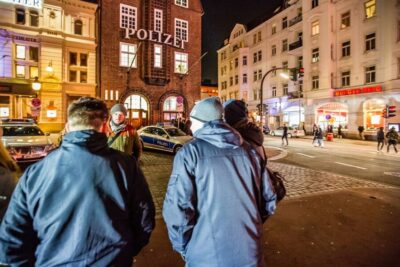
Sex and Crime in St. Pauli Tour for Ages 18 +
Read our review →
1.5-Hour Harbor and Speicherstadt Day Cruise
Read our review →



Reeperbahn Lust & Laster Tour for Adults Only
Read our review →Browse the lists this tour appears in