
Reviewed · BREMEN TOURS & ACTIVITIES
Bremen: Old Town Tour with Costumed Performer & Tour Guide
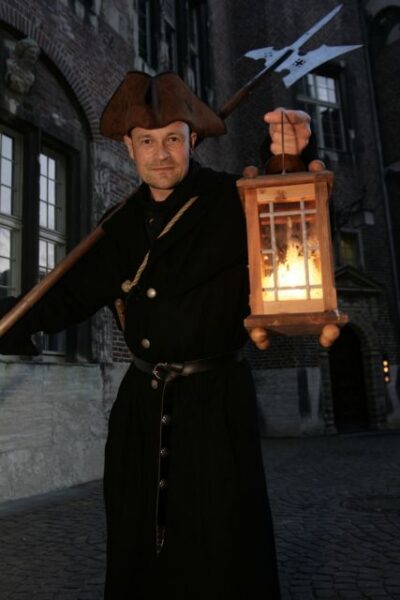
Bremen has a knack for offbeat stories. This 2-hour old town tour mixes a live German tour guide with a costumed performer, so the landmarks feel like parts of a living script, not just stops on a map. I like how it pairs big city symbols like the town hall and Roland with stranger, more personal characters that help you read Bremen in a different way.
One caution: sound quality can be an issue for some people, especially around the busy Christmas period, and a recent booking asked for headphones to make the dialogue clearer. If you are sensitive to missing words, pick a spot near the front and arrive a touch early.
In This Review
- Key Highlights You’ll Feel Right Away
- Why Bremen’s Staged Old Town Tour Works in Just 2 Hours
- Meeting at St. Peter’s Cathedral Steps: Where the Story Starts
- Town Hall and Roland: Civic Power You Can Actually See
- Böttcherstraße and the Art of Bremen’s Money Story
- The Schlachte Waterfront: Bremen as a Port City in Miniature
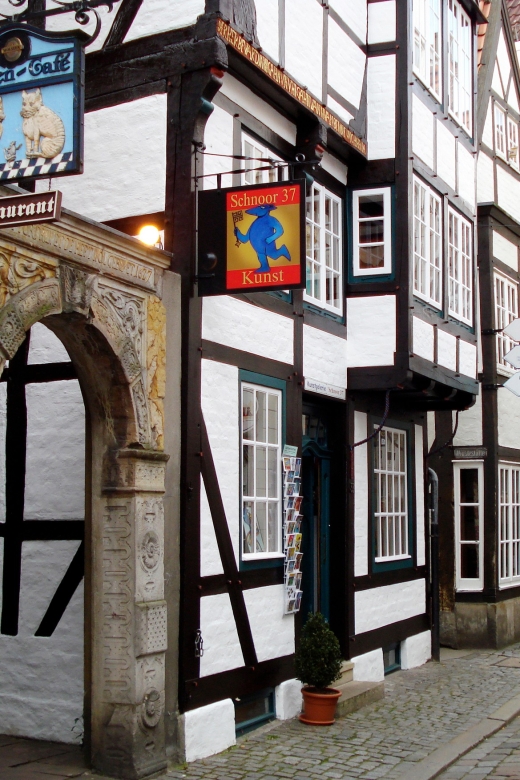
- Schnoor: Reading the Small Streets and Eccentric Characters
- Ostertorwache Documentation Center: Power, Punishment, and Perspective
- The Surprising Bremen Details: Rockefeller, Vanished River, Secret Main Street, Roland
- Price and Value: What $18 Gets You Besides a Walk
- Practical Tips to Hear the Performer and Stay With the Group
- Who This Tour Fits Best
- Should You Book This Bremen Old Town Tour?
- FAQ
- What is the duration of the Bremen Old Town Tour?
- Where do I meet for the tour?
- Is there a guide during the tour?
- Is the tour in English?
- What is included in the ticket price?
- Is pickup or drop-off included?
- Can I cancel for a refund?
- How much does it cost?
Key Highlights You’ll Feel Right Away
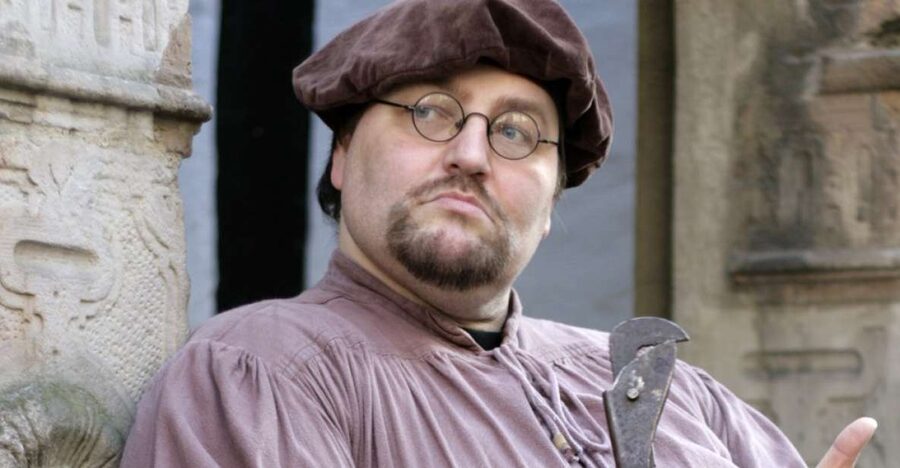
- Costumed performer + guide teamwork that turns a walking tour into a staged story you can follow.
- Main landmarks in one loop, from Marktplatz and the town hall to Böttcherstraße, Schlachte, and Schnoor.
- Bremen’s contradictions explained, including why the city feels both prosperous and poor at the same time.
- Civic power meets daily life, from Roland’s symbolism to the Schlachte waterfront area.
- A darker chapter at Ostertorwache, a documentation center in a former prison building.
Why Bremen’s Staged Old Town Tour Works in Just 2 Hours
This tour is built for people who want Bremen context without spending a whole day locked inside museums. You get a guided route through the classic center, but the delivery uses real-world history mixed with staged characters. That matters because it helps you remember details, even the quirky ones, like the tour explanation tying Rockefeller to Bremen Cathedral.
The format also makes the walk easier to handle. Two hours is long enough to cover multiple neighborhoods, but short enough that you stay alert. If you’re pairing this with shopping time on Böttcherstraße or a longer wander in Schnoor, it fits nicely as your “get your bearings fast” morning or afternoon plan.
You do need to be comfortable hearing stories in German. The guide is live and the performer adds dialogue and character work, so if you understand only a little German, you’ll still catch plenty from the visuals, but you may miss the finer points. If language is a concern, stand close so you can pick up more of the conversation.
Also holding a platform in Bremen
- Bremen: Walking Tour in German with Night Guard
★ 4.7 · 2,922 reviews - Bremen: City Center Guided Walking Tour
★ 4.5 · 2,709 reviews - Bremen: Underground Guided Tour
★ 4.1 · 1,408 reviews
Meeting at St. Peter’s Cathedral Steps: Where the Story Starts
You meet at the steps of Bremen Cathedral, at the main entrance to St. Peter’s Cathedral. That location is smart, because the tour’s whole theme is Bremen as both symbol and surprise, and this is one of the city’s strongest anchors.
Once you’re gathered, the tone kicks in quickly. You’re not just being pointed toward buildings, you’re being pulled toward ideas: why Bremen is often described as a city of republic traditions, how it developed civic identity, and how it still feels modern. The tour also promises explanations for specific odd questions, including why Roland appears to squint and how a vanished river ties into Bremen’s layout.
I like meeting at a major landmark because you can orient yourself right away. Even if you come straight from lunch, the cathedral steps give you a clear starting point, and you won’t need guesswork about where the group begins.
If you’re visiting in winter, consider the weather and crowd noise. A recent booking specifically mentioned that during the Christmas period the audio was hard to catch. You can’t control the season, but you can control your position, and front-row proximity helps.
Town Hall and Roland: Civic Power You Can Actually See
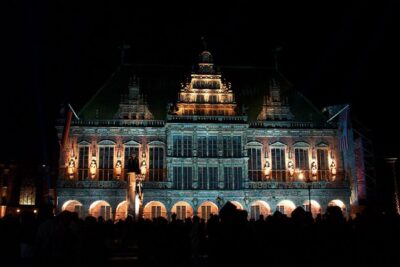
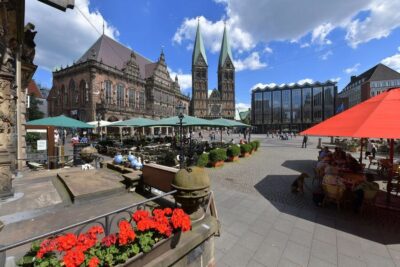
The tour spends time at the heart of Bremen’s public identity, including Marktplatz and the town hall. This is where Bremen’s “city republic” idea becomes visual. You’ll see the kinds of buildings that signal civic authority, and the tour helps you understand why they mattered beyond architecture.
Roland is a key stop, and the tour includes a detail that people often miss on their own. It explains why Roland squints, and that kind of specific, almost playful detail is exactly the point. When a tour gives you one sharp fact like that, your brain starts noticing related symbolism across the square.
This is also the best part of the tour for first-timers. If you only know Bremen through photos, you might think it’s all medieval facades. The staged story nudges you to read the space as a civic stage where rules, power, and public identity shaped daily life.
One practical note: the square can get busy. If you want a clear view and good hearing, pick your spot early and don’t plan to push to the front mid-story. The best chance to catch the performer’s cues is when the group is already settled.
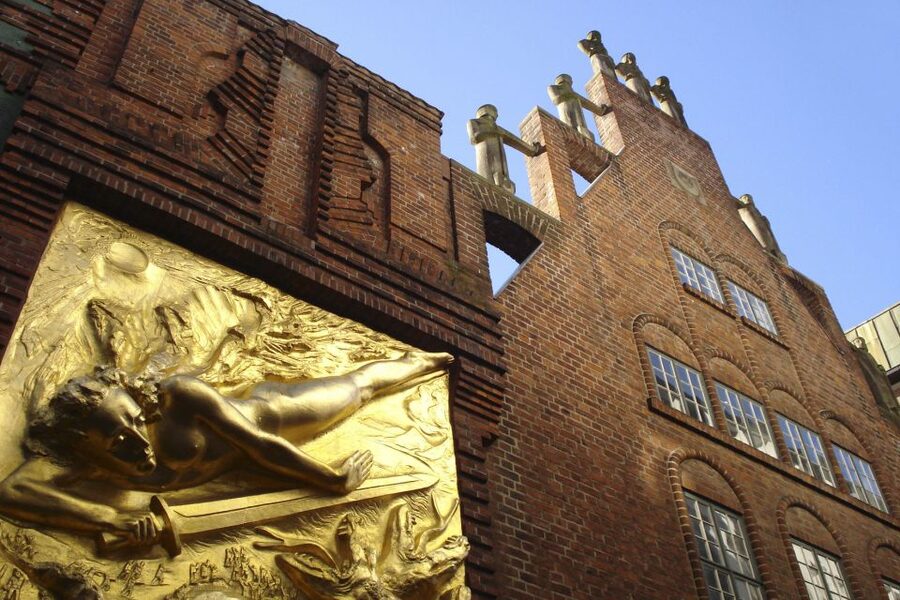
Böttcherstraße and the Art of Bremen’s Money Story
Böttcherstraße is where Bremen starts feeling more curated and design-forward. The tour treats it as more than a pretty street, it’s a place to think about wealth, influence, and what “rich” can mean in a city with unequal edges.
This matters because the tour’s big message is Bremen’s contrast. It sets up the idea that Bremen is both rich and poor at the same time, then points you toward places that symbolize prosperity while still hinting at real social differences. You don’t get a lecture format. You get a guided walkthrough that keeps returning to the question: how did this city get built, and for whom?
If you enjoy architecture but hate overly technical explanations, you’re in the right zone. The staged performer makes it easier to keep your attention on details, like façades, street character, and the way buildings sit along the route.
Böttcherstraße is also practical for your day. After the tour, you’ll likely want time to walk slowly here on your own, not because the tour drags, but because the street invites lingering. Plan for a little extra wandering time if you like shops or just want to soak up the look of the area.
The Schlachte Waterfront: Bremen as a Port City in Miniature
The tour heads toward Schlachte, one of Bremen’s waterfront areas, which helps complete the city picture. Town squares and cathedrals tell one story. Waterfronts tell another, more practical story about movement, trade, and how cities connect to the wider world.
The tour includes Schlachte because it links Bremen’s past “ports and river life” identity to what you can see today. You’ll hear about Bremen making a puzzling impression because there is mention of a vanished river and a secret main street concept. Even if those sound like odd tour hooks, they make sense in this section, where you’re moving from symbolic power into physical geography.
I like that this part makes the city feel less frozen in time. You get a sense that Bremen’s shape was influenced by waterways and routes, and that the city kept changing as those routes changed. It’s a more human way to learn city geography than reading a map alone.
If you tend to get cold easily, dress for an outdoor waterfront stretch. This tour is only two hours, but you are outdoors, and the Schlachte area can feel windier than the inner squares.
Onward connections from Bremen:


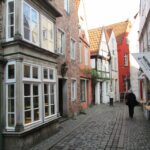

Schnoor: Reading the Small Streets and Eccentric Characters
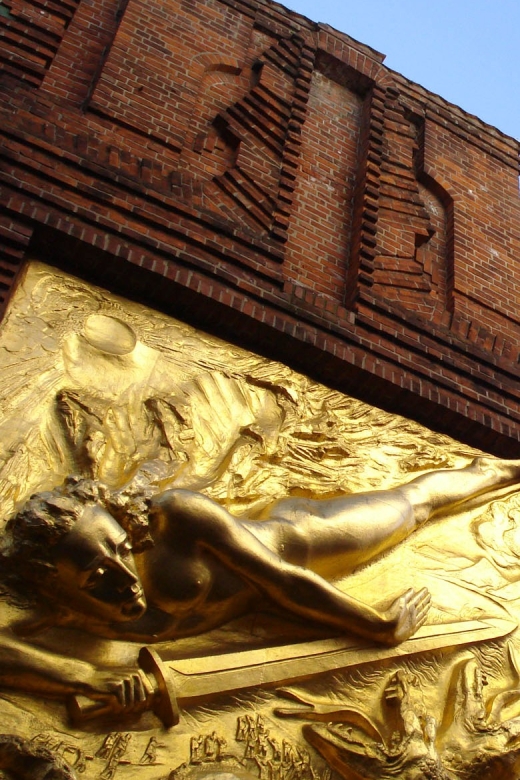
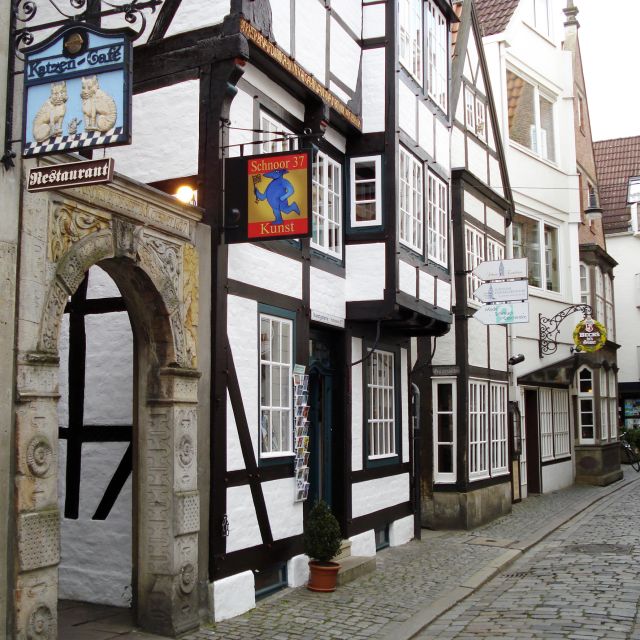
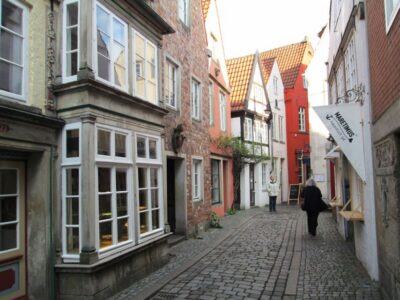
Schnoor is the part of Bremen that often wins people over for atmosphere. Narrow lanes and older street character create an immediate sense of place, and the staged performer uses that setting well by bringing in imaginary and real stories.
This stop is where the tour leans hardest into “eccentric originals and off-kilter oddballs.” You’ll hear tales that play with how people in Bremen think, not just what officials built. In other words, you learn the city through personality, not only through stone.
I also like that the tour’s character-driven approach fits Schnoor’s scale. Smaller streets are perfect for storytelling because you’re walking slowly enough to watch where you’re going and to stay engaged in the script. It’s the kind of route where you may look at a doorway and suddenly understand why it’s worth noticing.
A drawback to consider: if the group gets large, small streets can feel tight. Keeping near your guide helps you avoid getting separated, and it keeps you from losing audio. If you know you dislike crowded lanes, choose the earlier departure time when you can, and don’t wait until the last second to join your group.
Ostertorwache Documentation Center: Power, Punishment, and Perspective
The tour continues toward the documentation center Ostertorwache, which is a former prison building. That’s a sharp tonal shift, and it’s one of the tour’s most thought-provoking moments.
The tour frames Ostertorwache as a place that was formerly the most modern prison in Germany. That detail matters, because it turns the conversation from “old building” to “what society believed was effective.” It also gives your Bremen story emotional range. A city can be civic, artistic, and prosperous, and it can also be strict and punitive.
This stop helps you avoid the common mistake of seeing the old town as only pretty. The staged format still works here because the performer and guide steer you toward meaning, not shock. You come away with a more complete sense of Bremen as a place that responded to human needs and human fear in very concrete ways.
If you prefer light sightseeing only, this chapter might feel heavy. But if you like history that includes real moral complexity, this is often the part people remember long after they leave the square.
The Surprising Bremen Details: Rockefeller, Vanished River, Secret Main Street, Roland
What makes this tour feel different is the specific nature of its questions. You’ll hear about what Rockefeller has to do with Bremen Cathedral, why Roland squints, and why Bremen can look puzzling because of the vanished river and the idea of a secret main street.
I like these “how did that happen” details because they train you to look harder. After hearing an explanation like the Rockefeller connection, you tend to notice the cathedral as more than a landmark. After the Roland squint explanation, you’re more likely to spot expressions and carvings that you would normally ignore.
This also keeps the tour from becoming predictable. Many old town tours focus on the same handful of stops in the same way. Here, the tour uses odd clues as mental hooks, so you leave with a list of stories, not just a list of streets.
One more point, tied to the city republic theme: the tour repeatedly links Bremen’s identity to how it organized itself. You’re not only learning facts. You’re learning a mindset, the way Bremen positioned itself as self-governing and publicly minded.
Price and Value: What $18 Gets You Besides a Walk
At around $18 per person for a 2-hour guided experience, the value depends on what you want from a city tour. If you’re only chasing photos and a basic map route, you could do something cheaper on your own.
But if you like guidance plus entertainment, this price makes more sense. You’re paying for a live tour guide and a costumed performer who brings stories to life. That combination is what turns the experience from “I visited these places” into “I understood how these places connect.”
I also think two hours is a real value point. It’s enough time to see the cathedral area, move through Marktplatz, cover town hall and Roland, add Böttcherstraße and Schlachte, and reach Schnoor and Ostertorwache. Most cheap self-guided routes don’t do that much meaning in so little time.
If you’re traveling with someone who gets bored by long historic lectures, the performer component can be the difference between a tolerable walk and a tour you actually look forward to. Just remember the sound-quality caution if you’re going during busy holiday crowds.
Practical Tips to Hear the Performer and Stay With the Group
This tour is spoken in German, with live guide narration and performer dialogue. To get the most out of it, you need decent hearing and good placement.
Here’s what I’d do:
- Arrive early enough to get near the front when the group gathers at the cathedral steps.
- If it’s windy or crowded, adjust your spot so you face the guide, not the back of the group.
- Wear shoes that handle old streets, especially if you’re going toward Schnoor lanes.
Also keep expectations realistic. The stories are staged, so the performer will move, gesture, and use the space. If you hang back, you may miss cues. Staying closer helps you catch both the explanation and the character work.
One more practical takeaway from a recent experience: during the Christmas period, one person reported that they got little audio and wished for headphones. The tour info does not mention headphones, so your best defense is choosing a time when crowds and noise are lower, or positioning yourself to catch voices clearly.
Who This Tour Fits Best
I’d recommend this tour if you:
- Want a first-timer Bremen overview that still feels personal.
- Like storytelling styles that use characters and staged moments.
- Prefer a short tour with multiple landmarks rather than a single long museum visit.
- Are okay with German language as part of the experience.
I would not prioritize it if you:
- Need perfectly clear audio no matter the season.
- Want only straight facts with no character or staged dialogue.
- Strongly prefer not to have any political references at all. One verified booking found an SPD-related promotion off-putting, so if that matters to you, go in aware.
Should You Book This Bremen Old Town Tour?
Yes, if you want Bremen in a single, well-paced loop with a guide who explains the city’s odd details and a costumed performer who keeps the energy moving. The $18 price feels fair for what you get: town hall, Roland, Marktplatz, Böttcherstraße, Schlachte, Schnoor, and a meaningful stop at Ostertorwache, all delivered as a story.
Skip or reconsider if you know you struggle with audio in crowds, or if you need a purely factual approach with no theatrical elements. If you’re traveling in late December, plan a strategy for sound, like choosing a quieter departure time and positioning well at the start.
If your goal is to leave Bremen understanding why it feels both historic and still complicated, this tour is built for that exact outcome.
FAQ
What is the duration of the Bremen Old Town Tour?
The tour lasts 2 hours.
Where do I meet for the tour?
Meet at the steps of Bremen Cathedral, at the main entrance to St. Peter’s Cathedral.
Is there a guide during the tour?
Yes. You’ll have a live tour guide.
Is the tour in English?
No. The tour is in German.
What is included in the ticket price?
Included are the city tour, the tour guide, and a performer in costume.
Is pickup or drop-off included?
No pickup and drop-off is included.
Can I cancel for a refund?
Yes. You can cancel up to 24 hours in advance for a full refund.
How much does it cost?
The price is $18 per person.
Fresh on the arrivals board for Bremen

Bremen Tours & Activities, compared.



Browse the lists this tour appears in