
Reviewed · HISTORICAL TOURS
Bremen: Walking Tour of Historic Schnoor District
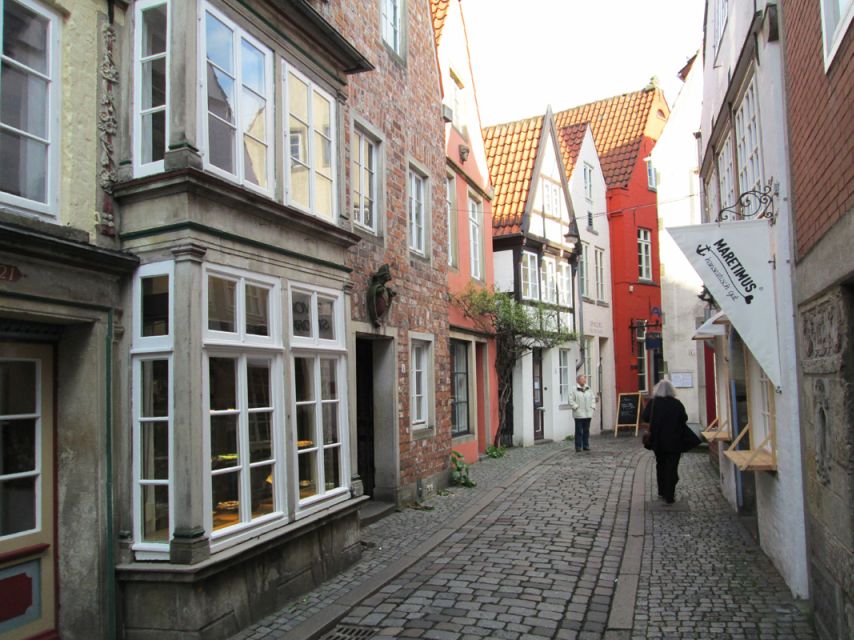
Schnoor feels like a maze of old Bremen. In just 60 minutes, this guided walk threads winding lanes lined with historic houses and craft storefronts near the Weser, so you get the vibe fast. I like that the focus stays on what you can see and read in the architecture, not a long, wandering schedule.
I love how the guide connects the dots from the Franciscan monastery era to the St. John’s Church built in the 14th century. I also love the little profane details you can spot up close, like Haus Schnoor 15, also called Brasilhaus, and Packhaus Schnoor 2.
One consideration: you only view the buildings from the outside. If you want museum interiors, you’ll need a separate plan.
In This Review
- Key highlights to know before you go
- Schnoor in 60 minutes: what makes this walk work
- Finding the start point at Die Glocke (and what to look for)
- The Schnoor story begins with a Franciscan edge
- St. John’s Church: redbrick Gothic you can actually spot
- Haus Schnoor 15 (Brasilhaus): why one house gets special attention
- Packhaus Schnoor 2 and the trade angle you might miss otherwise
- Recreated buildings, façades, and why you should look closely
- Half-timbered lanes near the Weser: tea room house and craft shops
- Architecture styles you will notice as the guide walks you through them
- What the guide actually adds, especially with a humor-forward style
- Price and value: why $14 feels fair for a 1-hour story walk
- Practical tips so you enjoy the full hour
- Who should book this Schnoor walking tour
- Should you book this tour?
- FAQ
- How long is the Bremen Walking Tour of the Historic Schnoor District?
- What is the price per person?
- Where do I meet the guide?
- Is the tour in German?
- Are buildings shown from the inside?
- Does the tour include food and drinks?
- Is a private tour available?
- Is the tour suitable for wheelchair users?
- What should I bring?
- What is the cancellation policy?
Key highlights to know before you go
- Schnoor’s narrow lanes with houses linked together like pearls on a string
- St. John’s Church in redbrick Gothic style, plus the remaining monastery church
- Profane 15th-century standouts like Haus Schnoor 15 (Brasilhaus) and Packhaus Schnoor 2
- Recreated historic structures and façades that hint at what stood there before
- Half-timbered corners near the Weser River, with goldsmiths and local craft shops
- A short, story-led tour where guides like Sönke bring the neighborhood to life
Schnoor in 60 minutes: what makes this walk work
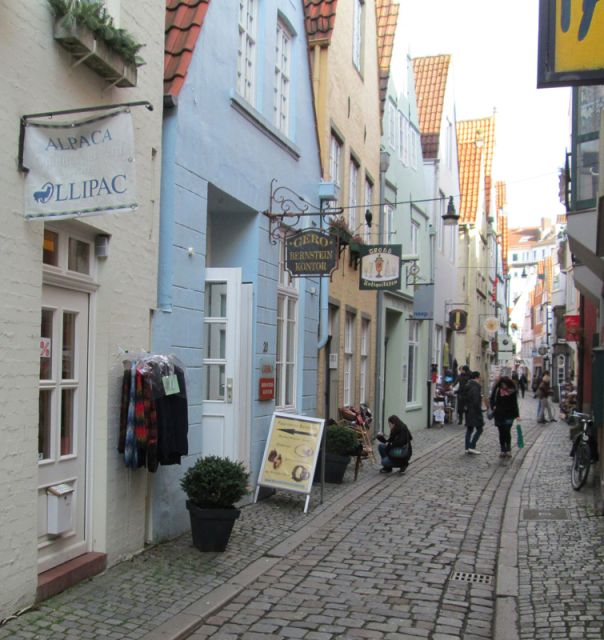
Schnoor is one of those places where it is easy to wander and forget to look up. This tour solves that problem by keeping you moving through the quarter while the guide points out what matters. In a single hour, you get a compact tour of streets, façades, and key landmarks, without the fatigue of a long day.
What you really buy with a guided format is interpretation. The Schnoor district is visually charming, yes, but it is also a layered neighborhood, shaped over centuries. A good guide helps you see patterns, like why certain buildings look the way they do, and what kinds of past life each street corner likely served.
You’ll get that classic Bremen feeling too, especially around the Weser river edge, where you’ll pass half-timbered houses and small shops. The experience is calm and leisurely, but it still feels structured, so you do not end the hour thinking you just took a pretty stroll.
More German cities at walking speed:
- Bremen: Walking Tour in German with Night Guard
★ 4.7 · 2,922 reviews - Bremen: City Center Guided Walking Tour
★ 4.5 · 2,709 reviews - Discover Berlin Half-Day Walking Tour
★ 5.0 · 9,624 reviews
Finding the start point at Die Glocke (and what to look for)
The meeting point is in front of the concert hall Die Glocke at Domsheide 6, Bremen. Your guide waits there holding a sign that says Bremen Tour Guide, so you can get oriented quickly.
Why this matters: Die Glocke is an easy landmark, and you do not waste the first part of your time hunting for the group. Since the tour is only 1 hour, small delays add up fast. Showing up a bit early is the simplest way to keep the day stress-free, especially if you are walking in from nearby stops.
One practical note: the tour is German. That means the storytelling, timing cues, and any answers you ask will be in German, so it helps if you are comfortable following spoken German. If you are not, you can still enjoy the exterior architecture, but you may not catch every detail.
The Schnoor story begins with a Franciscan edge
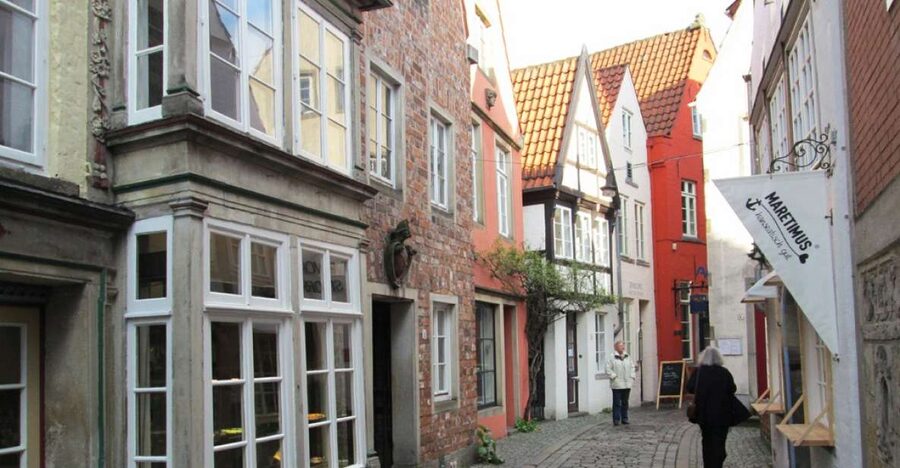
As you step into Schnoor, you are walking through a district that dates back far earlier than its postcard look suggests. The first known written reference to Schnoor goes back to the 13th century. At that time, a Franciscan monastery was built at the edge of the area that is now the Schnoor district.
Today, only the monastery church remains. That matters because it sets the tone for the tour: you are not only looking at decorative façades, you are watching the neighborhood evolve from a religious boundary zone into a place of homes, trade, and everyday city life.
Even if you are not a church architecture specialist, the guide helps you notice how the past lingers in what is still standing. It is also a reminder that these lanes did not spring up all at once. They grew into their role, and the buildings you see reflect that slow change.
St. John’s Church: redbrick Gothic you can actually spot
A major anchor during the walk is St. John’s Church, built in the 14th century. It is described as a redbrick Gothic church, and that redbrick detail is exactly the kind of thing you can track with your eyes as you move through the lanes.
Gothic does not always mean the same thing everywhere, and redbrick Gothic has its own look. You can use it like a visual compass while you wander. When the architecture starts to feel varied, the church gives your brain a fixed point to compare styles against.
The tour also frames St. John’s as part of the district’s longer timeline, sitting alongside the earlier monastery church. That contrast helps you understand Schnoor as a neighborhood that kept layering new periods on top of earlier ones, instead of starting over from scratch.
Haus Schnoor 15 (Brasilhaus): why one house gets special attention
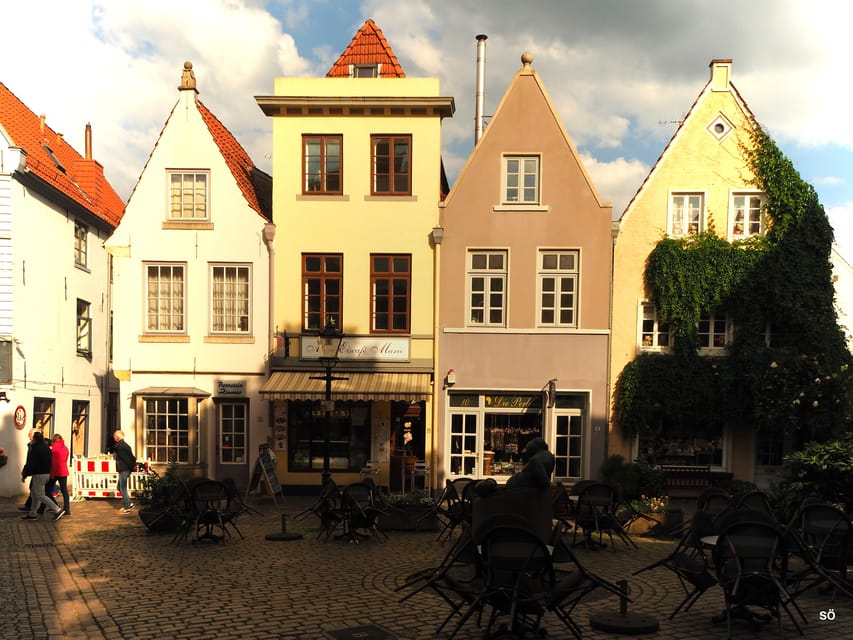
One of the most praised parts of the walk is the chance to see older profane buildings, not just churches and pretty façades. Haus Schnoor 15, also called Brasilhaus, dates back to the 15th century and is a standout example.
This is where the tour becomes more than scenic walking. The guide points out what you can learn just by looking at a house that is still from that era. You start to notice how certain buildings read differently from others, based on age, construction approach, and intended use.
If you enjoy architecture even a little, this sort of stop is satisfying because it gives you a concrete target. Instead of saying Schnoor is old, you see an individual building with age credentials and a named identity.
More centuries per city block:




Packhaus Schnoor 2 and the trade angle you might miss otherwise
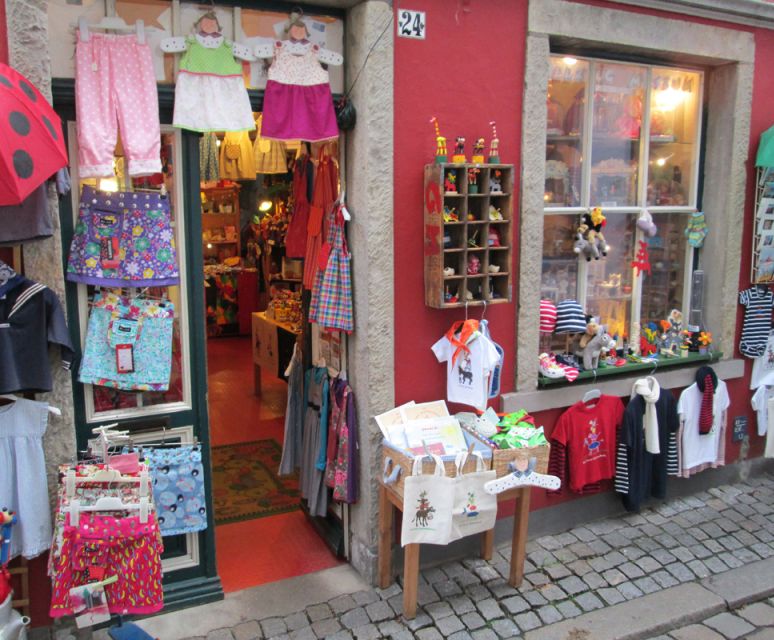
Packhaus Schnoor 2 is another highlight, also traced to the 15th century. A packhaus, by the name alone, pushes your thinking toward storage and commerce, not just residence.
That trade lens is important because Schnoor is not only a romantic maze. It also carried practical city functions. Passing places like Packhaus Schnoor 2 helps you build a more complete picture of who lived here and what daily rhythms likely looked like.
If you tend to overlook economic history when you travel, this stop gently corrects that. You do not need to be a history buff to appreciate it. You just need to listen to how the guide explains what these older, non-church buildings suggest.
Recreated buildings, façades, and why you should look closely
One of the most interesting aspects is that you will see buildings recreated according to historical specifications. You may also spot buildings that now consist only of façades, which once stood elsewhere.
This is a big deal for understanding Schnoor as a living neighborhood, not a theme park. Facades that remain are proof of continuity, but they also raise questions about preservation, relocation, and how cities decide what to keep visible.
So here is your job as you walk: slow down for the details. Look at how the recreated pieces blend with what surrounds them. Notice how the facades relate to the street width and the way lanes curve. A guide can explain the context, but your eyes still do the work.
Even when a building is not fully original, the tour helps you read the layers. That makes the architecture feel more meaningful than simply pretty.
Half-timbered lanes near the Weser: tea room house and craft shops
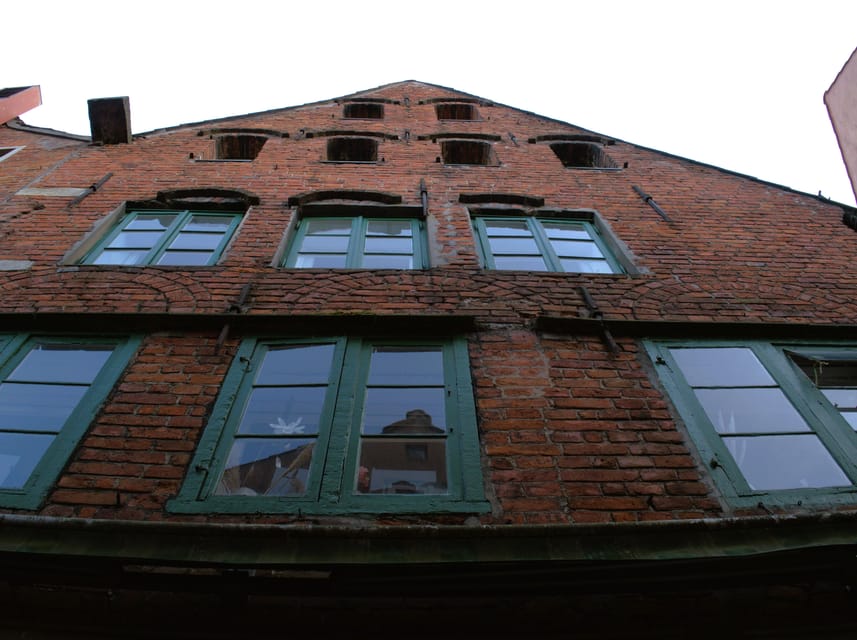
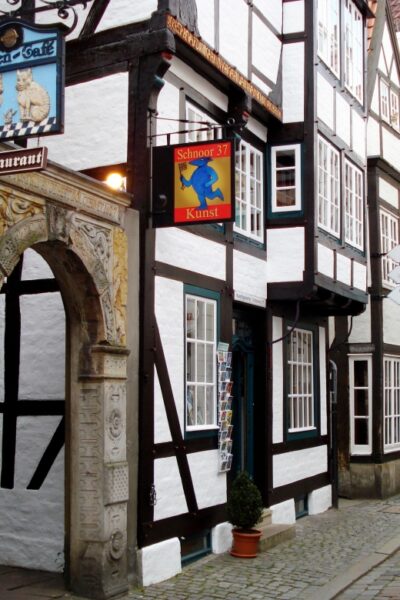
Half-timbered houses show up near the Weser River during the walk. The half-timber framing is one of the reasons Schnoor feels so distinctive, because it visually breaks up long stretches of brick and gives the lanes a human scale.
You’ll also pass a half-timbered house that includes a tea room. That is a fun little way to connect the past to today. A lane that once supported daily city life now supports visitors, conversation, and slow breaks, even if the details have changed.
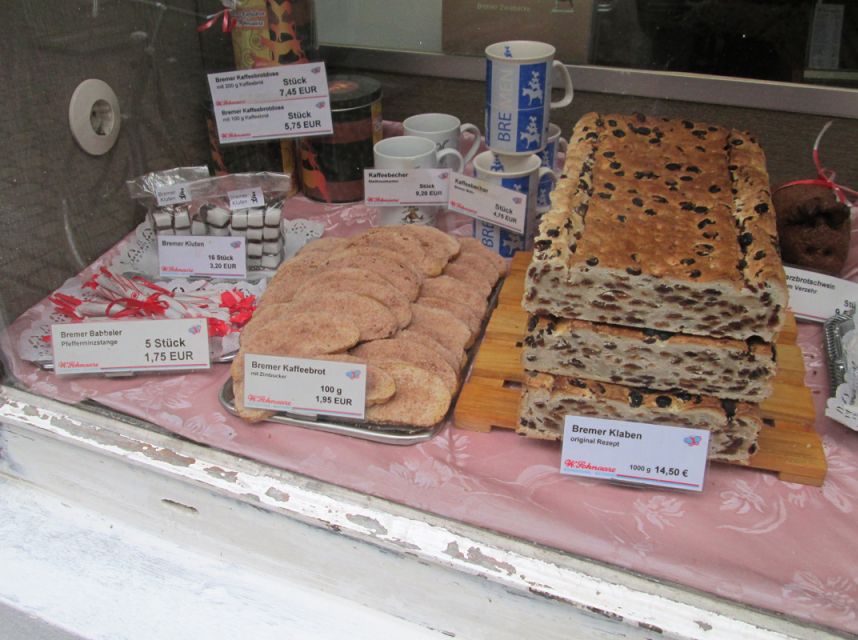
The tour also guides you past goldsmiths and shops selling local handicrafts. This part is practical and enjoyable because it links what you are learning about history to what you can still buy or experience now. If you are the type who likes to take home something made locally, you will probably want to check out the shops after the tour while things are fresh in your mind.
Architecture styles you will notice as the guide walks you through them
Schnoor is described as a mix of classicism and historicism, plus Baroque and Renaissance influences. That might sound like a textbook list, but the walking format makes it easier to spot.
As you go, you’ll see different building styles reflected in shapes, proportions, and façade choices. The guide’s job is to help you notice patterns without drowning you in jargon. You start thinking like a viewer instead of a tourist.
This is also why the hour works. You get enough time for contrasts. If you tried to DIY it without guidance, you could still enjoy the lanes, but you might miss the story behind why the area looks the way it does.
What the guide actually adds, especially with a humor-forward style
The best feedback you see about this tour is about how quickly the time passes and how much you learn. Many people praise the guide’s storytelling and the way facts get delivered with personality.
One guide name that comes up is Sönke. In the reviews, he’s described as funny, Bremen-lovable, and packed with interesting stories around Schnoor. That matters because a 1-hour walking tour lives or dies on energy. If your guide keeps the tone light while explaining the meaningful stuff, you end the hour feeling satisfied rather than rushed.
You should also expect the tour to be guided and lively rather than lecture-heavy. The focus stays on what you see outside, and that keeps things easy to follow.
Price and value: why $14 feels fair for a 1-hour story walk
At about $14 per person for a 1-hour guided tour, the value depends on what you want from Bremen. If you like wandering on your own, Schnoor is visually attractive enough to enjoy without paying for a guide. But if you want context, names, and a clean route through the quarter, this price is a reasonable trade.
You get a structured overview of the district’s timeline, including:
- the 13th-century monastery reference point,
- the 14th-century St. John’s redbrick Gothic landmark,
- 15th-century profane buildings like Haus Schnoor 15 and Packhaus Schnoor 2,
- plus the recreated buildings and remaining façades.
For many travelers, that level of interpretation is the real souvenir. The buildings are there either way. The guide helps you read them.
Practical tips so you enjoy the full hour
A few things will make your walk smoother:
- Wear comfortable shoes. The lanes are narrow and you’ll be doing sustained walking for an hour.
- Bring your camera instincts, but also remember to look up. The details are on façades and building fronts.
- Plan for outside-only views of buildings. You are not getting interior access as part of this tour.
Also, since food and drinks are not included, you can either eat before you go or plan a stop after. If you are sensitive to timing, eat early, then treat this as the focus block for architecture and street life.
If you are traveling in a private group, you may prefer this format because it can feel less rushed. The key benefit stays the same, you still get the guide’s storytelling tied to the street sights.
Who should book this Schnoor walking tour
This tour fits best if you:
- want a quick introduction to Bremen’s Schnoor quarter,
- like architecture and want the names and eras attached to what you see,
- enjoy short guided walks that leave time for wandering afterward.
It may not be ideal if you:
- need wheelchair accessibility, since it is not suitable for wheelchair users,
- want indoor visits or museum-style stops, since buildings are viewed from the outside only,
- prefer tours in a language other than German and would lose too much with spoken German.
If you are a first-time Bremen visitor and you want a “get the lay of the land” moment, this is a strong use of an hour.
Should you book this tour?
Yes, book it if you want your Schnoor time to feel guided, not accidental. The price is modest, the duration is tight, and the focus on specific landmarks, including St. John’s Church and 15th-century profane buildings like Brasilhaus and Packhaus Schnoor 2, gives you real payoff for the time.
Skip it only if outside views are not your thing, or if you need accessibility accommodations that this format does not support. Otherwise, this is an easy win for anyone who enjoys old streets, real architectural variety, and a guide who keeps the stories moving, especially the humor and charm that guides like Sönke are known for.
FAQ
How long is the Bremen Walking Tour of the Historic Schnoor District?
The tour lasts 1 hour.
What is the price per person?
The price is $14 per person.
Where do I meet the guide?
Meet the guide in front of Die Glocke concert hall at Domsheide 6, Bremen, 28195. The guide will have a sign that says Bremen Tour Guide.
Is the tour in German?
Yes, the live tour guide speaks German.
Are buildings shown from the inside?
No. Buildings on this tour are viewed from the outside only.
Does the tour include food and drinks?
No. Food and drinks are not included.
Is a private tour available?
Yes. Private group tours are available if you select that option.
Is the tour suitable for wheelchair users?
No, it is not suitable for wheelchair users.
What should I bring?
Bring comfortable shoes.
What is the cancellation policy?
Free cancellation is available up to 24 hours in advance for a full refund.
Fresh on the arrivals board for Bremen



Historical Tours, compared.
City History Canal Sightseeing Tour on a Motorboat
Read our review →


Browse the lists this tour appears in