
Reviewed · HISTORICAL TOURS
Völklingen Ironworks World Heritage Site: Guided tour of the ironworks site
Factories become monuments at Völklingen. This guided tour turns a UNESCO ironworks site into a clear story of steelmaking, from the blower hall to the blast furnace.
Two things I like a lot are the guided machine explanations and the freedom right after the tour. You get an expert guide who explains how pig iron was produced, then you’re able to wander through the halls, open spaces, and exhibitions on your own.
One consideration: the tour moves pretty briskly. If you like to stop, read every display, or take lots of photos, you might wish you had a little more time with the details.
In This Review
- Key points to know before you go
- Why Völklingen Ironworks Feels Like a Time Capsule
- Meeting the Tour Starts at the Ticket Office Entrance
- From Blower Hall to Blast Furnace, You See the Process in Real Space
- How Pig Iron Production Changed Everything
- Learning the History of Saarland Without Being Lost in Dates
- Ferrodrom Science Center and the Ongoing Link to Industry
- Paradise Garden: From Coking Plant to a Living Retreat
- The Roof-Top Viewing Platform and the One Real Safety Consideration
- Exhibitions Included, So You Can Build Your Own Follow-Up Plan
- Photography, Quiet Reading, and Why the Pace Matters
- Price and Value: Why $25 for a UNESCO Day Ticket Adds Up
- Who Should Book This Tour, and Who Might Not Love It
- Should You Book Völklingen Ironworks With a Guide?
- FAQ
- Where is the Völklingen Ironworks tour located?
- How long is the guided tour?
- How much does the tour cost?
- What does the guided tour include?
- What extra sites or areas are included with the ticket?
- What language is the live guide?
- Where do I meet the guide?
- Is the tour wheelchair accessible?
- Is it suitable for people afraid of heights?
Key points to know before you go
- UNESCO Völklingen Ironworks: one of the best preserved industrial-era ironworks sites in the world
- 2 hours with a live guide who explains old technology and daily working life
- Permanent and special exhibitions included, plus day admission to the whole site
- Ferrodrom Science Center access added to your visit
- Paradise landscape garden open after the guided part, made from the former coking plant
- Roof-top viewing platform exists, so plan carefully if heights bother you
Why Völklingen Ironworks Feels Like a Time Capsule
Völklingen Ironworks is not a museum you pass through in a hurry. It’s an industrial working-world preserved from the heyday of industrialization, with the original halls and machines still there to help you understand what people did and how production worked.
What makes this site special is how complete it feels. It’s described as the only fully preserved ironworks from that era, and it was the first monument from this industrial age to be inscribed on the UNESCO World Heritage List. That matters, because you’re not looking at a few restored pieces. You’re walking inside the production system itself.
More centuries per city block:
- Völklingen: Völklingen Ironworks World Heritage Site Ticket
★ 4.4 · 35 reviews
Meeting the Tour Starts at the Ticket Office Entrance
Your guided tour begins in the entrance area at the ticket office. That sounds simple, but it’s actually useful, especially if you’re trying to time your day well in Saarland.
The tour is live-guided in German. There’s no mention of other languages, so if German is not your strong suit, keep that in mind. Still, the guide’s job is to make the machines and the process understandable, and the setting does a lot of the teaching for you too.
The day admission is part of the value here. Even though the guided portion is about 2 hours, you’re not locked into a short loop. After the tour, you can explore the rest of the grounds and exhibitions at your own pace.
From Blower Hall to Blast Furnace, You See the Process in Real Space
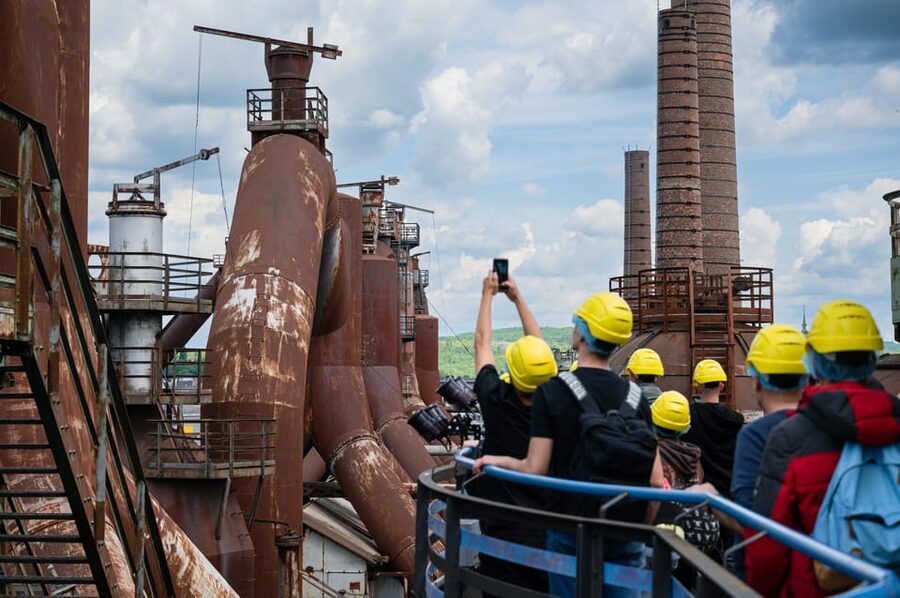
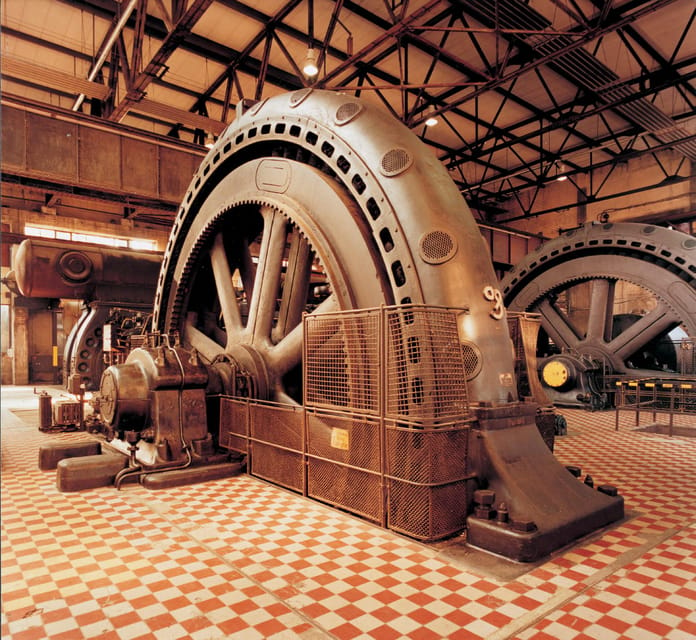
The guided portion is built around the core ironworks areas. You’ll move through impressive spaces and machines, including the blower hall and the blast furnace areas. Seeing them in place is a big part of why this tour works.
The guide helps connect the equipment to the question you should keep in mind: how is pig iron produced? The ironworks weren’t just built for show. They were designed for producing metal at scale, and the layout, machinery, and pipe systems were part of the system that made that possible.
And there’s more going on than just “industrial gadgets.” The tour also touches the human side: how the people who lived and worked in the area fared. That’s one reason I think this tour is more than a technical walkthrough. It gives you context for why the industry shaped life in this part of Europe.
How Pig Iron Production Changed Everything
If you’ve ever seen a diagram of blast furnace production, you’ll notice something. Diagrams are tidy. Real ironworks are not. At Völklingen, you get a feel for the complexity, including the maze of pipe systems and connected machinery across halls and open spaces.
That’s where the guided explanation becomes valuable. The machines from the past can look intimidating, but your guide’s role is to translate the physical structures into the production logic behind them. You’re not just looking. You’re learning how material turns into pig iron.
This is also where you’ll start to understand why the site is such a powerful UNESCO example. It preserves the environment of industrial work, not only a single machine. When you can see the whole flow of production, the industrial era stops being an abstraction.
Learning the History of Saarland Without Being Lost in Dates
The tour is framed around the eventful history of the Saarland in the heart of Europe. You’ll hear stories about how the ironworks fit into the broader region, not just isolated facts about steelmaking.
This historical framing is a practical win. Industrial history can get stuck in dates and terms. Here, the guide points you toward what the machinery and buildings meant in daily life and in the local economy.
One theme to watch for is the contrast between the heavy industrial past and the later repurposing of parts of the site. That contrast leads directly into one of the most interesting parts of your visit, the former coking plant turning into the Paradise.
Ferrodrom Science Center and the Ongoing Link to Industry
Your ticket includes access to the Ferrodrom® Science Center. That’s a strong addition if you like explanations that go beyond the ironworks themselves.
Because the details of what you’ll see inside Ferrodrom aren’t spelled out here, I’d treat it as a companion experience. The ironworks give you the real machines and space. Ferrodrom gives you another way to connect the science and processes to what you just saw.
If you want to get the most out of it, do Ferrodrom after the guided tour. That way, you can turn what the guide showed you into questions, then look for answers inside the science center.
Paradise Garden: From Coking Plant to a Living Retreat
The best example of “industrial past, nature present” here is the Paradise landscape garden. It formed from the former coking plant, which is described as the former hell of the coking plant, now reclaimed.
What I like about this part is the way it reframes the site. You’re not only staring at steel and soot. You’re seeing how reclaimed parts of the complex can support diverse flora and fauna, and you’re watching how people decided to reuse space rather than erase it.
It’s also a good emotional reset after the furnace areas. A guided tour through production spaces can feel heavy, and then you step into a garden setting that still belongs to the same industrial story.
The Roof-Top Viewing Platform and the One Real Safety Consideration
The site includes a viewing platform above the rooftops of Völklingen, and it’s part of the attractions you can reach after your guided portion. The upside is obvious: higher viewpoints help you understand layout and scale.
The downside is also important. The activity notes it is not suitable for people afraid of heights. So if you know you get anxious around heights, skip the roof-top stop and stick to ground-level areas and exhibitions where you feel steady.
Exhibitions Included, So You Can Build Your Own Follow-Up Plan
Your ticket includes access to all permanent and special exhibitions. That’s a big deal because it turns a guided tour into a full day of learning without needing to book extra tickets for museum time.
Here’s how I’d use this, practically. After the tour, pick one theme you care about most, then let the exhibitions support it. If you’re into technology, spend time on the science and process connections. If you prefer people and society, spend more time on how industrial life shaped the region.
Also, keep your expectations realistic. A guided tour shows you the essentials of a huge site. The rest is for you to explore, which is exactly the right setup here because the ironworks has numerous halls, open spaces, and an interesting pipe-system maze.
Photography, Quiet Reading, and Why the Pace Matters
I’d go into this tour knowing that it’s informative but can feel fast. One drawback that comes up is limited opportunities for photography or reading during the guided part.
So if you want photos, do two things. First, focus on getting a few strong shots of key machinery while the guide is describing them. Second, plan to take more photos after the tour, when you can move at your own pace.
If you love reading, consider how much text you can realistically absorb during a 2-hour walkthrough. A better strategy is to use the guide to understand what you’re looking at, then come back to displays later for calmer reading time.
Price and Value: Why $25 for a UNESCO Day Ticket Adds Up
At about $25 per person for a 2-hour guided tour plus day admission, this can be good value, especially because the ticket includes more than the guide.
You’re paying for:
- a guided tour through the UNESCO World Heritage Site
- access to permanent and special exhibitions
- access to the Ferrodrom® Science Center
- access to the Paradise landscape garden
In other words, your money buys time with context, then time for self-guided exploration. That blend is usually what makes museum-style experiences worth the cost.
If you’re only interested in a quick highlights stop, it might feel like more than you need. But if you want a guided start and then room to roam, the structure here fits well.
Who Should Book This Tour, and Who Might Not Love It
This is a great fit if you like:
- industrial history and real-world machines
- UNESCO sites with strong preservation
- guided explanations that connect technology to people
- pairing history with a nature-focused reclaimed garden
It may not fit as well if you strongly dislike heights or get anxious around roof-top viewing areas. The tour is also in German, so language comfort matters for fully absorbing the guide’s explanations.
It’s also a smart choice if you want a structured beginning to a larger site. The guided part gives you orientation fast. Then you can explore the rest at your own speed without wondering where to go next.
Should You Book Völklingen Ironworks With a Guide?
I’d book it if you want your visit to feel “click” fast. The guide helps you make sense of what you’re seeing, from blower hall and blast furnace areas to the broader story of Saarland and the human side of industrial work. Then the included time for exhibitions, Ferrodrom, and Paradise lets you shape the day after you understand the basics.
I would not book it only if you know you need lots of slow reading and lots of photo time during the guided portion. The pace can be tight. In that case, you might still enjoy the site, but you should plan to save your best time for self-exploration after the tour.
If you’re comfortable with German narration, not afraid of heights, and you want a UNESCO ironworks visit that actually teaches, this is an easy yes.
FAQ
Where is the Völklingen Ironworks tour located?
The Völklingen Ironworks World Heritage Site is in Saarland, Germany.
How long is the guided tour?
The guided tour duration is 2 hours.
How much does the tour cost?
The price is listed as $25 per person.
What does the guided tour include?
It includes a guided tour of the Völklingen Ironworks World Heritage Site, day admission, and access to all permanent and special exhibitions.
What extra sites or areas are included with the ticket?
Your ticket includes access to the Ferrodrom® Science Center and access to the Paradise landscape garden.
What language is the live guide?
The live tour guide is German.
Where do I meet the guide?
The meeting point is in the entrance area at the ticket office, where the guided tour starts.
Is the tour wheelchair accessible?
Yes, the tour is listed as wheelchair accessible.
Is it suitable for people afraid of heights?
No, it is not suitable for people afraid of heights.
Fresh on the arrivals board for Volklingen
Historical Tours, compared.
City History Canal Sightseeing Tour on a Motorboat
Read our review →

Browse the lists this tour appears in