
Reviewed · EVENING EXPERIENCES
Ulm: Evening stroll through the old town
Nightfall turns Ulm into a storybook. This guided evening walk is interesting for one simple reason: you see how Ulm Minster anchors the city, then you wind into the fishermen’s and tanners’ quarter where the medieval streets feel made for nighttime photos. Two things I really like are the exterior focus on Ulm Minster’s construction and the romance of the riverside quarter with alleys, bridges, and footbridges. One possible drawback to plan for is language: the live guide speaks German, so if you were counting on English, you may struggle to catch the details.
You start in the minster square and begin with context. The tour explains how Ulm Minster was built, including what makes its tower so famous. Then you move north of Ulm Minster and into the newer parts of Ulm where architecture plays a clever game: Medieval meets modern.
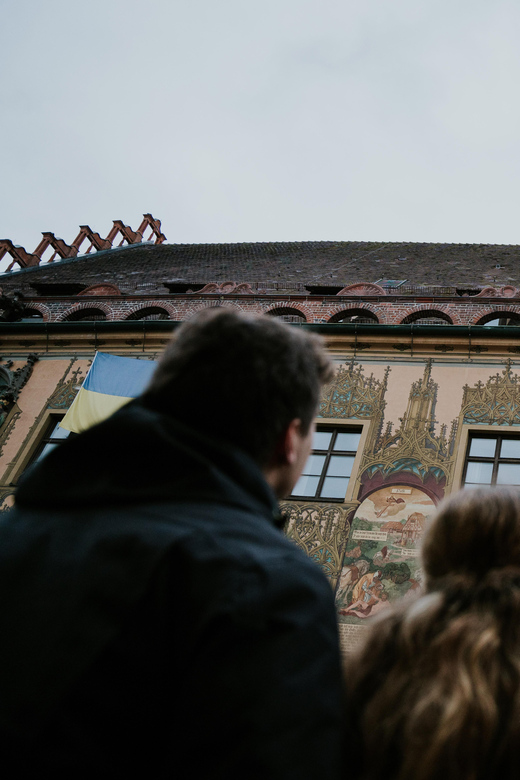
Along the way, you’ll hit major landmarks without it feeling like a checklist. The Ulm Town Hall is close by, and you get to focus on its big visual features, including a Renaissance fresco cycle and an astronomical clock with zodiac signs and moon phases. You also see the leaning Butcher tower, then follow the city wall for a more layered sense of how Ulm grew over time.
In This Review
- Key things to notice on this Ulm evening stroll
- Why an evening walk in Ulm feels different
- From minster square to Ulm Minster’s construction details
- Moving north, then into “Medieval meets modern”
- Ulm Town Hall: fresco cycle and the astronomical clock
- Leaning Butcher tower and the city wall walk
- Fishermen’s and tanners’ quarter at night, including the Crooked House
- Timing, comfort, and what to bring for a 1.5-hour evening
- Price and value: about $14 for a guided 1.5-hour evening
- Who should book this Ulm evening tour
- A quick note on guides, language, and group experience
- Should you book this evening stroll in Ulm?
- FAQ
- Where does the Ulm evening stroll start?
- How long is the tour?
- What are the main highlights of the evening route?
- Is it an evening tour?
- What language is the live guide?
- How much does it cost?
- Is the tour guided?
- Can I cancel and get a refund?
- Is there a pay later option?
Key things to notice on this Ulm evening stroll
- Starting point at minster square: you get oriented fast, with Ulm Minster already working as your visual anchor.
- Ulm Minster construction stories: even on an exterior walk, you learn what makes the tower world-famous.
- Medieval meets modern architecture contrast: newer buildings near the historic core make the old sights feel sharper.
- Ulm Town Hall highlights: focus time on Germany’s largest fresco cycle of the 16th century and an astronomical clock with zodiac and moon phases.
- Leaning Butcher tower plus city wall: you see “quirky” and “defensive” Ulm in the same route.
- Fishermen’s and tanners’ quarter in evening light: small alleyways, bridges, and footbridges, with the Crooked House nearby.
Why an evening walk in Ulm feels different
Ulm is one of those cities where night changes the mood, not just the lighting. When buildings are illuminated, stonework and street curves become easier to read, so the medieval parts feel less abstract and more human-scale.
This tour works because it is built for a slow, steady pace over about 1.5 hours. You’re not sprinting from stop to stop. Instead, you get a guided route that layers meanings, from how Ulm Minster was constructed to how craftspeople’s neighborhoods evolved, then ends in the quarter that feels most cinematic.
Also, “evening” matters for atmosphere. The fishermen’s and tanners’ quarter, with its tight lanes and bridges, tends to feel especially romantic after dark because shadows and light bring out the street texture.
More German evenings after the offices close:
- Hamburg: 90-Minute Evening Lights Harbor Cruise
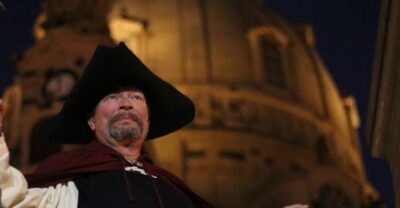
★ 4.5 · 7,728 reviews - Dresden: The Original Night Watchman Tour in Lantern Light
★ 4.6 · 6,653 reviews
From minster square to Ulm Minster’s construction details
Your walk starts at minster square, and that is a smart move. Standing there, you get a real sense of how dominant Ulm Minster is in the city’s layout. The tour keeps the experience exterior-focused, so you’re not stuck inside waiting for your attention to catch up.
The highlight here is the story of Ulm Minster’s construction and what makes its tower the highest church tower in the world. Even if you’ve seen big churches before, this one hits differently because the guide ties the architecture to its place in Ulm’s identity.
What I like about this approach is that it helps you look. Instead of just saying it is impressive, you learn what to look for while walking around the square area. You’ll likely start noticing proportions, vertical lines, and the way the tower visually organizes the streets around it.
Practical note: since it is an outdoor evening route, bring a layer. Even in summer, evenings in this region can cool down, and you’ll feel it during stops.
Moving north, then into “Medieval meets modern”
After you leave the minster area, you shift into neighborhoods north of Ulm Minster and then toward the newer city centre. This is where the tour quietly does something useful: it teaches you to read a city as layers, not as one frozen “old town” postcard.
The motto for this part is Medieval meets modern, and the route matches it. You see several new buildings constructed in recent years and decades, located in the heart of Ulm. For me, the value here is contrast. When you stand near modern façades while still picturing the old town walls and towers from earlier, Ulm’s character becomes easier to understand.
This contrast can also help you travel smarter. If you are someone who usually skips “modern” districts, don’t on this one. The guide’s framing helps you see new architecture as part of Ulm’s ongoing story, not a distraction from the medieval bits you came for.
Ulm Town Hall: fresco cycle and the astronomical clock
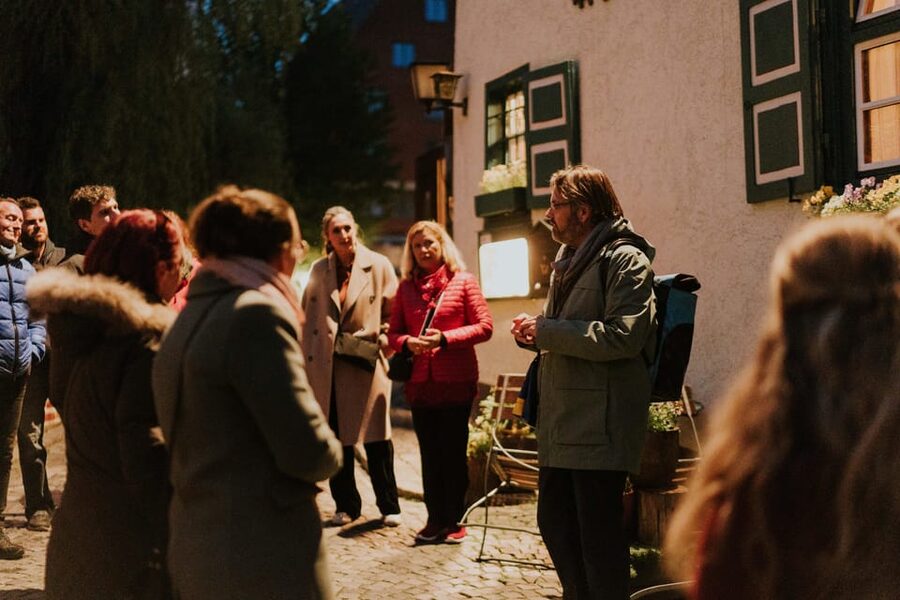
One of the best places on the route is the Ulm Town Hall, right near the city centre action. The building itself is an early Renaissance structure, and you get time to focus on two major attractions.
First is a fresco cycle from the 16th century. You’ll hear that it is probably Germany’s largest fresco cycle of that era. That is the kind of fact that could sound like trivia, but the guide’s explanations tend to make it feel more grounded. It becomes a window into what civic spaces meant back then, and why a city might proudly show its art in the heart of administration.
Second is the astronomical clock with zodiac signs and moon phases. This is the part I always enjoy on guided tours because it turns a clock into a mini-science display with a medieval worldview. Even if you’ve never been into astronomy, the zodiac imagery and moon phases make you look twice, and the evening setting gives you a chance to take it in calmly.
If you like details, this stop is a good payoff. If you prefer quick hits, it still works because it is anchored by two concrete, visible features, not just general commentary.
Leaning Butcher tower and the city wall walk
As you continue, you pass the leaning Butcher tower and then move toward the city wall. This section shifts the focus from “pretty views” to how a city defends itself and grows around landmarks.
The Butcher tower stands out because it is literally leaning, which makes it memorable in a way that a straight-on view never could. When a guide points out why it matters visually and how it fits the urban story, the tower stops being a curiosity and becomes a sign of how Ulm’s built environment has changed over time.
Then the city wall adds another layer. City walls are easy to understand when you are walking along them because you can feel the geography under your feet. You start to see why certain neighborhoods cluster where they do, and how the old layout shaped movement through the town.
This portion is also a practical break. After the Town Hall stop, it’s helpful to have an “in-between” stretch where the commentary guides you while you walk. You won’t feel like you are waiting for the next big attraction, because the wall and towers keep the visuals moving.
Fishermen’s and tanners’ quarter at night, including the Crooked House
This is the romantic part of the route. Things get really scenic in the fishermen’s and tanners’ quarter, with its small alleyways, bridges, and footbridges. In the evening, that network of passages becomes part of the experience, not just a backdrop.
What I appreciate here is how the tour frames the quarter. It used to be a craftsmen’s area that felt shabby, but today many buildings are top-restored. That restoration matters because it changes how you interpret the space. Instead of imagining how it used to be, you can now see the craftsmanship and the street layout as it stands.
The Crooked House fits perfectly into this ending mood. The guide highlights it as the world’s most leaning hotel according to the Guinness Book of World Records. It’s the kind of detail that makes the place feel playful while still being tied to local architecture and identity.
If you like walking routes that feel like a story, you’ll enjoy the way the tour lands in this quarter after covering Ulm Minster, the civic sights, and the defensive walls. By the time you reach the bridges and tight lanes, the medieval feel no longer feels random. It feels earned.
Timing, comfort, and what to bring for a 1.5-hour evening
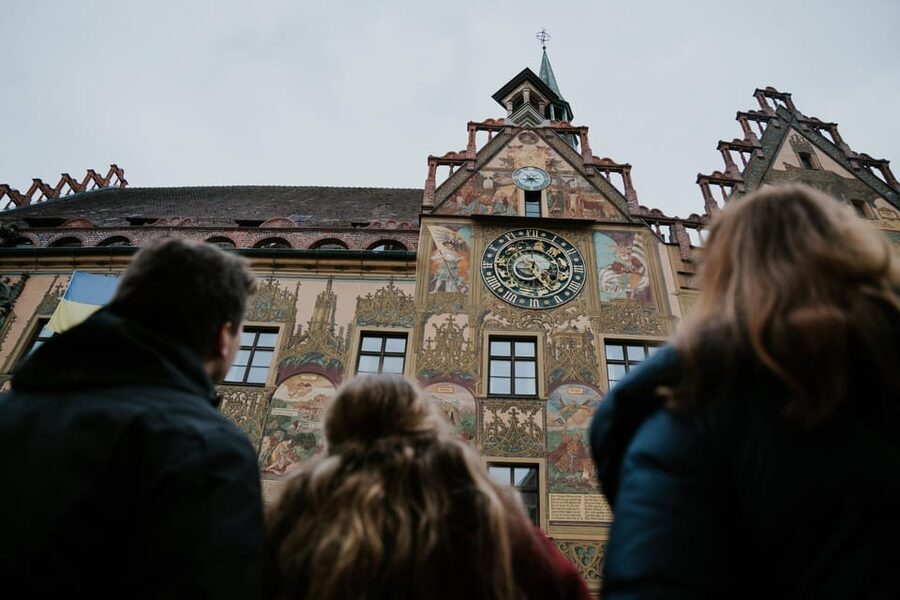
The tour lasts 1.5 hours, and that duration is ideal for an evening. Long enough to cover several major sights, short enough that you don’t end up exhausted before you’ve had dinner.
Because this is a walking tour in the old parts of Ulm, comfortable shoes matter. Expect sidewalks and turns, and expect the quarter with alleyways and footbridges to be more stop-and-look than “breeze through.”
I also suggest a light layer even if the day was warm. Evening outdoor walking can cool quickly, and you’ll likely want your hands free for photos and your focus on the guide’s explanations.
Finally, bring your expectations in line with the language. The tour guide speaks German. If you speak only a little German, you can still enjoy the visuals, but the most detailed interpretation will be harder to follow.
Price and value: about $14 for a guided 1.5-hour evening
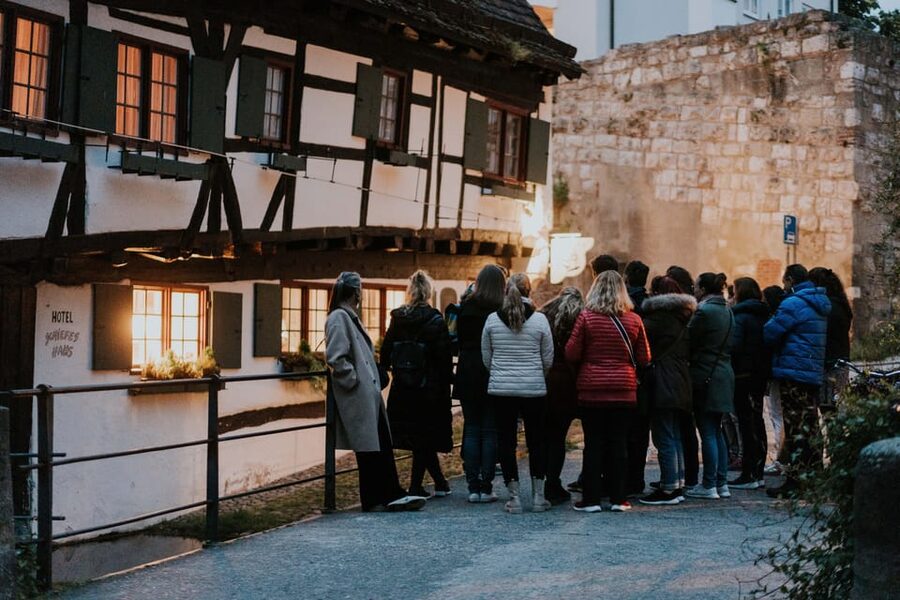
At $14 per person, this is priced like a value-first city stroll. The key reason it feels fair is that you are paying for a professional guide and a route that strings together multiple “anchor” sights in one coherent loop.
For example, you get exterior learning about Ulm Minster’s world-famous tower, a civic stop at the Town Hall with its fresco cycle and astronomical clock, and then a more atmospheric landing in the fishermen’s and tanners’ quarter with the Crooked House. Seeing all of that on your own is possible, but the guide’s framing helps you understand what you are looking at, and that’s the difference between wandering and getting meaning.
There’s also timing value. An evening tour can save you from spending one extra daytime block in the city. With only 1.5 hours, you can still plan a relaxed meal after.
Who should book this Ulm evening tour
I’d book this if you:
- want a first-time friendly orientation to Ulm, centered on Ulm Minster
- like architecture and urban layers, not just one museum stop
- enjoy guided interpretation, especially when it connects landmarks to how a city worked
- want the medieval quarter vibe without committing to a longer half-day
This tour may be less ideal if:
- you need an English-language guide, since the tour is German
- you dislike walking in old-town streets or want a slow tram-style pace, since it is still a strolling route with multiple stops
A quick note on guides, language, and group experience
The tour is run by Ulm/Neu-Ulm Touristik GmbH with a live German guide. Based on what I’ve seen praised, guides can be funny and responsive to questions, which makes the time feel less like a lecture and more like a guided chat with good local context.
Still, language is your biggest variable. One group found it difficult when they expected English support. So, if German is not your thing, go into it knowing you may catch fewer details and lean more on the visuals and the illuminated streets.
Should you book this evening stroll in Ulm?
I think this is a strong pick for most people visiting Ulm for a short stay, especially if you want a guided evening route with clear highlights: Ulm Minster, the Town Hall with its fresco cycle and astronomical clock, the leaning Butcher tower, the city wall, and the fishermen’s and tanners’ quarter with the Crooked House.
It also has an excellent overall rating of 4.7, based on 41 reviews, which usually tells you the experience delivers consistently.
The decision comes down to language fit and your walking comfort. If you are comfortable with German or okay following a tour that is more visual than verbal, book it. If you strongly need English, you should rethink your plan or pair it with independent time in the city so you can read what matters to you.
FAQ
Where does the Ulm evening stroll start?
It starts at minster square.
How long is the tour?
The tour duration is about 1.5 hours.
What are the main highlights of the evening route?
You’ll see an illuminated old town area, learn about Ulm Minster, and visit the fishermen’s and tanners’ quarter. You’ll also pass by sights like the Ulm Town Hall, including its fresco cycle and astronomical clock.
Is it an evening tour?
Yes, it is an evening stroll.
What language is the live guide?
The live tour guide speaks German.
How much does it cost?
The price is listed at $14 per person.
Is the tour guided?
Yes, it includes a professional tour guide.
Can I cancel and get a refund?
Free cancellation is available up to 24 hours in advance for a full refund.
Is there a pay later option?
Yes, you can reserve now and pay later, keeping your plans flexible.
Fresh on the arrivals board for Ulm
Evening Experiences, compared.

The Original Night Watchman Tour in Lantern Light
Read our review →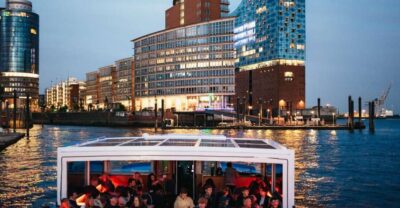

Munich Ghosts and Spirits Evening Walking Tour
Read our review →Browse the lists this tour appears in