
Reviewed · BIKE TOURS IN MUNICH
Superior E-Bike Tour incl. 3rd Reich Sites & a beer Garden Stop
Munich has a way of making the past feel close. This e-bike tour strings together major Third Reich sites with high-impact stops, good pacing, and time to ask questions while you ride. I especially like how it uses electric assist to cover big distances without turning your day into a leg-burning sprint, and I love that the guide explains the why behind what you see, not just the what.
One possible drawback: you need to feel comfortable riding a bike and stopping safely when the group pauses for photos and stories, because there is some street time plus a few longer stretches.
In This Review
- Key points that make this tour worth your time
- Munich by e-bike: why this 5-hour format works
- Marienplatz start: helmets on, then off you go
- Odeonsplatz and Feldherrnhalle: walking the 1923 turning point
- Max-Joseph-Platz: royal grandeur next to big political stages
- Königsplatz: when art space turns into propaganda space
- Schwabing by electric assist: from ideology to daily life
- Haus der Kunst: one building, two eras of cultural control
- St-Jakobs-Platz and the Jewish heart of Munich
- English Garden and the beer garden stop: recharge the right way
- How the guide keeps it moving, without watering it down
- Price and value for an e-bike history day at $93.92
- Should you book this Third Reich e-bike tour?
- FAQ
- How long is the e-bike tour in Munich?
- What is the meeting time for the tour?
- Is the tour guided and in English?
- What is included in the price?
- Are food and drinks included?
- Where does the tour start and end?
- How big is the group?
- What should I wear or bring for the tour?
- Can I cancel and get a full refund?
Key points that make this tour worth your time
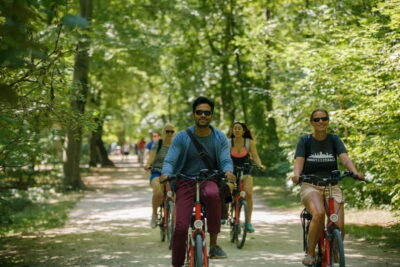
- Electric assist keeps the ride easy while still letting you move past key sites faster than walking
- Third Reich context on the street as you pedal, including stops tied to the 1923 Beer Hall Putsch area
- Major Munich highlights mixed in with darker sites, like the English Garden and major squares downtown
- Small group size (up to 14) makes it easier to hear the guide and ask questions
- A beer garden break in a classic Munich setting, with snacks and drinks on your own
Munich by e-bike: why this 5-hour format works
This is a sweet spot tour. At about five hours, you get serious history without spending your whole day indoors or doing the slow shuffle between far-apart sights. The e-bike matters because Munich streets can add up fast, and the electric assist lets you stay focused on the story instead of fighting your legs.
It also helps that the tour is designed around short photo and reflection moments, then real riding. You start downtown, get your bearings, and then your guide keeps the narrative going as the route shifts from grand royal squares to the spaces where Nazi power and resistance played out in public.
And yes, you’ll be on a bike the whole time, which is a big part of the value. Even with frequent stops, the momentum is what makes it feel like you are seeing the city, not just lining up at monuments.
More Beer & Pub Tours in Munich
- Bavarian Beer and Food Evening Tour in Munich
★ 4.5 · 1,575 reviews - Classic Mike’s Bike Tour daily @ 11.30 incl Beer Garden & Surfers
★ 5.0 · 1,246 reviews - Munich: Beer and Food Tour with Dinner & Oktoberfest Museum
★ 4.7 · 1,086 reviews
Marienplatz start: helmets on, then off you go
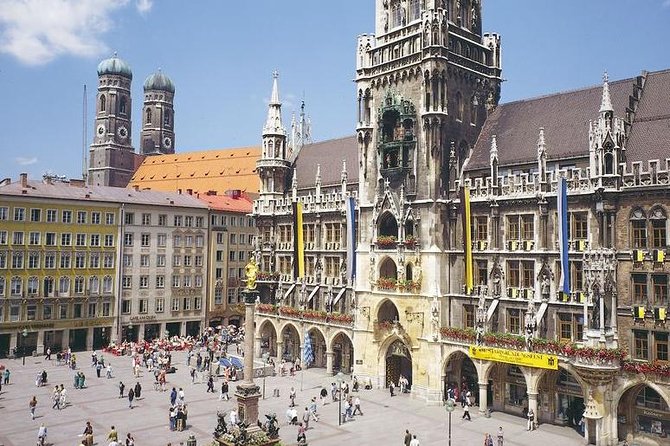
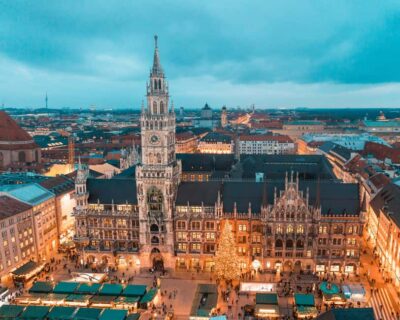
You begin at Marienplatz, the busy central square where you get a broad overview first. Cycling is not allowed there, so you start with a short orientation on foot, then walk to the bikes to begin.
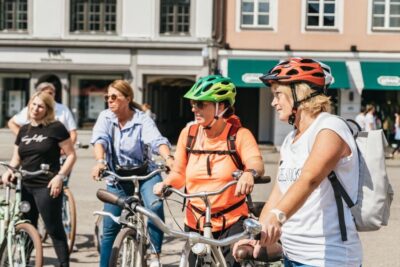
This first stretch is useful. It sets expectations for the pace and makes the next part easier because you are not trying to figure out where to ride while also absorbing history. You are also given a helmet, which is a small thing that makes the whole day feel more “proper tour” than casual sightseeing.
Practical tip: wear shoes you trust for quick stops and uneven pavement. The tour notes call for comfortable clothes and shoes plus rain gear. That matters in Munich, because conditions can change fast even when the forecast looks fine.
Odeonsplatz and Feldherrnhalle: walking the 1923 turning point
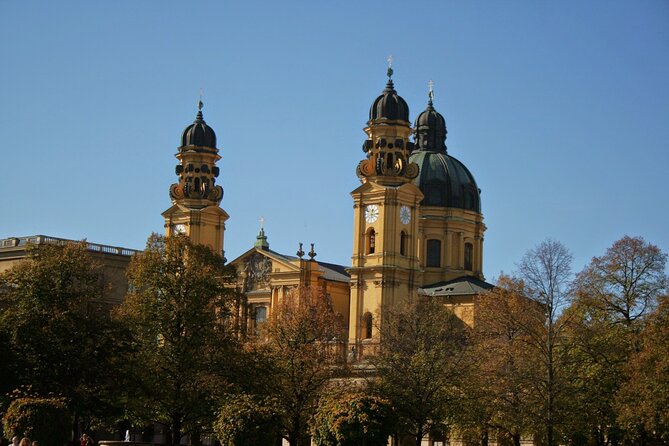
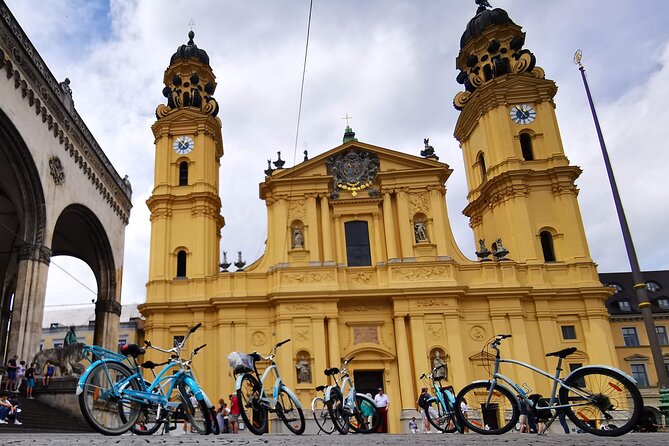
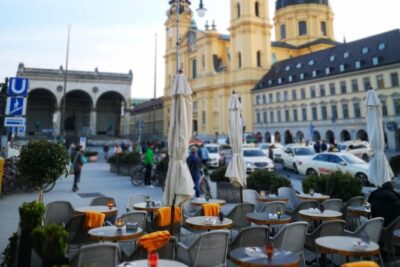
Odeonsplatz is the kind of square that looks pretty from far away and heavy when you pay attention. The famous architecture frames the story you are hearing, including the Theatinerkirche and the Feldherrnhalle, with its loggia style inspired by the Loggia dei Lanzi in Florence.
Then you hit the moment that makes this area unforgettable: the failed Beer Hall Putsch in 1923. The confrontation connected to the Nazis and Bavarian police is tied to the Feldherrnhalle, where fatalities left a lasting mark on the square.
What I like here is how the guide keeps it anchored to place. You are not just hearing names. You are standing where power was performed in public and where violence changed the course of events. The tour also builds in a chance to reflect quietly at poignant memorials linked to those who resisted the Third Reich, which helps this part land with the right tone.
Consideration: this is emotionally serious terrain. If you want a more lighthearted sightseeing day, you might find the pace heavy even though the ride itself is easy.
Max-Joseph-Platz: royal grandeur next to big political stages
From Odeonsplatz, the route flows toward Max-Joseph-Platz. This square is framed by major cultural buildings and the Residenz, Munich’s former royal palace complex. You also pass the Bavarian State Opera, which gives you that unmistakable Munich feeling of art, performance, and public life.
The value here is contrast. The Third Reich story is real and grim, but Munich also shows how grand civic spaces can become stages for political messaging. By seeing royal and cultural landmarks in the same day, you understand the setting Nazis tried to exploit: public visibility, attention, and legitimacy.
If you love architecture, this stop rewards you. The open space makes it easy for your guide to point out details and explain how the city’s layout helped shape public events.
Königsplatz: when art space turns into propaganda space
Königsplatz was commissioned in the 19th century to showcase classical Greek architecture. You get the Glyptothek and the State Collection of Antiquities around the square, which means you are looking at a designed cultural stage.
Then your guide shifts the lens to the Nazi era. During the Third Reich, this same area was used for Nazi rallies and propaganda events. Nearby was the Brown House, Nazi Party headquarters, which adds another layer to the route.
This is one of the stops where e-bike touring really helps. You can move through the city fast enough to connect multiple sites without losing the thread. And because you keep riding, you see how different parts of Munich were pulled into the same political machine.
Practical tip: take a breath here. The details are visual, but the meaning is mental. Even a short pause helps you process what it means when spaces meant for culture become vehicles for coercion.
More Bike Tours in Munich


Schwabing by electric assist: from ideology to daily life
Then the route swings into Schwabing, a district with an artistic reputation that stretches back before the 20th century. You hear about how it was incorporated into Munich, how it became a magnet for artists, writers, and intellectuals, and how names like Wassily Kandinsky, Paul Klee, and Thomas Mann are tied to that creative pull.
This part of the day works because the mood changes. After heavy places connected to Nazism, Schwabing gives you a sense of what Munich life looked like when politics was not the only topic. It also helps you understand how ideology can collide with normal culture and everyday street life.
You’ll notice today’s Schwabing has a lively, trendy vibe with cafes and shops. That is useful for practical travelers, because it hints at where you can wander after the tour if you want to keep the day going without another long commute.
Haus der Kunst: one building, two eras of cultural control
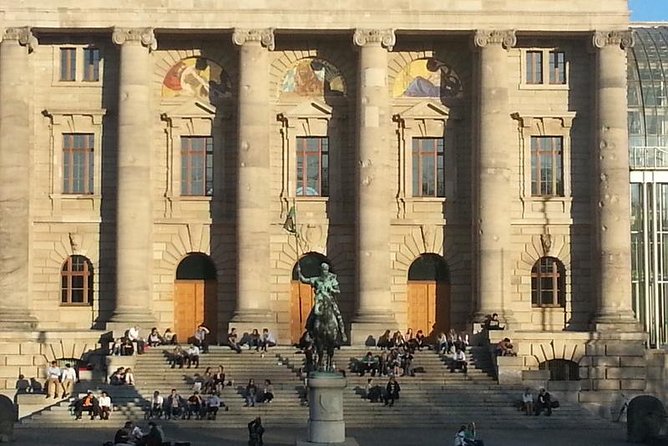
Haus der Kunst is one of the key stops because its story is built into the walls. It was commissioned under Adolf Hitler and opened in 1937 as the House of German Art. The purpose was to show art deemed acceptable by the Nazi regime while attacking so-called degenerate art.
During World War II, it was used for other functions, including storage and an officers’ club. After the war, it became a museum for international contemporary art, part of Munich’s cultural revival.
This is where your guide’s pacing really matters. The building itself is dramatic, but the point is how the same space shifts roles depending on who controls culture. You get a chance to see that history is not only about events. It is about institutions too.
If you like modern art and want context for how institutions change, this stop can be extra satisfying, because it connects the darker “what was” with the contemporary “what is.”
St-Jakobs-Platz and the Jewish heart of Munich
A big part of this tour is making sure you do not only focus on Nazi leaders and their power centers. You cycle toward St-Jakobs-Platz, described as the Jewish heart of Munich, and the site of the new Jewish Synagogue.
Even with limited time, this stop helps rebalance the day. It turns the story toward communities that suffered, survived, and rebuilt. Your guide also uses quiet reflection moments in places tied to resistance, and that pairs well with ending this section at Jewish landmarks.
Practical note: this is not just a photo stop. The narrative gives you a fuller picture of how Munich’s identity was shaped by multiple communities, not only by the ideology that ruled during the Third Reich years.
English Garden and the beer garden stop: recharge the right way
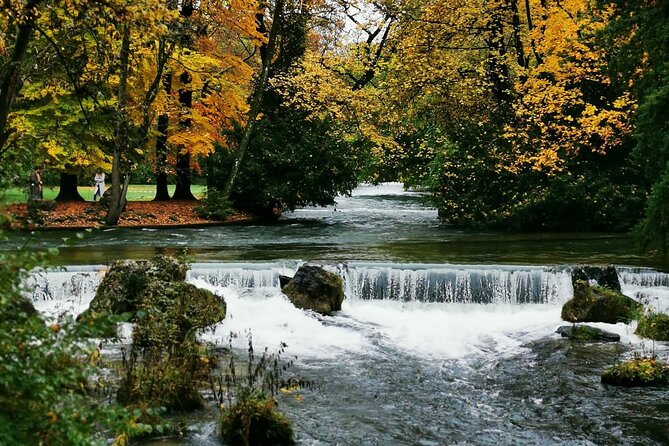
After the downtown core and the heavy memorial moments, you head to the Englischer Garten, one of the world’s largest urban parks. The scale is part of the point. It is larger than New York City’s Central Park, and it is designed in an English landscape style despite the German name.
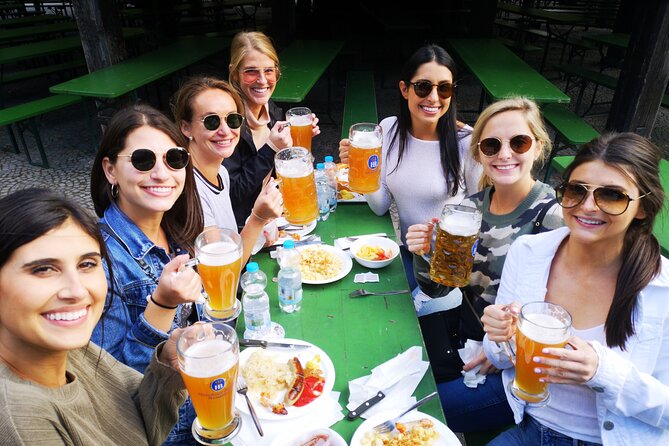
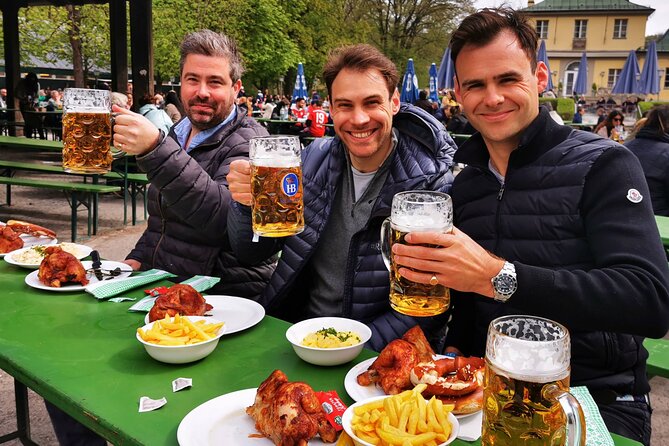
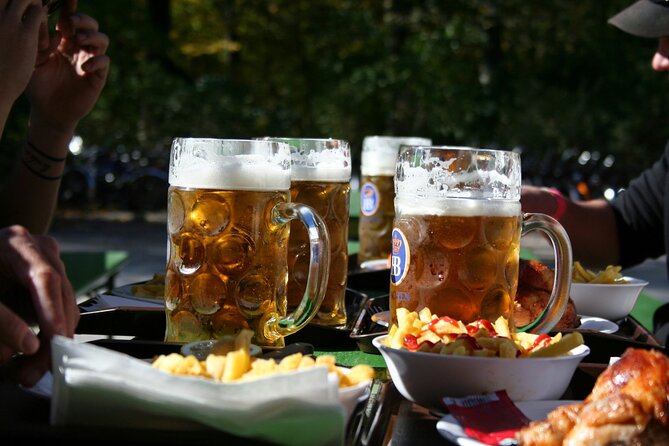
This is where you get a well-timed reset. The tour includes a traditional Munich beer garden stop for snacks, with food and drinks not included unless specified, so you choose what you want. That works well because beer gardens are part of Munich culture, but you control the budget and what you eat.
The park also has multiple attractions your guide can point out. You might see the Chinese Tower and its beer garden, learn about the Eisbach Wave where surfers ride the current, and get views from the Monopteros, a Greek-style temple.
Even if you do not hop off to explore deeply, you get something valuable: a sense of how locals use green space. That makes the city feel like a living place again, not only a museum of the past.
If weather is good, this is the moment to ask for quick suggestions from your guide on where to go next, because the day is long enough that a smart follow-up can turn a half-day tour into a full memory.
How the guide keeps it moving, without watering it down
One theme that really comes through is how the guides handle tone. Even with serious content, the experience stays upbeat and well paced. Names you may hear during the tour include Simon, Will, Chris, and Jack, and each of them is described as friendly and focused on explaining events clearly.
That matters because Third Reich sites can turn into either a lecture or a blur. Here, your guide uses the bike time to keep the story coherent, so you can ask questions while you ride. That approach helps you connect the big events, like the 1923 Beer Hall Putsch, to the physical spots tied to them.
Also, the tour caps at 14 people. I like that because it improves the flow at stops. Less crowding means more hearing the guide and better chances to ask follow-up questions.
Quick self-check before you go: if you are not confident riding, or you do not understand international bike and street signals, you might want to practice basics ahead of time. The tour format depends on you cooperating in motion.
Price and value for an e-bike history day at $93.92
At about $93.92 per person for roughly five hours, this tour is priced like a serious guided experience, not a casual city walk. The real value is the combination: a professional guide, e-bike and helmet included, and a route that strings together multiple major sites across different neighborhoods.
If you were to replicate this yourself, you would spend money on a bike rental, then still need a guide to connect the dots between locations. Here, the guidance is part of what you are paying for, and it saves time. Munich is big enough that five hours is both short and long, depending on how you travel. The e-bike makes that time work.
Also, the tour is offered in English and uses a mobile ticket, which keeps friction low. If you like planning your days with fewer unknowns, this format fits.
Should you book this Third Reich e-bike tour?
Book it if you want a guided Munich day that mixes major sights with real context, and if you like learning while moving through the city. The route covers major squares, Feldherrnhalle and related 1923 events in the public space around Odeonsplatz, Haus der Kunst’s Nazi-era cultural role, Jewish landmarks at St-Jakobs-Platz, and a proper park and beer garden break in the Englischer Garten.
Skip or consider an alternative if you dislike biking or you want a history day with no street riding. This is not a slow walking tour. Even though the electric assist makes it easier, it is still an active format with pauses.
If you are the kind of traveler who likes asking questions and connecting what you see to what happened, this is a strong choice for a first or second day in Munich.
FAQ
How long is the e-bike tour in Munich?
The tour lasts about 5 hours.
What is the meeting time for the tour?
The start time is 9:30 am.
Is the tour guided and in English?
Yes. It includes a professional guide, and it is offered in English.
What is included in the price?
The tour includes a professional guide and the use of a bike and helmet.
Are food and drinks included?
Food and drinks are not included, unless specified. The beer garden stop includes snacks, with your own cost for what you order.
Where does the tour start and end?
It starts at Munich Stories – Stadtführungen München, Marienplatz 15, 80331 München. It ends at Mike’s Bike Tours & Rentals at the corner of Hochbrückenstrasse and Bräuhausstraße, 80331 München.
How big is the group?
The tour has a maximum of 14 travelers.
What should I wear or bring for the tour?
Wear comfortable clothes and shoes, and bring rain gear. Sunscreen is recommended in summer.
Can I cancel and get a full refund?
Yes, you can cancel for a full refund if you cancel at least 24 hours before the experience’s start time.
Cellar Benches, Long Tables
- Munich: Bike Tour with Beer Garden Break
★ 4.9 · 391 reviews - Beer & Beyond: Munich Beer Tour
★ 5.0 · 291 reviews - Munich City Bike Tour + Beer Garden Lunch Stop
★ 5.0 · 283 reviews - Munich City Walk and Oktoberfest Tour With Beer Tent Reservation
★ 5.0 · 275 reviews
Kitchens, Doors Open
- Munich: Viktualienmarkt Food Tour
★ 4.5 · 1,127 reviews - Munich’s Beer Halls and Breweries: 3-Hour Guided Tour
★ 4.6 · 928 reviews - Munich: Viktualienmarkt & Altstadt Food Tour
★ 4.7 · 481 reviews - Lunch Like a Local: Munich’s ORIGINAL Viktualienmarkt Food Tour
★ 5.0 · 416 reviews
Fresh on the arrivals board for Munich


Bike Tours in Munich, compared.
Classic Mike’s Bike Tour daily @ 11.30 incl Beer Garden & Surfers
Read our review →
Neuschwanstein Castle by Bus Incl. Bike Ride or Hohenschwangau
Read our review →
Browse the lists this tour appears in