
Reviewed · ROTHENBURG OB DER TAUBER TOURS
Medieval Musical Tour of Rothenburg ob der Tauber
Medieval songs in Rothenburg, that is the trick for your ears. This 1 hour 45 minute tour uses live singing to teach you how medieval music worked, while you move through some of the town’s most memorable corners. You will hear period composers, learn what the lyrics meant, and understand why these sites mattered.
I also like how the guide makes each stop feel like a story, not a lecture, with scenes like Minnesang characters such as Margarete von Schwangau and legends tied to UNESCO-listed heritage like the Master Draught, also called Meistertrunk. One thing to plan for: the Medieval Crime and Justice Museum has admission not included, so you should expect a small extra cost at that specific stop.
In This Review
- Key points to know before you go
- Why Rothenburg turns into a music lesson
- Price and group size, plus what you get for $237.26
- Town Hall and Medieval Crime Museum: Minnesang, justice, and chant
- Das Plönlein viewpoint to romance songs with Wolfram von Eschenbach
- Under the linden tree and at Nag’s Mill: daily life meets Minnesang
- Spitalviertel and Holy Ghost Church: hospitals, a nun composer, and acoustics
- Spital Bastion finale: fortifications and mercenary songs
- Should you book this Medieval Musical Tour?
- FAQ
- Is the Medieval Musical Tour of Rothenburg offered in English?
- How long is the tour?
- Where does the tour start and end?
- Do I get a mobile ticket?
- Do I need to buy a ticket for the Medieval Crime and Justice Museum stop?
- Is gratuity included in the tour price?
- What is the maximum group size?
- Are private tours available?
- Are children allowed, and are they free?
- What if I need to cancel, or the weather is bad?
Key points to know before you go
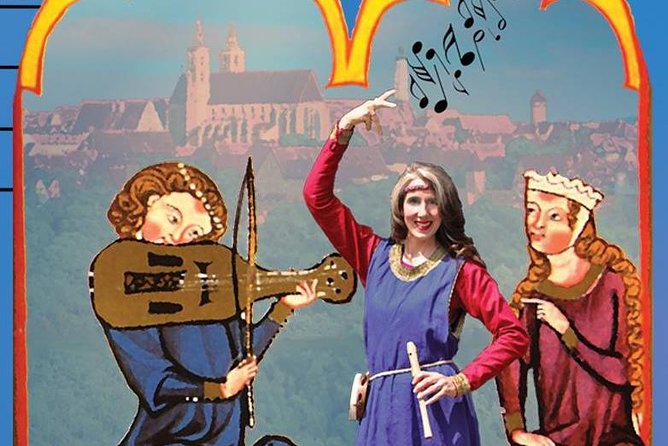
- Live medieval and Renaissance music performed at multiple stops, each tied to a specific location
- English-language guide with short, focused lessons that connect lyrics to everyday life
- Good value for groups, because gratuity is included in the tour cost
- A realistic walking route through Rothenburg’s medieval layout, ending at Spital Bastion
- One extra-admission stop at the Medieval Crime and Justice Museum (plan ahead)
Why Rothenburg turns into a music lesson
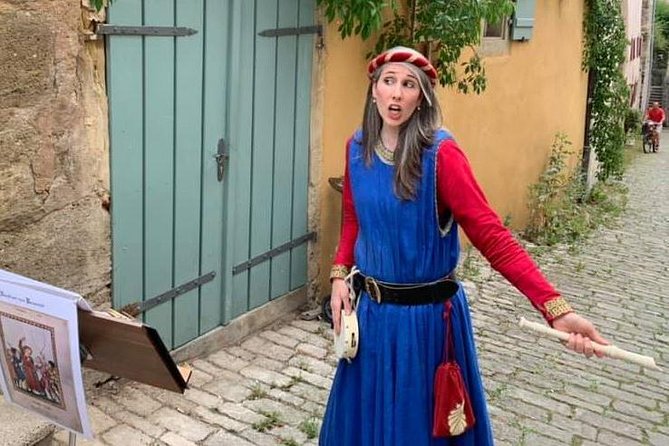
Rothenburg ob der Tauber is already a feast for the eyes: towers, walls, and tight lanes that make medieval life feel close. The clever move here is that the tour does not just point at buildings. It adds sound and meaning, so you learn why people sang and what their words were trying to say.
This is also a good fit if you like “small facts with payoff.” You will hear about the Glockenspiel at the Market Square, learn how chant connects to events like the Black Death, and then switch gears into love and romance through medieval German lyric styles. The guide also talks about different kinds of Minnesang, including how it changed over time.
If your history interest is broad, this keeps you moving and focused. If you are more music-focused, you get the context that many concerts skip, like how a lyric voice fits into a place, a social class, or a moment in time.
More walled towns on the Romantic Road:
- From Munich: Rothenburg and Romantic Road Day Trip by Bus
★ 4.5 · 2,168 reviews - Romantic Road, Rothenburg, and Harburg Day Tour from Munich
★ 4.5 · 1,376 reviews - Rothenburg ob der Tauber: Private Old Town Walking Tour
★ 4.8 · 155 reviews
Price and group size, plus what you get for $237.26
The price is $237.26 per group for up to 8 people. When a group fills close to the maximum, the per-person cost drops a lot, and that makes it easier to justify than many standard guided walks. Also, gratuity is included in the cost, which is a nice break from the usual “what should I tip” math.
Group size is capped at a maximum of 20 people, with small-group options that do not exceed 15. If you prefer a quieter experience, you can choose a private tour of up to 15 adults where nobody else joins. The tour is sold in multiple formats, including single tickets on selected days, so you can match it to how you like to travel.
Logistics are straightforward: you get a mobile ticket, the tour is offered in English, and it lasts about 1 hour 45 minutes. The route starts at Marktpl. 1 in Rothenburg and ends at Spitalbastei.
Town Hall and Medieval Crime Museum: Minnesang, justice, and chant
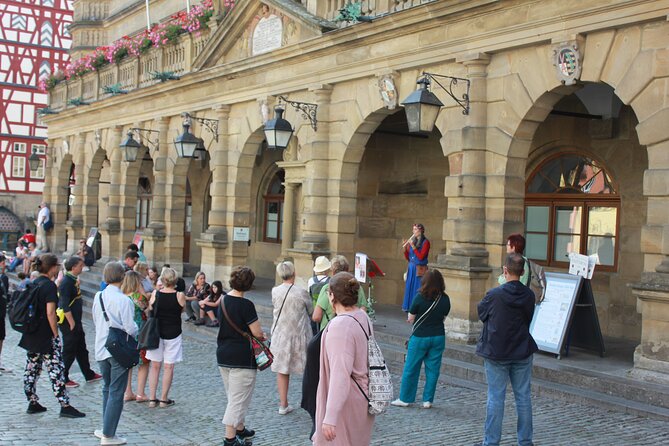
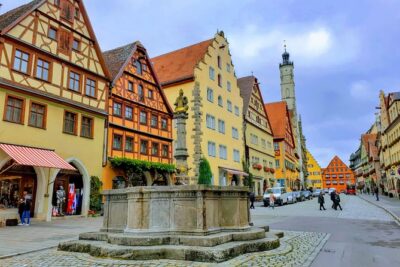
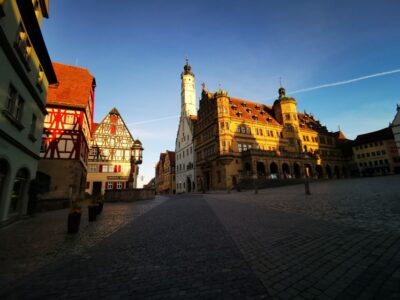
Your first stop is the Rothenburg Town Hall area at the Market Square. The guide begins with Minnesang, the medieval German tradition of lyric singing, and then frames the story through a character named Margarete von Schwangau. You also get the legend of the Master Draught, the Meistertrunk theme connected to a UNESCO World Heritage event, and a clear explanation of the Glockenspiel history at the square. This part ends with a live song by Oswald von Wolkenstein.
Next you move to the St. Johannes Church and the Medieval Crime and Justice Museum. This is where the tour turns darker and more human. You can see an original city wall from the 12th century, and the guide introduces medieval chant before connecting it to the Black Death and plague. The church and surrounding buildings are explained in their medieval role, then you get another live chant performance.
The main drawback here is practical: admission for the Medieval Crime Museum is not included. If you are trying to keep costs predictable, plan for that extra ticket and give yourself a moment to stay on schedule.
Das Plönlein viewpoint to romance songs with Wolfram von Eschenbach
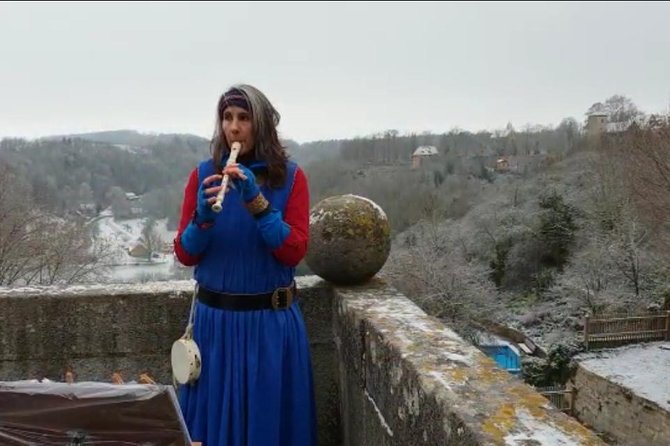
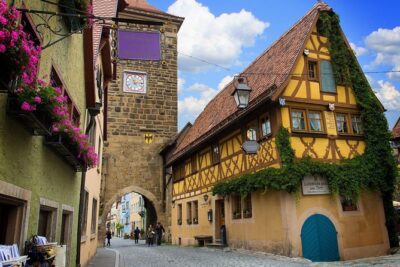
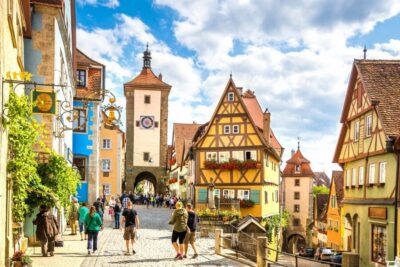
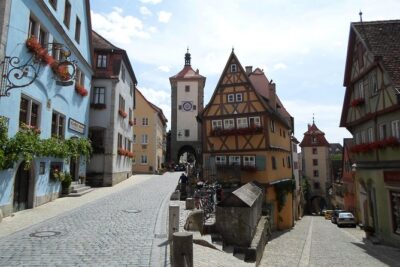
Stop 3 brings you to the scenic stretch near the Tauber Valley viewpoints and then to the famous Das Plönlein area. The guide ties the view to medieval culture, including an explanation of Wolfram von Eschenbach and how love and romance show up in German medieval lyrics.
You also learn what you are actually looking at: the medieval double bridge, the vineyard valley perspective, and how Rothenburg was shaped by the earthquake of 1356. From there, the story connects to the castle of Rothenburg and the Staufer Dynasty, also mentioned as the Hohnstaufer lineage. Then you hear a live song by Wolfram von Eschenbach.
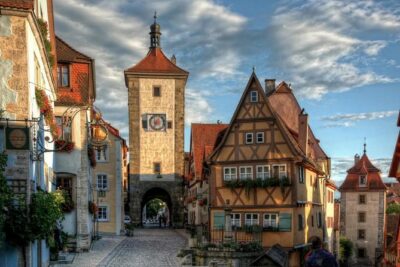
After that, the tour focuses tightly on Das Plönlein itself, including the history of the landmark and how the buildings relate to the town’s old city wall expansion. You also get trivia about Rothenburg and an introduction to composer Neidhart von Reuental, with lyrics that depict the lives of the middle and lower class.
If you are the type who likes photos, this stop is the one to slow down for. Take a breath, listen to the lyrics in context, then look again at the buildings. The viewpoint makes the story stick.
Under the linden tree and at Nag’s Mill: daily life meets Minnesang
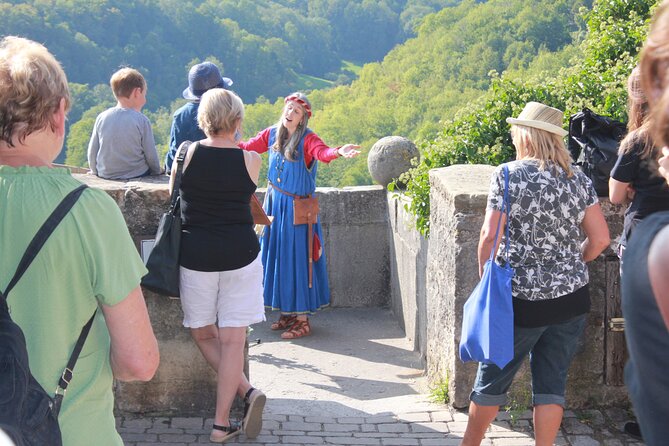
Stop 4 has two linked pieces, starting with the Linden Tree area and then moving to Nag’s Mill. The linden tree gets explained as more than a pretty plant, with its role in medieval German and modern culture and what it signaled in Rothenburg. The guide then introduces Walter von der Vogelweide and performs Under the Linden.
This segment is smart if you care about “how styles change.” The guide talks about Minnesang variations, including high and low Minnesang, and how those forms evolved over time. You are not just hearing words. You are learning how musical categories shifted.
Then you transition to Nag’s Mill, a historical mill site that is tied to Renaissance-era building significance. The guide explains medieval grain storage practices, which adds a grounded, practical angle to all the romance and courtly lyric talk. It is a nice reminder that the town’s music culture sat alongside real work.
This stop is free of extra admissions and stays short, so it works well even if you feel a little museum fatigue setting in. It is change of pace, not a detour.
Onward connections from Rothenburg:

Spitalviertel and Holy Ghost Church: hospitals, a nun composer, and acoustics
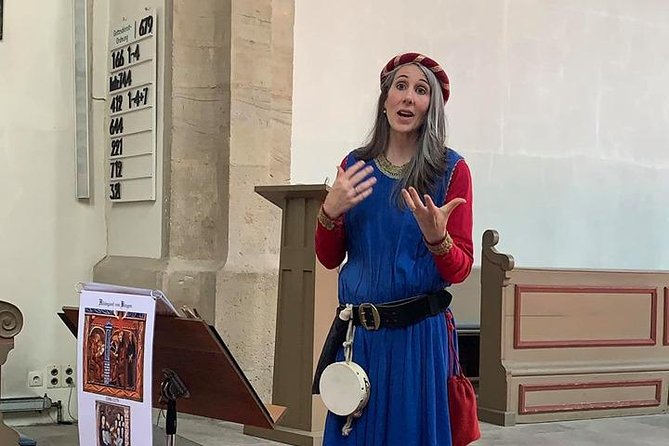
Now the route shifts toward care, community, and performance spaces. At Spitalviertel, the guide explains the Hospital Quarter Square and the history of the location, including the second and final expansion of the medieval city wall. You learn about the hospital and church, and even the residence of staff. There are architectural highlights in the Renaissance style, which helps you see why this part of town looks the way it does.
Then you go into Holy Ghost Church, where the tour becomes very “listen closely.” The guide shares the life of a mystery medieval composer who was a nun born in 1098. You will hear how her influence reached into politics, science, and Christianity, and then you get a live performance inside the church with wonderful acoustics.
This is the emotional high note for many people, because the voice lands in the right room. It also helps if you like your history with atmosphere. Even if you only catch part of the lyrics, the acoustics make the meaning feel bigger.
The only caution is simple: churches can be cool, and you may stand or move slowly inside. Wear layers, and expect to keep your pace steady.
Spital Bastion finale: fortifications and mercenary songs
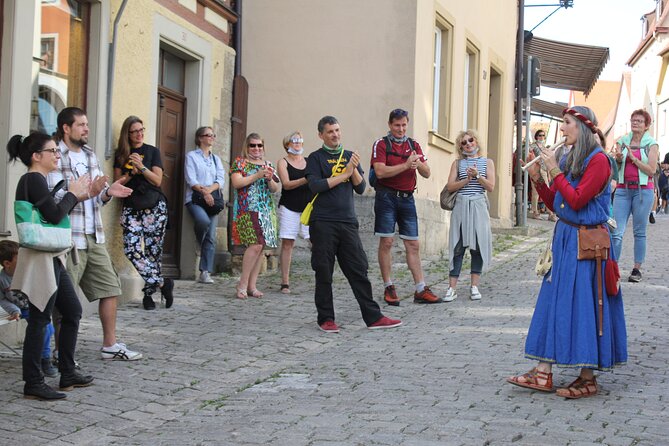
The tour ends at Spital Bastion, also called Spitalbastei or the Hospital Bulwerk. This is a strong finish because you step inside the fortification, described as the largest and youngest in Rothenburg. You learn why it mattered and what the site tells you about how the town protected itself.
From there, the guide shifts to the people behind the walls: mercenary soldiers and their role in Renaissance periods. Then you hear the final part of the musical thread, including the “last composer” who wrote a song for the mercenary soldiers.
This final stop feels like a full-circle moment. Earlier you learned about chant, Minnesang, love lyrics, and daily life at a mill. Here, you close with a performance that connects words to power, defense, and real-world politics.
If you want a clean ending, this works. You finish where the story has the most weight, and you can head off on your own afterward with a better sense of how Rothenburg functioned.
Should you book this Medieval Musical Tour?
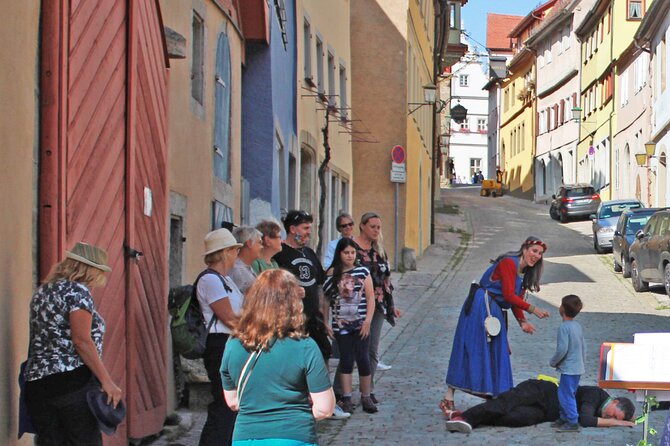
Book it if you want Rothenburg to feel more than scenic. This tour is at its best when you like music plus context, and when you enjoy hearing composers explained right next to the stones they relate to.
It is also a great choice for time-limited visits. In about 1 hour 45 minutes you cover seven key stops, including Town Hall, Das Plönlein, and Holy Ghost Church, without getting stuck in one museum for too long. Plus, gratuity being included makes your total cost easier to budget.
Skip it only if you dislike walking between multiple small sites, or if you prefer your history purely factual with no singing. And if you book for a group, remember the one spot with admission not included is part of the route, so factor that in.
FAQ
Is the Medieval Musical Tour of Rothenburg offered in English?
Yes. The tour is offered in English.
How long is the tour?
It runs for about 1 hour 45 minutes.
Where does the tour start and end?
It starts at Marktpl. 1, 91541 Rothenburg ob der Tauber, Germany, and ends at Spitalbastei, 91541 Rothenburg ob der Tauber, Germany.
Do I get a mobile ticket?
Yes, the tour includes a mobile ticket.
Do I need to buy a ticket for the Medieval Crime and Justice Museum stop?
Admission for the Medieval Crime and Justice Museum is not included, so you should expect to pay for that stop separately.
Is gratuity included in the tour price?
Yes. Gratuity is included in the cost.
What is the maximum group size?
The experience has a maximum of 20 travelers. Small group tours may group you with other travelers but do not exceed 15 persons.
Are private tours available?
Yes. Private tours are available for up to 15 adults in your group, and no one else joins.
Are children allowed, and are they free?
Children 12 years and younger are free of charge. Children 13 and over are considered adults and should be booked as such.
What if I need to cancel, or the weather is bad?
You can cancel for a full refund up to 24 hours in advance. The tour requires good weather, and if it is canceled due to poor weather, you will be offered a different date or a full refund.
Fresh on the arrivals board for Rothenburg
Rothenburg ob der Tauber Tours, compared.
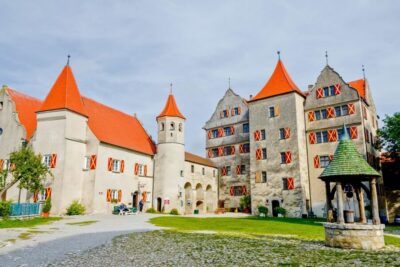
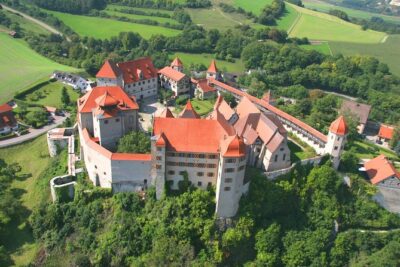
Romantic Road, Rothenburg, and Harburg Day Tour from Munich
Read our review →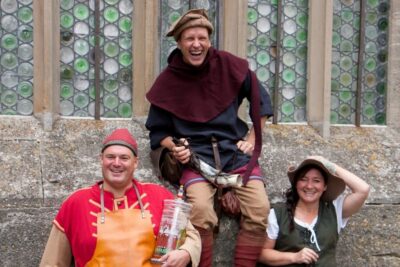
Rothenburg ob der Tauber: Private Old Town Walking Tour
Read our review →
Frankfurt Super Saver: Neuschwanstein Castle and Rothenburg Day Trip
Read our review →
Heidelberg and Rothenburg Day Trip from Frankfurt
Read our review →Browse the lists this tour appears in