Reviewed · TICKETS
Eltville: Eberbach Monastery Entry Ticket
Walk into Eberbach like a film extra. I love the way Eberbach Abbey lines up with The Name of the Rose filming locations, and I love the wine cellars with giant presses and barrel-filled rooms. One thing to plan for is occasional ticket-tech trouble at entry, like QR codes that don’t scan the first time, though staff can often fix it quickly.
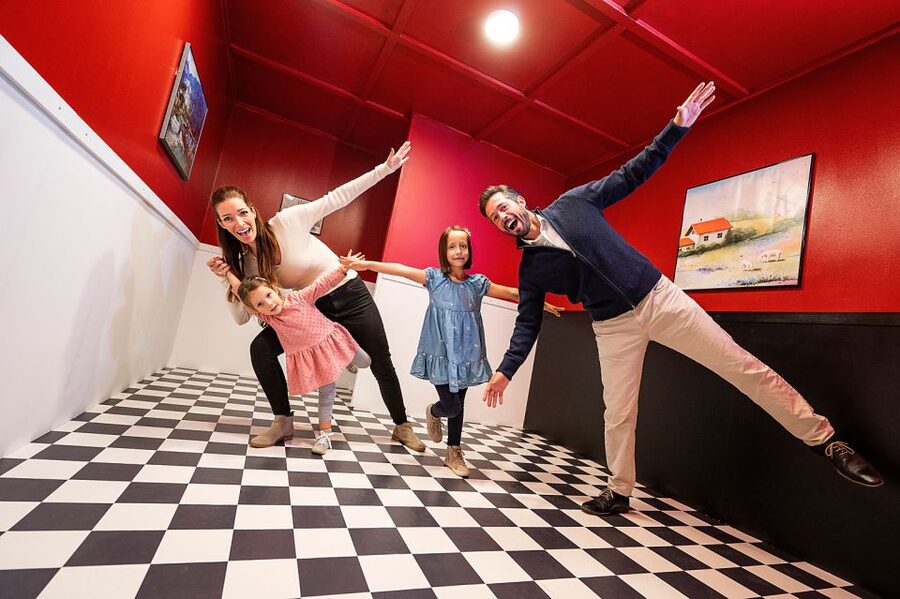
This is a self-paced 1-day visit where you can slow down or power-walk, based on your mood. If you catch the Abbey Museum when special exhibits like the optical-illusions show are on, it adds a fun visual twist. Wear comfy shoes, bring water, and consider a packed lunch so you do not have to rush.
In This Review
- Key things that make Eberbach Abbey special
- Eberbach Abbey in Eltville: why this monastery still feels cinematic
- What your Eltville entry ticket covers in 1 self-paced day
- Entering Eberbach: where to go and how to avoid start-up frustration
- Basilica and cloister, plus the Thomas Bayrle arcade window
- Wine as architecture: the Baroque dining hall, giant presses, and barrels
- Ice cellar, treasure chamber, and the pleasure of slow wandering
- Monks’ bedrooms and dining rooms: imagining daily routine
- Abbey Museum: Eltville-linked art, religious objects, and VERTRICKST! (if on)
- Ederbach Monastery wine house: try local wine the sensible way
- Price and value: what $18 gets you and why it can be worth it
- Practical logistics: getting there from Eltville, and what to pack
- Should you book the Eltville Eberbach Monastery entry ticket?
- FAQ
- How long is the Eltville: Eberbach Monastery entry ticket valid?
- Where do I enter Eberbach Abbey?
- What is included with the ticket?
- What should I bring for the visit?
- Is this activity suitable for wheelchair users?
- How do I get there by public transport from Eltville?
- Are there parking facilities at the monastery?
- Can I try local wine during the visit?
- What if my QR code or ticket scan does not work at entry?
Key things that make Eberbach Abbey special
- The Name of the Rose filming locations you can recognize as you move from room to room
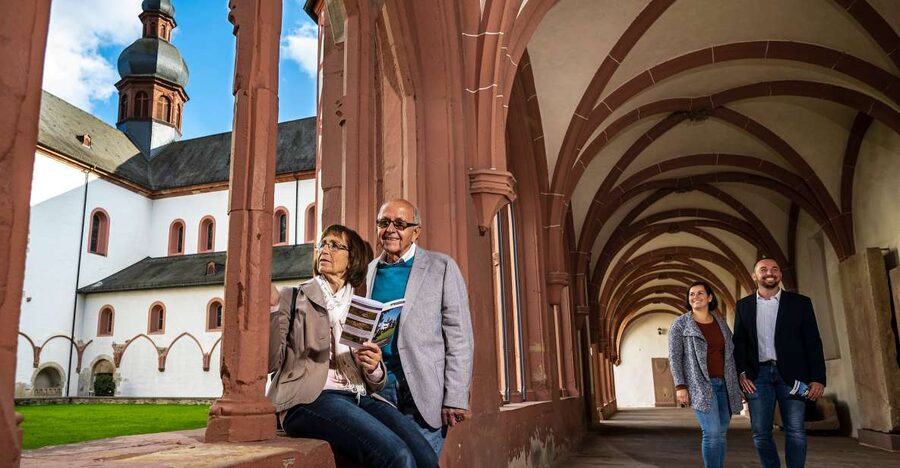
- The cloister arcade window by Thomas Bayrle, a modern art detail inside a medieval setting
- Baroque dining hall with huge wine presses, built for serious wine production
- Ice cellar and a bottle treasure chamber, where the cold storage story gets real
- Abbey Museum with Eltville-linked art and religious objects, plus documents and sculptures
- Optical illusions exhibition VERTRICKST! (if running during your dates), using mirrors, moving images, and AR through an app
Eberbach Abbey in Eltville: why this monastery still feels cinematic
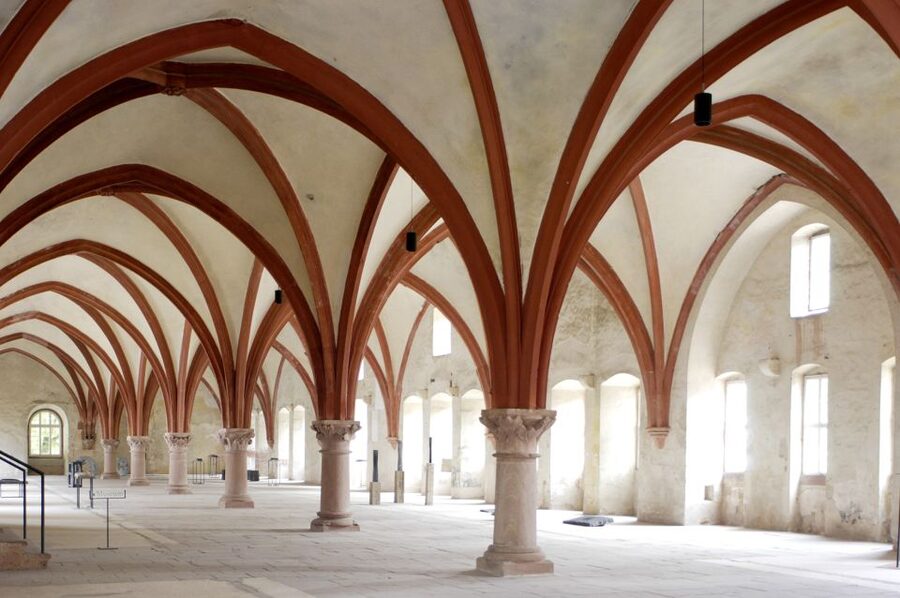
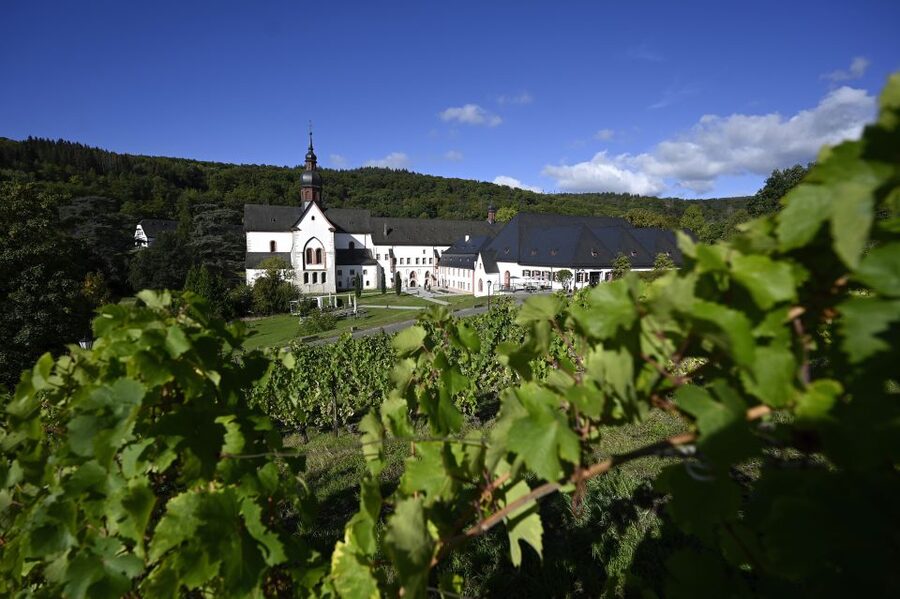
Eberbach Abbey is the kind of place where history does not sit behind glass. You walk through spaces that once ran on routine: meals, prayer, work, and wine. Even if you are not a big church-history person, the scale of the architecture and the visible traces of production make it easy to understand what life was like here.
The biggest hook for me is the movie connection. The abbey became a filming location for The Name of the Rose, and you get the sense that the camera crews knew exactly where to stand. As you wander the cloisters and interior rooms, you can connect what you see to scenes you might remember, without needing a special pass to do it.
What your Eltville entry ticket covers in 1 self-paced day
Your Eltville: Eberbach Monastery Entry Ticket is straightforward: it is admission to the abbey site, and you explore on your own schedule within a 1-day valid window. There is no rigid timed itinerary you have to follow, which is good because Eberbach rewards pacing.
You should plan for several zones, not just a quick walk-through:
- the abbey church areas (including the basilica)
- the cloister and its artistic details
- the big production spaces, especially the Baroque dining hall
- the cellars with presses, barrels, and wine storage rooms
- the Abbey Museum, where history and collections are organized for you
If you like to read along as you go, you can easily spend most of the day here. If you only want the highlights, you can still cover a lot, but you’ll want to prioritize the wine areas and the museum.
Entering Eberbach: where to go and how to avoid start-up frustration
Go to the main entrance and show your paper or digital ticket. This sounds simple, and mostly it is, but the entry moment is where you should be prepared.
Based on real-world experience, ticket scanners can be finicky. I recommend you have a backup ready, like the ticket shown in your app plus a saved screenshot, so you can move if your QR code does not register right away. If that happens, staff can typically issue a working ticket at the entrance, and you should not let it stress you.
Tip: arrive when you are not rushing. During quieter times, you can take your time with the first rooms, which sets the tone for the whole visit.
Basilica and cloister, plus the Thomas Bayrle arcade window
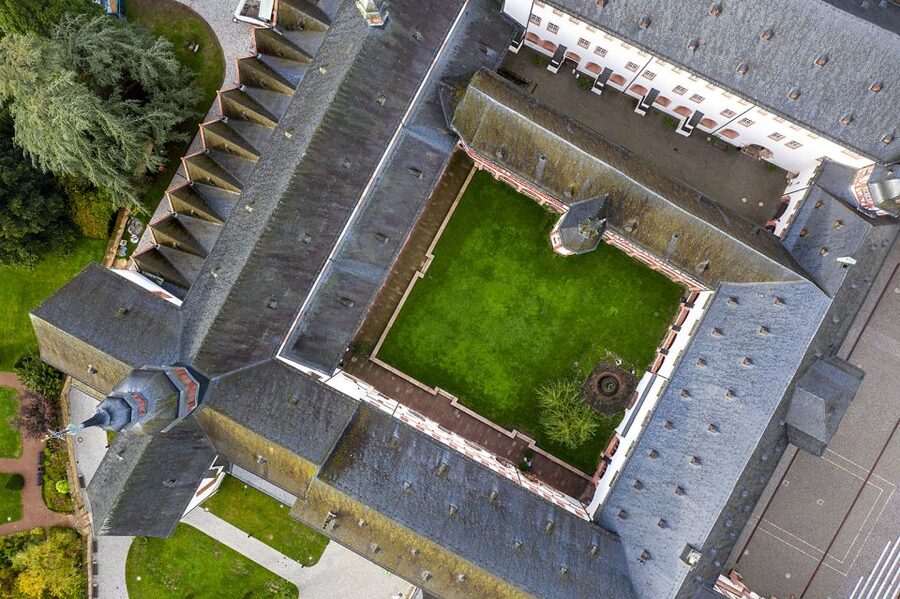
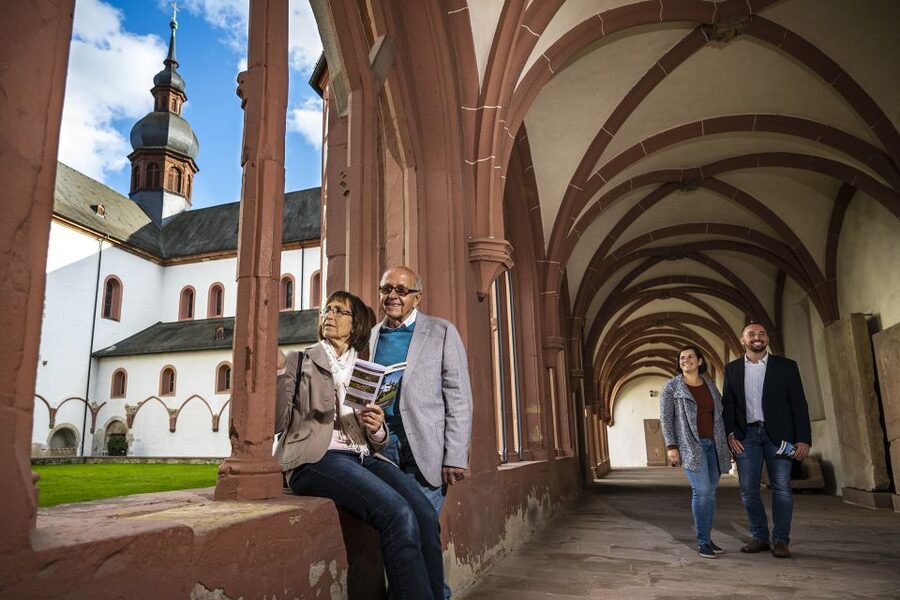
Start with the abbey’s sacred spaces and movement paths. The basilica and the cloister areas help you understand the layout: where people gathered, where they walked, and where life happened around the rhythm of the monastery.
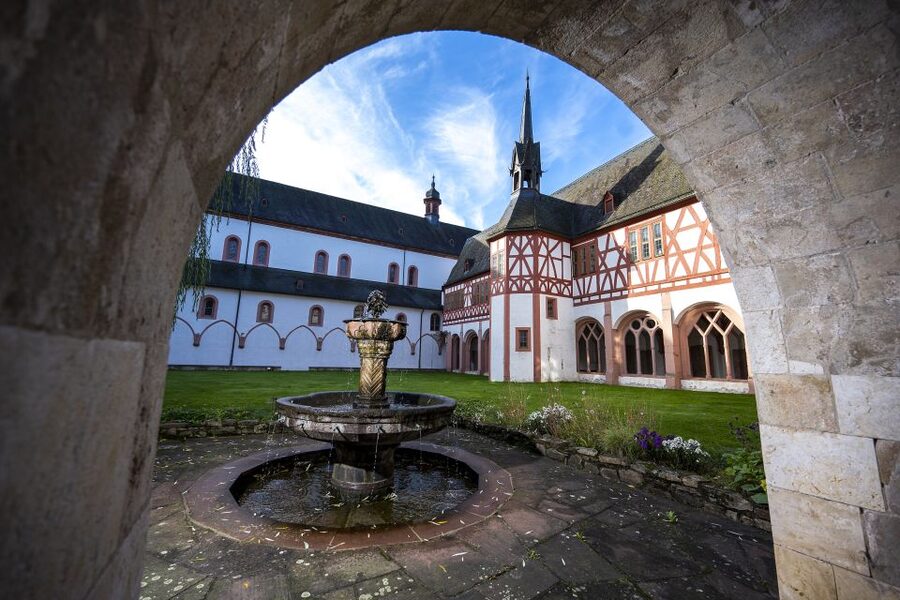
Then look closely at a standout modern detail: the cloister arcade window designed by Thomas Bayrle. It is one of those moments where you suddenly notice that the abbey is not stuck in a museum-only past. The contrast makes the old stone feel even more grounded, because you see how today’s art can sit inside centuries-old architecture without erasing it.
This is also a good section for photos. The arcade structure gives you natural frames, and the light often works well once you are inside and settled.
Wine as architecture: the Baroque dining hall, giant presses, and barrels
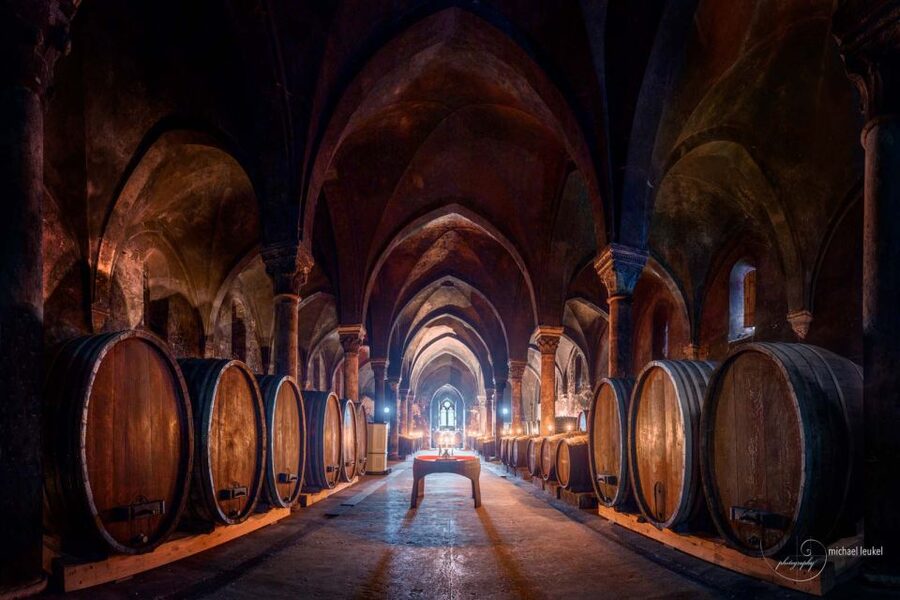
Here is where Eberbach becomes practical history. The monastery is famous for its wine production, and the building design shows that. When you reach the Baroque dining hall, you see giant wine presses that make it hard to think of wine as something abstract. These were machines for work, and the scale tells you exactly how central the harvest was.
Next comes the cellar world: you will find historic barrels and the larger wine-storage setup. The cellars are cool, quiet, and easy to read visually because the rooms are built around the process. If you like learning by looking, this area connects the dots fast.
I like that this is not only about romance. Even with the stunning religious setting, the wine areas keep the experience grounded. You come away understanding that monks were not only praying, they were producing, storing, and managing a major operation.
Ice cellar, treasure chamber, and the pleasure of slow wandering
Do not rush the lower storage rooms. The ice cellar is one of those stops that makes you pause, because it shows how food and wine preservation worked with the environment. Then there is the “treasure chamber,” described as a cellar full of wine bottles.
Even if you never buy a bottle that day, these rooms give you an emotional payoff. You feel the idea of value stored over time, not just wine poured for immediate drinking. It also helps you appreciate why the cellars matter so much to the abbey’s story.
Practical advice: wear shoes with solid grip. Stone floors in historic sites can be slick, and you’ll be spending time standing and walking.
Monks’ bedrooms and dining rooms: imagining daily routine
Eberbach does something smart here. It gives you room types, not just monuments. You can stroll through the monks’ bedrooms and the dining hall, and suddenly the abbey stops being only architecture and becomes routine.
This section works best if you let your brain do the small work of imagining a schedule: where you’d wake, where you’d eat, where you’d gather. You do not need a script. The spaces are arranged so you can sense how life moved through the day.
If you enjoy “lived-in history,” this is one of the best parts. If you prefer only art or only wine, you might skim this, but it still adds context to why the wine operation mattered to the household.
Abbey Museum: Eltville-linked art, religious objects, and VERTRICKST! (if on)
The Abbey Museum organizes Eberbach’s story through documents, sculptures, and paintings, plus art and sacred objects connected to Eltville. You get on-site context rather than feeling like you are just collecting random highlights.
One reason the museum works so well is that it is not only “about monks.” It is about what the abbey preserved and how the story is told through different kinds of objects. You might see preserved items from Eberbach on site, along with objects loaned from public, ecclesiastical, and private collections.
Also, keep an eye out for the temporary optical-illusions exhibition VERTRICKST!. The setup described for that exhibition includes inclined planes, mirror rooms, whimsical bird themes, moving images, and techniques using augmented reality through a smartphone app. It is aimed at young and old, and it can add a playful break from the deeper historical rooms.
Ederbach Monastery wine house: try local wine the sensible way
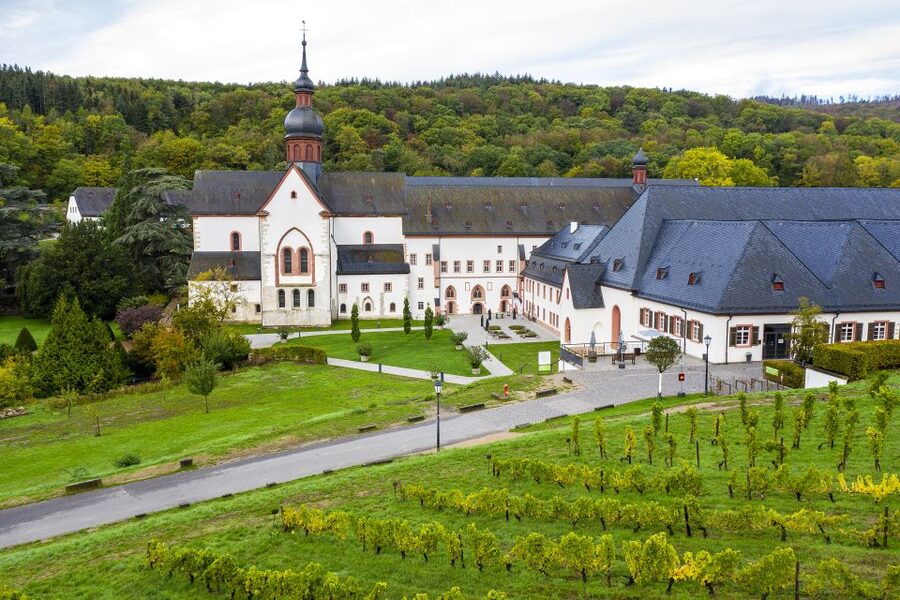
One of the nice parts of this visit is that it does not stop at looking. There is a monastery wine house (noted as the Ederbach Monastery wine house) where you can try local wine grown at the monastery itself.
I suggest treating this like a tasting, not a souvenir stop. Take one or two pours, ask what is grown there, and then connect it back to what you just saw in the presses and cellars. When you do that, the tasting becomes the final layer of understanding, not just a drink at the end.
If you like shopping, there may also be a monastery shop experience on site, and you can browse at your own pace after your walk through the big rooms.
Price and value: what $18 gets you and why it can be worth it
At about $18 per person, this ticket is good value if you like doing two things in one stop: wine production history plus an art-and-objects museum.
Why I think it is fair:
- You get access to multiple large areas, including cellar spaces and the museum.
- The site is designed for slow wandering, which turns your time into value.
- The film-location connection helps many people feel they are getting more than a normal “church visit.”
The main value trade-off is that you are exploring on your own. If you want heavy narration all day long, the entry ticket alone may not fully satisfy you. But if you enjoy reading signs, looking closely, and mixing in a tasting, the price feels reasonable.
Practical logistics: getting there from Eltville, and what to pack
Transportation matters here because the site is a real destination. You can drive, but the parking facilities are limited, especially during larger public events. That is not a deal-breaker, but it does mean you should avoid arriving with a last-minute parking plan.
If you use public transport, you can travel from Eltville train station. The route described is line 172, which runs hourly to Kloster Eberbach (Barockpforte). For long-distance connections, the suggested hubs are Wiesbaden, Mainz, or Frankfurt. For exact times, you should check the Rhein-Main-Verkehrsverbund timetable for the Kloster Eberbach stop.
What to bring:
- comfortable shoes
- water
- comfortable clothes for walking inside and outside areas
- a packed lunch (helpful if you want to stay longer without rushing)
Not suitable for wheelchair users, so plan an alternative if accessibility is a requirement.
Should you book the Eltville Eberbach Monastery entry ticket?
Book it if you want a 1-day, self-paced monastery visit that mixes architecture, wine history, and a museum with Eltville-linked collections. The pairing of giant presses, barrel cellars, and museum objects makes this feel like a complete story, not just a single pretty building. If The Name of the Rose is part of your travel radar, this becomes even more satisfying.
Skip or think twice if:
- you need guaranteed hassle-free ticket scanning, because entry tech can occasionally stumble
- you require wheelchair accessibility, since it is not suitable for wheelchair users
- you want a deeply guided, talk-every-step experience as part of the ticket price
If you decide to go, do it with the right mindset. Come to walk, look closely, and take your time with the wine and museum stops. When you do, Eberbach Abbey delivers that rare thing, history you can physically move through.
FAQ
How long is the Eltville: Eberbach Monastery entry ticket valid?
It is valid for 1 day. You can check availability to see starting times.
Where do I enter Eberbach Abbey?
Enter through the main entrance and show your paper or digital copy of the ticket on arrival.
What is included with the ticket?
The ticket includes entry to Eberbach Monastery.
What should I bring for the visit?
Bring comfortable shoes, water, comfortable clothes, and a packed lunch.
Is this activity suitable for wheelchair users?
No. It is not suitable for wheelchair users.
How do I get there by public transport from Eltville?
From Eltville train station, you can take line 172, which runs hourly to the Kloster Eberbach (Barockpforte) stop.
Are there parking facilities at the monastery?
There is parking on site, but it is very limited, especially during larger public events.
Can I try local wine during the visit?
You can try local wine at the Ederbach Monastery wine house during your visit.
What if my QR code or ticket scan does not work at entry?
If a scan fails, staff can help resolve the issue. It is wise to have your ticket ready in both digital and accessible form, so you can get in quickly if scanning acts up.
Tickets, compared.
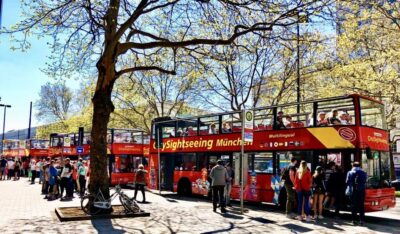
Munich Hop-On Hop-Off Tour: 1-Day or 2-Day Ticket
Read our review →