
Reviewed · DRESDEN TOURS & ACTIVITIES
Dresden: Combo Ticket for Paula Modersohn-Becker and Edvard Munch + Albertinum
One ticket, two titans of 1900. I like the joint presentation of Paula Modersohn-Becker and Edvard Munch, and I especially like how the exhibition frames the questions of life around 1900 through a women’s perspective. You also get works connected to the Munch Museum Oslo, which makes the whole pairing feel bigger than a local show.
The Albertinum side of the ticket then expands the context with the Albertinum Collection, from Romanticism to the Present, plus the Sculpture Collection from 1800. One caution: an audio guide is optional and not included, and some content is shown in its original language, which can slow your pace if you are relying on explanations.
In This Review
- Key Points I’d Prioritize
- A One-Day Ticket That Actually Lets You Think
- The Special Exhibition: Modersohn-Becker and Munch, the Big Question of Life
- Why This Pairing Changes How You Read the Art
- Albertinum Collection: Romanticism to the Present (and why it’s worth your time)
- Sculpture Collection from 1800: A calmer lane for the same questions
- Timing in Dresden: Use the Thursday late opening to your advantage
- What the $22 Price Really Buys You
- Who This Combo Ticket Is Best For
- A Few Smart Moves Before You Go
- Should You Book This Combo Ticket?
- FAQ
- How long is the ticket valid?
- What does the combo ticket include?
- Is an audio guide included?
- What are the opening hours on Thursdays?
- Is this experience wheelchair accessible?
- Can I cancel or pay later?
Key Points I’d Prioritize
- A first major joint presentation brings Paula Modersohn-Becker and Edvard Munch together in Dresden for this special moment.
- The 1900 life question theme is built around relationships, nature, and the environment, and it is explicitly approached from a woman’s perspective.
- Connection to Munch Museum Oslo helps you feel the wider story behind Edvard Munch’s world.
- Two admissions for one day lets you pair the special exhibition with the Albertinum Collection and Sculpture Collection.
- Thursday hours run late for the special exhibition (11:00 am to 8:00 pm), so you can shape your day around it.
A One-Day Ticket That Actually Lets You Think
This combo ticket is a smart fit if you like your art with questions attached. Instead of doing just one exhibition and sprinting to the next thing, you get time for both: a special show focused on Paula Modersohn-Becker and Edvard Munch, plus museum galleries that stretch from Romanticism to the Present and sculpture from 1800. That pairing matters, because the special exhibition is asking big questions about life around 1900, including how people relate to nature and the environment.
For me, the best part is that the ticket does not force a single, rigid path. You can linger in the special exhibition, then shift into the Albertinum collections when you want steadier, broader context. It is also a good value move at about $22 per person, because you are paying for admission to two museum areas, not just one.
Also holding a platform in Dresden
- Dresden: Semperoper Tickets and Guided Tour
★ 4.7 · 12,102 reviews - Dresden: The Original Night Watchman Tour in Lantern Light
★ 4.6 · 6,653 reviews - Dresden: Semperoper and Old Town Tour
★ 4.8 · 5,735 reviews
The Special Exhibition: Modersohn-Becker and Munch, the Big Question of Life
The star here is the special exhibition titled Paula Modersohn-Becker and Edvard Munch: The Big Question of Life. It is presented in connection with Paula Modersohn-Becker’s 150th birthday, and it is built around the idea that the early 1900s were full of unsettled questions about how life works and where it is going.
What you should expect is a show that links both artists through themes that still feel current. The exhibition addresses questions about life and the future, the relationship between people and nature, and the role of environment. It is not just “here are two famous names.” The curatorial focus is on the questions themselves, with a clear emphasis on how those issues show up from a woman’s perspective.
A practical upside: because the exhibition is designed around theme, you can move through it with purpose. You do not have to be an expert to follow what the show is doing. Just keep asking yourself what each artwork suggests about daily life, relationships, or nature, and then check how the perspective shifts when you move from Modersohn-Becker to Munch.
Why This Pairing Changes How You Read the Art
Paula Modersohn-Becker and Edvard Munch are both major figures in 20th-century painting, but the pairing works because it turns style into a conversation. When you see them together in one program, you start noticing how different artists frame similar concerns in different ways.
In this exhibition, the “big question” is not just abstract philosophy. It is presented as something lived. That is where the woman’s perspective matters. You get a lens on relationships and life patterns around 1900 that can feel closer to the rhythms of everyday existence than to pure theory.
Then the connection to the Munch Museum Oslo matters for a different reason. It helps you sense that Munch’s world is not trapped inside one building or one city. Even if you have only a day in Dresden, the exhibition nudges you to think in bigger networks, like art careers and collecting histories that cross borders.
One more thing I appreciate: because this is described as the first major joint presentation of these two artists in this format, the show has the energy of a “special event.” It feels like more than a standard rotation of gallery hangs.
Albertinum Collection: Romanticism to the Present (and why it’s worth your time)
After the special exhibition, your ticket continues into the Albertinum Collection. This section covers Art from Romanticism to the Present. That wide span can sound like a lot, but it is valuable because it gives you a way to measure where Modersohn-Becker and Munch sit in a longer story.
Here is how I think about it while planning your day. The special exhibition concentrates on life questions around 1900. The Albertinum Collection lets you step back and ask, “Okay, what was changing in art as those questions became urgent?” Romanticism sets up certain ways of seeing emotion and nature. Then you progress toward later movements and ideas, until you reach the present tense of the collection.
Even if you only have time for part of the collection, going in after the special exhibition can sharpen your noticing. The museum gets less like an open-ended buffet and more like the background soundtrack to what you just studied.
Practical advice: do not feel like you need to “cover everything.” Pick a handful of works that echo the exhibition’s themes of life, nature, and environment. If you find a section that clicks, slow down. The best museums are the ones you actually experience, not the ones you rush through to prove a point.
Sculpture Collection from 1800: A calmer lane for the same questions
Your combo ticket also includes the Sculpture Collection from 1800. Sculpture is not always the first choice for people who show up for paintings. But in this case, it works because sculpture can give you a different kind of understanding of “life questions.”
Paintings can feel like a moment frozen in time. Sculpture often feels more physical, more about form you can mentally circle. Even without extra context provided in the ticket details, sculpture from 1800 can act like a bridge between the Romantic focus on nature and emotion and the later modern concerns that show up around 1900.
If you tend to get “museum tunnel vision,” the sculpture section is also a good way to reset. You shift from reading surfaces to reading structure and space. It is a mental breath. And because the ticket includes both collections, you are not paying extra to do the slower, steadier option.
Onward connections from Dresden:



Timing in Dresden: Use the Thursday late opening to your advantage
On Thursdays, the special exhibition hours extend. The special exhibition runs 11:00 am to 8:00 pm, while the Albertinum Collection is listed 11:00 am to 5:00 pm. That difference matters, because it changes what you should prioritize later in the day.
If you are going on a Thursday, I’d plan like this:
- Go to the special exhibition earlier and give it your full attention.
- Use the Albertinum Collection and Sculpture Collection as your “second act,” catching what you can before 5:00 pm.
Even if you are not on Thursday, think in two phases: the show first for focus, the collections second for context. Trying to do everything at once usually leads to rushed looking, and this ticket is more satisfying when you take it in stages.
What the $22 Price Really Buys You
At about $22 per person, this combo ticket is priced like a value play, not a splurge. The key reason is the structure: you get admission to the special exhibition, plus admission to both parts of the Albertinum collections listed with your ticket. So you are effectively paying for multiple museum experiences in one day.
The “value” angle is not only the math. It is also the way the experience is organized around theme and time period. You get a spotlight exhibition that focuses the early 1900s questions, then you get broader museum coverage that can help you situate those ideas inside a longer artistic sweep.
One thing to watch: an audio guide is optional, not included. If you rely on audio for pacing or language support, factor that in. Some content is shown in its original language, so plan to spend your energy on the visuals or consider bringing a translation approach you are comfortable with.
Who This Combo Ticket Is Best For
I think this ticket is a strong match if you:
- Want a focused special exhibition with a clear theme, not just name recognition
- Like your art paired across eras and perspectives
- Enjoy museum context, meaning you want more than one collection in the same day
- Prefer a self-paced visit where you can slow down and revisit sections
It is also wheelchair accessible, which is a big practical win for people who need that option.
If you are the type who only wants one room and one theme, you might feel a little pulled in too many directions. But if you like having choices, the combination fits nicely.
A Few Smart Moves Before You Go
Because the ticket includes multiple museum areas and some content may be in its original language, I’d keep your expectations grounded. Go in with a plan for how you want to spend your attention.
My simple strategy:
- Start with the special exhibition, and decide what question you want to track as you look.
- In the Albertinum Collection, focus on works that connect to nature, relationships, or the sense of life changing over time.
- Use the Sculpture Collection when you want to shift your thinking from surface storytelling to physical form.
Also, since the special exhibition is specifically framed around Modersohn-Becker and Munch and their “big question,” it can help to treat the experience like a conversation between perspectives. You will likely get more out of it if you let the comparison build in your head as you move through the rooms.
Should You Book This Combo Ticket?
If you want a day in Dresden that feels purposeful and intellectually fresh, I think this ticket is worth booking. You are getting a rare, first major joint presentation of Paula Modersohn-Becker and Edvard Munch, a themed look at life around 1900 with a women’s perspective, and extra museum context through the Albertinum Collection and Sculpture Collection.
Book it if you like seeing how art grapples with real questions, not just style trends. Also book it if you want value, because around $22 gets you more than one museum component in a single day.
Skip it only if you are strict about needing an included audio guide or if you know language issues will frustrate you. Since some content is in its original language and audio is optional, this experience is best when you are comfortable learning from visuals first and using text or audio only as a bonus.
FAQ
How long is the ticket valid?
The combination ticket is valid for 1 day.
What does the combo ticket include?
It includes admission to the special exhibition Paula Modersohn-Becker and Edvard Munch: The Big Question of Life, plus admission to the Albertinum Collection (Art from Romanticism to the Present) and the Sculpture Collection from 1800.
Is an audio guide included?
No, an optional audio guide is not included.
What are the opening hours on Thursdays?
On Thursdays, the special exhibition is open from 11:00 am to 8:00 pm. The Albertinum Collection is open from 11:00 am to 5:00 pm.
Is this experience wheelchair accessible?
Yes, it is wheelchair accessible.
Can I cancel or pay later?
You can cancel up to 24 hours in advance for a full refund. You can also reserve now and pay later, so you can book without paying today.
Fresh on the arrivals board for Dresden



Dresden Tours & Activities, compared.
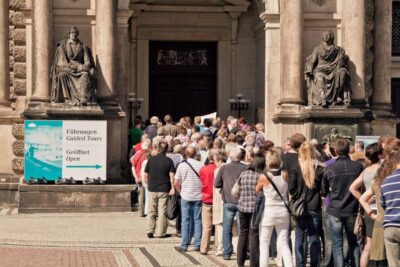

The Original Night Watchman Tour in Lantern Light
Read our review →


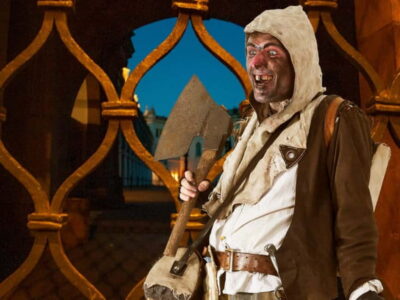
Terrifying Tour of Dresden Led by a Dungeon Master
Read our review →
Browse the lists this tour appears in