
Reviewed · COLOGNE TOURS & ACTIVITIES
Cologne Highlights, Stories, and Local Atmosphere Tour
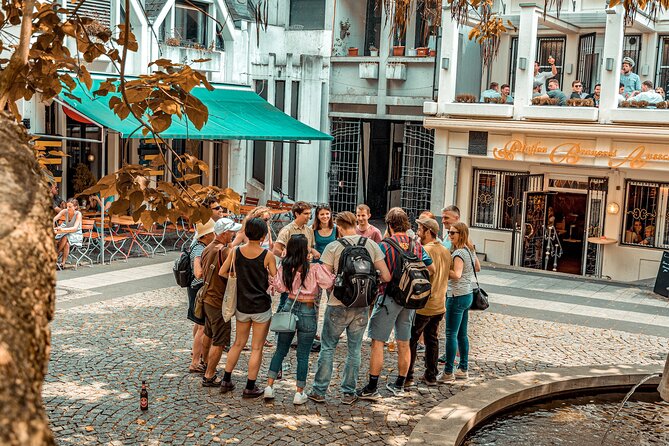
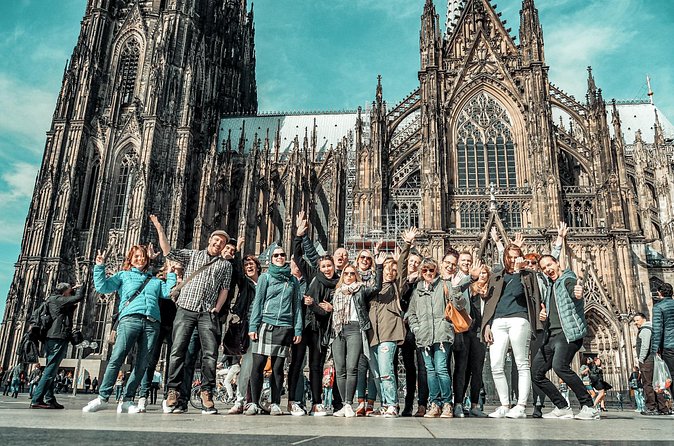
Cologne sings when you walk it. This 2.5-hour highlights walk strings together medieval Cologne and the Dom, with laughs and local trivia, and it feels like you are learning with a friend. I like the rhythm, because the pace stays comfortable and you get short photo moments rather than one long lecture. I also like the Cologne flavor you do not get from a map, from Roman-era origins to why people here love Kölle so much. One possible drawback: the opening can run long if your guide talks a bit extra at the first stop, so bring patience and good shoes.
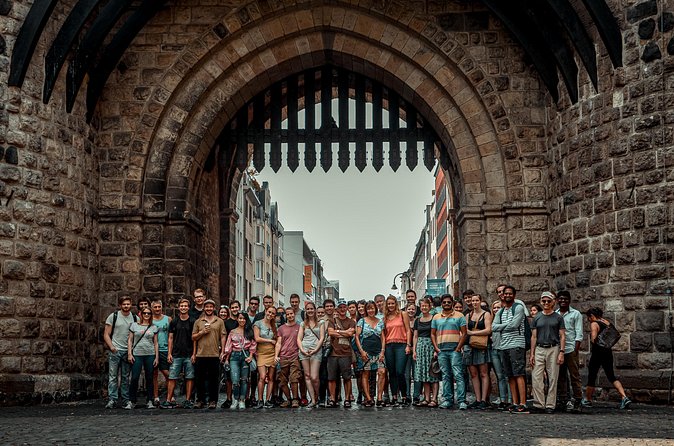
You start at Eigelsteintorburg, a medieval gate that sets the tone fast. You finish near the Old Town at the Willi-Ostermann-Brunnen, which is a smart landing spot if you want lunch, museums, or just more walking afterward. The tour is capped at 25 people, and it runs in English with a mobile ticket, so it is built for easy joining and easy follow-through.
In This Review
- Key Things That Make This Cologne Highlights Tour Worth Your Time
- Starting at Eigelsteintorburg: Medieval Cologne Sets the Tone
- The “Cologne Feeling” Walk: Roman Routes, German Layers, and Hidden Corners
- Lapidarium Stop: Crest Symbols, Patron St. Stories, and City Pride
- Weidengasse and Little Ankara: Rebuilding, Diversity, and a City That Adapted
- St. Maria Himmelfahrt: A Less-Obvious Church Interior Worth the Time
- Cologne Cathedral, The Dom: A Step-by-Step Story You Can Follow
- Roncalliplatz: Gargoyles, Windows, Doors, and Practical Visiting Hints
- Old Market: Timeline, Symbolic Street Details, and Dark Humor
- Willi-Ostermann-Brunnen and Karneval: Fifth Season Energy, Explained
- Price and Value: Why It Costs So Little, and What You Should Expect
- Who Should Book This Cologne Highlights Tour
- Should You Book This Cologne Highlights Tour?
- FAQ
- How long is the tour, and where does it start and end?
- What language is the tour offered in, and do I need a ticket?
- What is included in the price, and what is not included?
- Should I budget for tips?
- How late can I cancel and still get a refund?
- Is the tour suitable for most people, and is it easy to reach?
Key Things That Make This Cologne Highlights Tour Worth Your Time
- Eigelsteintorburg as a real medieval starting point, not just a random curbside meeting.
- A guided “Cologne feeling” story that connects Roman routes, German layers, and why the city can feel surprisingly Italian.
- Dom-class sight time without getting lost, plus practical hints for how to visit the cathedral area better on your own.
- Karneval context at the end, including songs and dances tied to the city’s calendar.
- Small, themed stops like Lapidarium and Roncalliplatz that explain symbols you would otherwise miss.
Starting at Eigelsteintorburg: Medieval Cologne Sets the Tone
The tour begins at Eigelsteintorburg at Eigelstein 135. It is an excellent choice for a first stop because it immediately anchors you in old Cologne. You meet your guide there and get oriented to your group, which matters on a city walk like this. With a maximum of 25 people, you should still hear well and see what the guide is pointing at.
From the start, the guide frames Cologne as layered. You get the origin story moving from Germanic tribes to Roman routes, then into the medieval past. That quick “how the city formed” thread is what makes later stops click. Instead of memorizing facts, you start to understand why Cologne looks and behaves the way it does.
One theme I really like here is the guide’s attempt to explain why Cologne sometimes feels more Italian than purely German. That is not a random claim, it is a lens. You will hear how the city’s culture and street life grew from mixed influences across centuries, so the later cathedral focus does not feel like the only story in town.
If you are worried about walking, this tour is manageable. It is still a walking highlights route for about 2.5 hours, but the stops are structured, and the guides keep moving you forward. If you like hearing a lot but you also want breaks, the pacing here tends to work well.
Also holding a platform in Cologne
- Cologne: Panoramic City Cruise
★ 4.3 · 5,698 reviews - Cologne: Brewery Tour with 3 Kölsch Beer Tastings
★ 4.7 · 3,108 reviews - Cologne: Top Sights Rhine River Cruise – Skyline Tour
★ 4.4 · 3,030 reviews
The “Cologne Feeling” Walk: Roman Routes, German Layers, and Hidden Corners
After the medieval meet-up, the early stretch is about fundamentals. You learn how Cologne became Cologne through roads, power shifts, and rebuilding cycles. Roman routes show up as a backbone idea, then the guide layers in medieval Cologne as the next big chapter.
What you will notice is how the tour tries to make the city intelligible. For instance, the guide does not just say Cologne is old. You get a reason for the city’s character, including the laid-back attitude the guide links to different eras and turning points.
There are also small “look closer” moments along the way, including a few hidden-feeling spots. You can take photos during the quieter pauses, and it helps that these moments are part of the plan rather than you wandering off. If you have only one half-day in Cologne, this early “big picture then small details” approach is a smart way to get oriented without feeling rushed.
Lapidarium Stop: Crest Symbols, Patron St. Stories, and City Pride
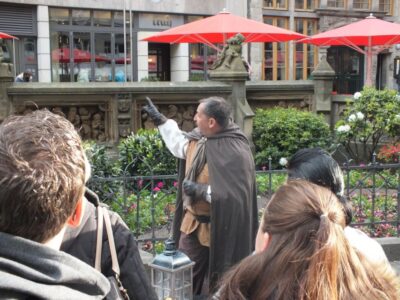
The second stop is Lapidarium, right in front of one of the local bars. That location choice is practical. It means you get context for daily life, not just monuments. The guide also sets up some cautionary history about unfortunate boating in Cologne’s past. It is the kind of detail that makes a city story feel human, because accidents and problems are part of how cities evolve.
Then the focus shifts to the Cologne crest. You learn what the colors mean, which patron saint ties into the symbolism, and why the religious past shows up the way it does. If you have ever walked past a coat of arms and wondered why it looks the way it does, this stop answers that.
I also like the emotional angle here. The guide poses the question everyone wants answered when they meet locals: why do people in Cologne love their city so much? You get story-based responses rather than a generic slogan. That sets up the rest of the tour, especially the parts about rebuilding and Karneval.
Weidengasse and Little Ankara: Rebuilding, Diversity, and a City That Adapted
Next you head to Weidengasse, tied to the Eigelstein area and described as a strong example of Cologne’s diversity, often associated with the nickname Little Ankara. This stop shifts the tone from medieval and crest symbolism into modern Cologne identity.
You hear a story about how Cologne survived near destruction and abandonment, then later grew into the most diverse city in Germany. The guide frames it as a rebuilding story, not just a migration story. You also get the idea that Cologne’s darkest period left the city looking like an architectural mess, but also left something else behind too, a community heart you do not find elsewhere in Germany.
This is one of the stops that turns history into something you can feel while you walk. You start looking at the street layout and the community atmosphere as part of the story, not just background scenery.
One practical note: this is a good time to reset if you have been listening steadily. Fifteen minutes is short, and you get a clear theme and then you move.
St. Maria Himmelfahrt: A Less-Obvious Church Interior Worth the Time
The tour pauses at St. Maria Himmelfahrt, described as a beautiful multi-styled church in Cologne’s Old Town that often gets overlooked. That is a nice balance after cathedral talk. It gives you a chance to see how Cologne’s faith and art history show up in a quieter setting.
You will hear quick art history context, and then you get a look inside. The guide frames the interior as one of the most beautiful in the city and connects it to what rebuilding Cologne looked like. Even if you are not a church expert, you will probably come away with a clear visual memory because the tour focuses your attention on what matters.
If you tend to rush through churches on your own, this stop helps. The guide points out what to look for so you do not just stand there and hope you understand. Since the stop is only about fifteen minutes, you should feel satisfied rather than drained.
Onward connections from Cologne:


Cologne Cathedral, The Dom: A Step-by-Step Story You Can Follow
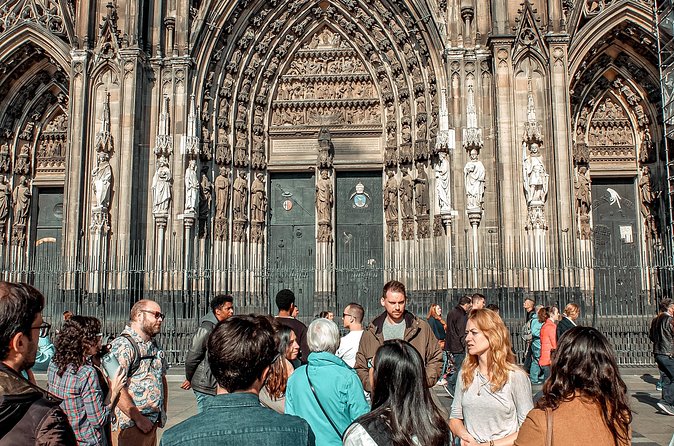
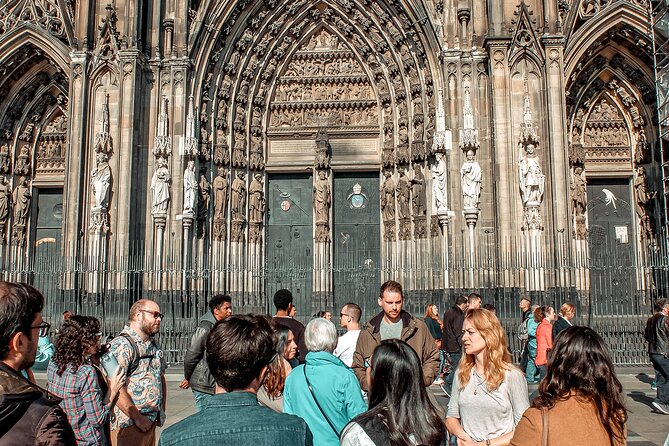
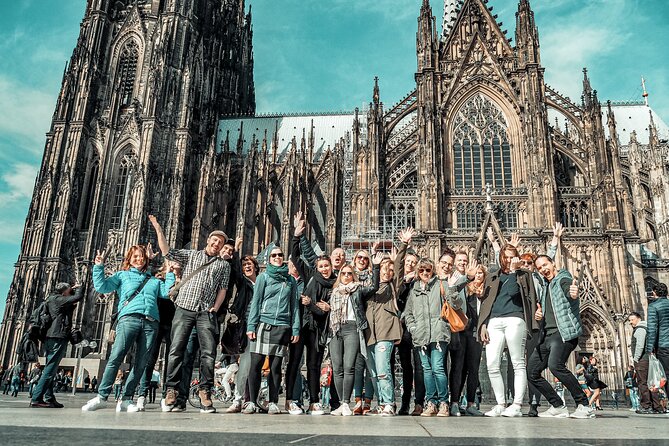
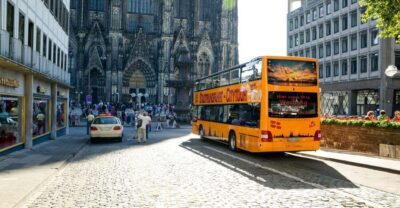
Of course, the tour reaches Cologne Cathedral. This is where the route earns its name. Instead of treating the Dom as one giant photo stop, the guide goes through its history step by step. That matters. The cathedral is iconic, but it is also easy to feel like you are just looking at a famous building without grasping why it is such a big deal for Cologne people.
You will also hear what defines the cathedral in the context of local identity. It is not only about architecture. The guide ties the Dom to why Cologne is the way it is, which is the thread that keeps repeating throughout the tour.
Photo time is built in around this section too, so you can get your shots without sprinting. If the weather turns cold or rainy, the planned pace still keeps things comfortable, based on how guides have handled the route in the past.
Roncalliplatz: Gargoyles, Windows, Doors, and Practical Visiting Hints
Next you arrive at Roncalliplatz for more Dom-focused details and to talk about the cathedral’s surroundings, including the buildings that crowd the area. This is an important perspective shift. The Dom looks clean and grand in a distance view, but up close you see the city fabric around it, and that changes how you experience it.
The guide works from top to bottom, pointing out special features. Expect talk about windows, doors, gargoyles, and the roof. It is the kind of explanation that makes your eyes work better. After Roncalliplatz, you will likely spot details you would otherwise miss, and you will know what those details mean in plain terms.
There is also advice on how to visit. The tour does not stop at “go see it.” It helps you plan what to pay attention to if you come back later.
Old Market: Timeline, Symbolic Street Details, and Dark Humor
At Old Market, the tour shifts again. Cologne is full of hidden meanings, and this stop helps you read the city center like a timeline. You get a sense of when rivalries and animosity led to obscenities that can still be seen in the city center today.
That sounds like a quirky footnote, but it does something useful. It reminds you that cities are not always noble. People fight, prank, and mark their territory. When you know to look for those layers, you start noticing signage and street details with different eyes.
This stop also tends to satisfy the “show me the stories” crowd. The guide uses these facts to connect big history to street-level reality.
Willi-Ostermann-Brunnen and Karneval: Fifth Season Energy, Explained
The tour ends at the Willi-Ostermann-Brunnen near the Old Town. This is a strong finale because it changes the emotional temperature. You learn about Willi Ostermann, Cologne’s famous songwriter, and how he shaped Kölle through music and lyrics.
Then the guide turns to Karneval, described as Cologne’s fifth season. You get the need-to-knows and, importantly, you get songs and dances. That matters because Karneval is not just a parade date. It is a whole social rhythm, and the guide frames it as an individual Cologne experience that locals take seriously but also enjoy with humor.
Some guides also use behind-the-scenes stories from their time spent around Karneval events in Cologne, including the idea that it is the largest Karneval in Europe and one of the biggest parties on the continent. Even if you are not planning to attend this year, you walk away understanding why people here talk about it like part of who they are.
The tour finishes in a central spot, within walking distance of lunch options, museums, and transport. That ending matters because it keeps you from ending on the far edge of town with nothing nearby.
Price and Value: Why It Costs So Little, and What You Should Expect
The price is listed at $3.62 per person, and the important detail is how it works in practice. The tour is structured like a freewalking concept where the online price is tied to the booking process, and tips are part of how guides earn their living.
In other words, do not treat $3.62 as the real cost of the experience. Treat it as the fee that lets you lock in a time and receive a mobile ticket. The real value is the guide, the pacing, and the “Cologne context” you get across the 2.5 hours.
What is included:
- A local guide with deep love and knowledge of Cologne
- Local tips and recommendations based on years of experience
- The online booking fee for handling the reservation
What is not included:
- Gratuities. Tips are welcome and expected on a pay-what-you-want basis, and most people leave 10€ to 20€ per person.
If you like walking tours but you hate feeling rushed or lost, this is a good model for you. You can pay the fixed online amount, then decide the tip based on how well the guide connects you to the city.
Also, English is offered, and confirmation is received at booking. The tour is capped at 25 people, which helps keep the conversation focused rather than chaotic.
Who Should Book This Cologne Highlights Tour
This tour is a good fit if you want:
- A guided story version of Cologne, from early routes to WWII resilience
- A comfortable group walk around the Dom and Old Town area
- Enough stops to see major landmarks, but not so many you feel exhausted
It also works well if you care about local culture more than checklists. One guide example you might appreciate is how Amber has been praised for balancing passionate history with hilarious stories and local trivia, plus comfortable pacing even in cold weather. Other guides, like Sander, Mike, Cameron, and Izzy, have been noted for engaging storytelling and a pace that tends to feel right.
Who might skip it:
- If you dislike listening for long stretches at the start, you might want to arrive with a calm mindset. One earlier stop can run longer than the rest.
Should You Book This Cologne Highlights Tour?
I think you should book it if you want Cologne to feel like a story you understand. The Dom is a must, but the tour is more interesting when it also gives you the crest meaning, the Old Town timeline, the rebuilding angle, and the Karneval finale at Willi Ostermann.
If you are short on time, this is a smart way to get your bearings fast. If you are visiting for the first time, it also gives you local context that makes your later self-guided exploring better. Just plan for tips, and bring sturdy shoes because you are walking for about 2.5 hours.
FAQ
How long is the tour, and where does it start and end?
The tour runs for about 2 hours 30 minutes. It starts at Eigelsteintorburg (Eigelstein 135, 50668 Köln) and ends at the Willi-Ostermann-Brunnen (Köln-Altstadt-Nord, 50667 Cologne).
What language is the tour offered in, and do I need a ticket?
The tour is offered in English, and you receive a mobile ticket. Confirmation is sent at the time of booking.
What is included in the price, and what is not included?
Included is a local tour guide, local tips and recommendations, and the online booking fee. Not included are gratuities (tips).
Should I budget for tips?
Yes. Tips are welcome and expected on a pay-what-you-want basis. Most people leave 10€ to 20€ per person.
How late can I cancel and still get a refund?
You can cancel up to 24 hours before the experience for a full refund. If you cancel less than 24 hours before, the amount you paid will not be refunded.
Is the tour suitable for most people, and is it easy to reach?
Most travelers can participate. Service animals are allowed, and the meeting area is near public transportation.
Fresh on the arrivals board for Cologne
Cologne Tours & Activities, compared.

Browse the lists this tour appears in