
Reviewed · COLOGNE TOURS & ACTIVITIES
Cologne: Guided Highlights Tour
Two thousand years of Cologne in ninety minutes. This Cologne highlights walk is a smart, efficient way to see the historic old town, including the Gothic Cathedral and Roman-era legacy, while also getting the feel of a diverse, lively city. One thing to plan for is that it is outdoors, so rain can turn the experience into a wet shoe challenge.
I especially like how the guide connects landmarks into a story you can actually use when you keep exploring on your own. And I like the way the route bounces between big icons and small streets, so you come away with a real sense of how Cologne fits together. If you prefer a super slow pace, the 90 minutes may feel like it moves fast, but it is still a comfortable walking tour for most people.
In This Review
- Key points to know before you go
- Kreuzblume meeting point, and how to make it painless
- Roncalliplatz and the historic center approach
- Cologne Cathedral: the main character, not just a photo stop
- The Dionysos mosaic, and why it belongs next to the cathedral
- Museum Ludwig to the Rhine: art breaks, then river air
- St. Martin’s quarter and Alter Markt: from tight lanes to open space
- The guide makes it work, and the best ones set the tone fast
- Price, value, and what is included in the $16 experience
- Walking comfort, timing, and the practical stuff
- Who this tour is best for
- Should you book the Cologne guided highlights tour?
Key points to know before you go
- Kreuzblume start: meet right by the Cologne Tourist Office area, then you head into the historic center
- Cathedral plus nearby Roman signal: you see major Gothic views and also the Dionysos mosaic
- Rhine promenade time: you get a walk along the river after passing Museum Ludwig of Modern Art
- Cobblestones near St. Martin’s: narrow lanes of the former merchants quarter before the open square at Alter Markt
- Guide quality shows fast: in many experiences, guides keep the group engaged and answer questions clearly
Kreuzblume meeting point, and how to make it painless
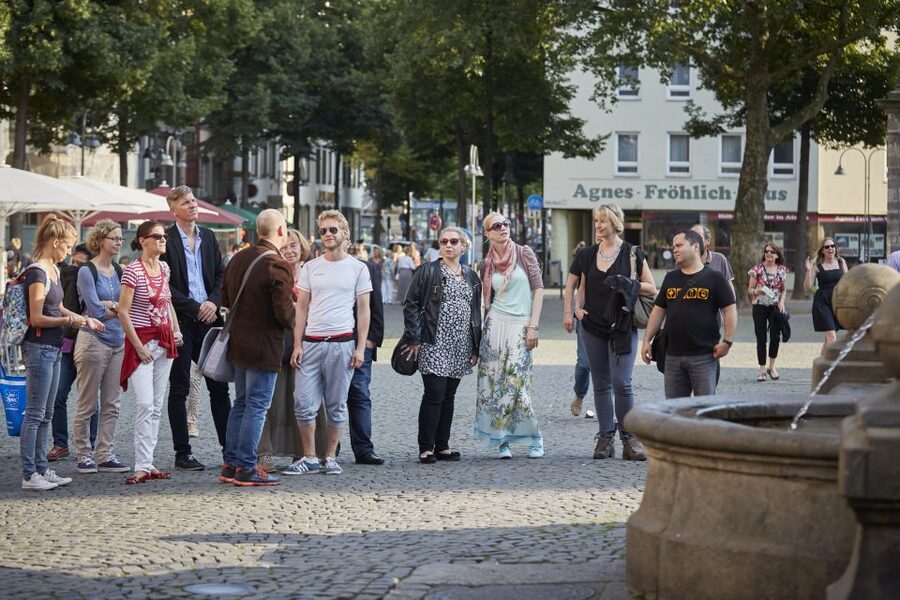
The tour begins at Kreuzblume, opposite the Cologne Tourist Office (KölnTourismus). If you want this to feel smooth, arrive about 10 minutes early. That small buffer matters here because you are in a busy central zone with lots of other tour groups and passersby.
You only need a couple of basics: a passport or ID card and comfortable shoes. The shoes part is not dramatic, but it is real. This is a walking highlights tour with cobbled lanes later on, so flip-flops are a fast way to ruin your afternoon.
One practical note from the experience: the meeting point can feel slightly unclear if you are looking for a big, obvious sign. Plan to stand by the right landmark, then scan for your guide holding the tour name placard.
Also holding a platform in Cologne
- Cologne: Panoramic City Cruise
★ 4.3 · 5,698 reviews - Cologne: Brewery Tour with 3 Kölsch Beer Tastings
★ 4.7 · 3,108 reviews - Cologne: Top Sights Rhine River Cruise – Skyline Tour
★ 4.4 · 3,030 reviews
Roncalliplatz and the historic center approach
Once you start, the city mix becomes the point. You begin in the core area and quickly shift into Cologne’s old-town rhythm, where modern city life and ancient layers coexist on the same block.
Roncalliplatz is part of the early flow of the tour, and it helps set expectations. You are not doing a random grab-bag of famous buildings. The route is designed to give you a line of sight from big history to street-level details. That is why the 90 minutes works: it is structured enough to be useful, but not so rigid that you feel herded.
If you want a mental map of Cologne fast, this is the moment to lock it in. Even before the major sights, your guide will point out the kinds of spaces you will want to return to later, whether that is a square for lingering or a street that feels especially atmospheric.
Cologne Cathedral: the main character, not just a photo stop
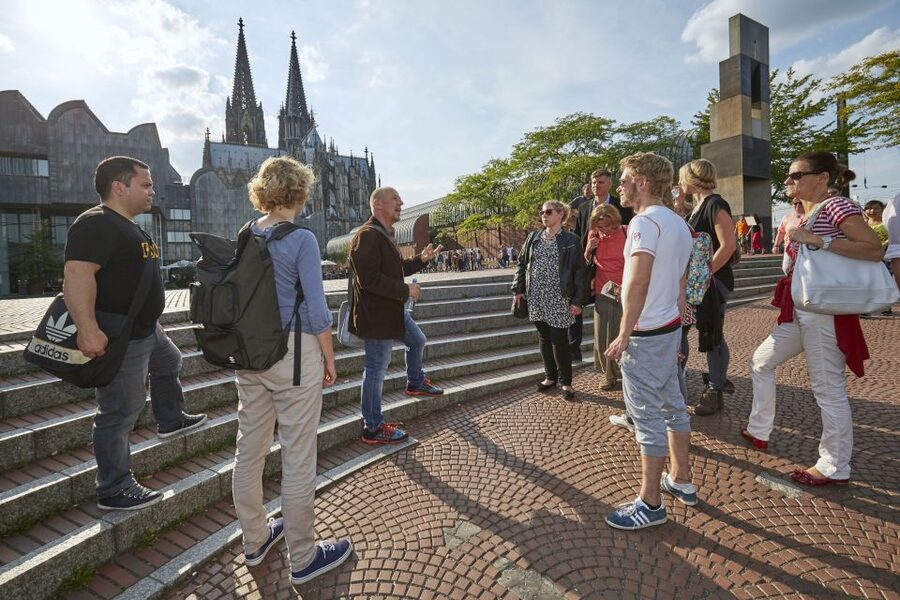
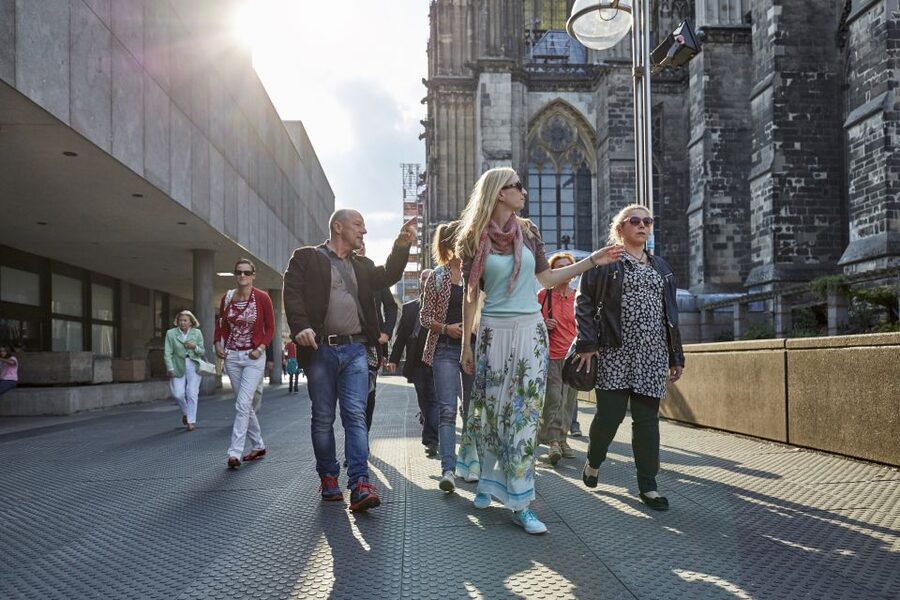
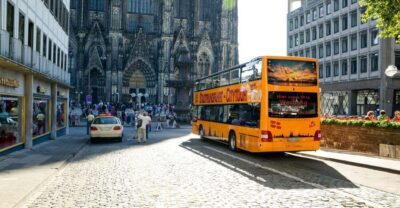
The Gothic Cathedral is the anchor. You see it with enough context that it becomes more than a backdrop. A great thing about a guided highlights format is that you do not need to study before you go. You can understand why the cathedral matters while you are standing in front of it.
Your route also sets you up to notice what you might otherwise miss: where you are in relation to nearby landmarks, how streets funnel toward the cathedral area, and what parts of the building catch light differently as you move.
A small but important tip: if you care about photos, don’t just take one angle and rush on. Watch for the moment your guide tells you to look, because it is often tied to a view direction or a detail you can only appreciate from a specific spot. The tour is fast, but it is not careless.
The Dionysos mosaic, and why it belongs next to the cathedral
Right near the cathedral area, you will encounter the impressive Dionysos mosaic. This is one of those “wait, how is that here?” moments that makes Cologne feel unique.
The mosaic is a reminder that Cologne is not only medieval and Gothic. The tour weaves in the city’s Roman legacy so you get a longer time frame than most first-time stops. That matters because when you later wander the old streets on your own, you start to recognize that the city keeps building on itself.
If you like history but hate lectures, you are in luck. In the strongest versions of this experience, guides keep it lively and answer questions, so you leave with a clearer sense of how past cultures shaped the present streetscape.
Museum Ludwig to the Rhine: art breaks, then river air
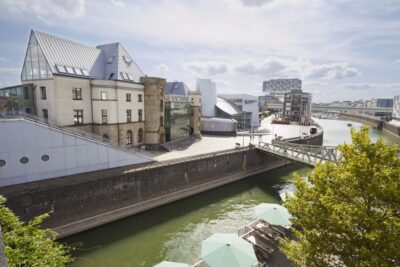
After the cathedral area, your route passes Museum Ludwig of Modern Art on the way to the river. Even if you do not plan to enter the museum, the stop works as a bridge. Cologne is not frozen in time. You get a reminder that modern culture sits right next to ancient stones.
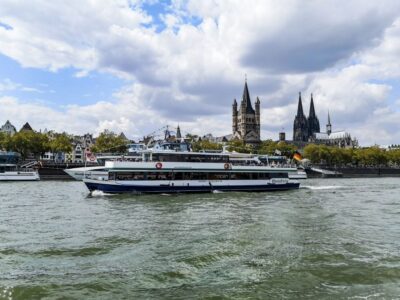
Then you stroll along the banks of the Rhine. This is a key part of the tour because it breaks the density of the old town. You get open space, fresh air, and a wider view of how the city turns outward toward the river.
If you have ever felt overwhelmed by dense city centers, this is the emotional reset. It also gives you a clearer sense of orientation. After you walk the Rhine section, returning to squares and streets later in the day feels easier.
One weather reality: on rainy days, the river walk is still worth it, but you will want to be practical. A compact rain jacket and shoes that handle wet cobbles make a big difference.
Onward connections from Cologne:


St. Martin’s quarter and Alter Markt: from tight lanes to open space
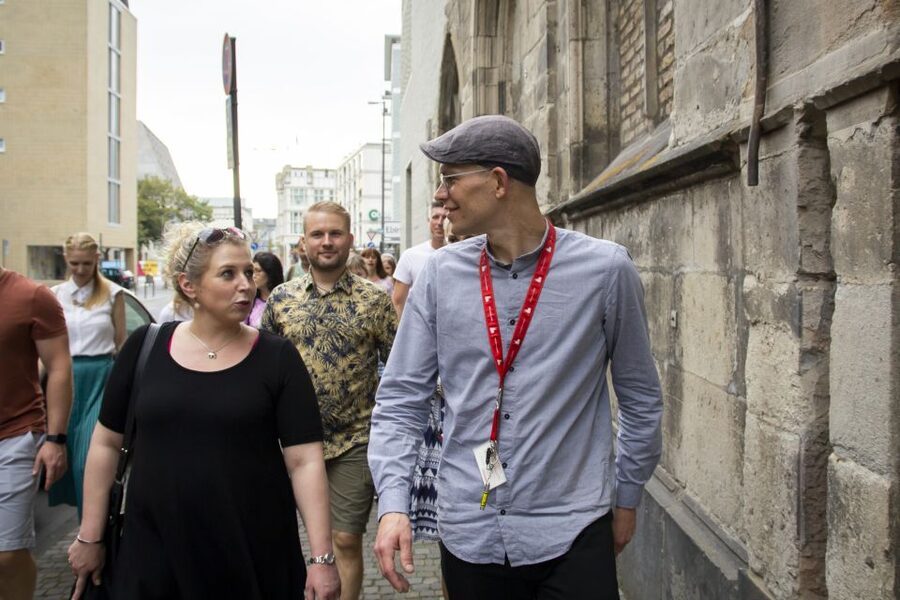
Next comes a shift in texture: you walk through narrow, cobbled lanes in the former merchants’ quarter around St. Martin’s Church. This part is where Cologne’s everyday atmosphere shows up. The walls feel closer, the street turns more often, and you start noticing small architectural details that vanish when you only chase major landmarks.
Your guide’s job here is important. Without guidance, these streets can blur into generic “old town.” With the tour, you understand what kind of place it is and why the city’s commercial past shaped the layout.
Then you finish at Alter Markt, the Old Market Square, where you get spaciousness and a classic old-town square vibe. You also pass the City Hall, which helps land the tour on something civic and central, not just scenic.
This ending is a smart move. When you wrap up in a large square, you have options: keep walking into nearby streets, sit down with a drink or snack you choose, or use the area as a launch point for the rest of your Cologne day.
The guide makes it work, and the best ones set the tone fast
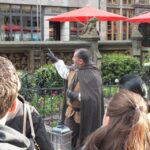
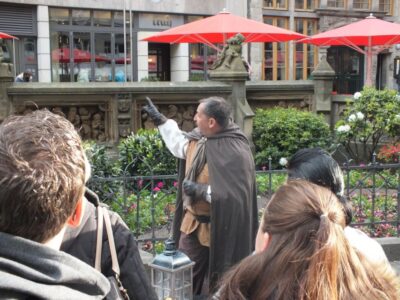
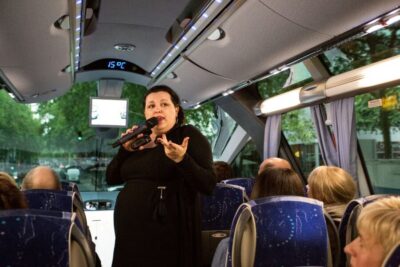
A highlights tour lives or dies by the guide. The strongest versions of this experience highlight a pattern: guides keep the group engaged, answer questions clearly, and bring a bit of humor to the mix.
I noticed several guide names showing up across excellent experiences: Mel, Ralph, Oliver Herrmann, Andrea, Monika, Tobias, and Ulli. Different people, same goal. They make the city feel personal instead of like a checklist.
What you can expect from great guiding in this format:
- Clear explanations that help you understand why the cathedral and Roman legacy belong in the same story
- Humor that lightens the mood, especially when the city is busy or the weather is not cooperative
- Good timing, so you do not lose the flow to wandering or long detours
One useful detail: small group size can improve how clearly you hear the guide and how easily you can ask questions. There was at least one experience where only two people joined, which made everything feel extra easy. You can’t count on that every time, but it helps explain why the best tours feel relaxed.
Price, value, and what is included in the $16 experience
At about $16 per person for around 90 minutes, this is good value for a first-time orientation walk. You are buying two things: a structured route and a professionally trained local guide.
The tour includes a high-quality tour guide trained according to European standards. That matters because it is not just someone who knows facts. It is someone who can explain, pace the group, and point you toward what you can build on later.
Food and drinks are not included. That is not a downside, it is a choice. You can pick what fits your taste and your budget once you reach the end at Alter Markt. If you plan to extend the day, consider grabbing a snack before the tour or planning one right after.
Where the value really shows up is in efficiency. You get the cathedral, a Roman-era highlight with the Dionysos mosaic, river time, and the old merchants’ lanes, all without needing to chart a route yourself or piece together context.
Walking comfort, timing, and the practical stuff
This tour runs about 90 minutes, which is a sweet spot. Long enough to get oriented and learn meaningful context, short enough that you do not feel drained by the time you finish.
Still, plan for a typical city-walk pace. Bring comfortable shoes. The cobbled lanes near St. Martin’s are where comfort really matters.
If you are sensitive to rain, come prepared. One experience mentioned rainy weather on the last day of the year, and the tour stayed engaging despite it. That tells me the guiding still lands, even when the streets get slick.
Also, give yourself time to find the meeting point and get settled. Arriving on time reduces stress, and it lets you start listening instead of hustling.
Wheelchair accessible is listed for the activity. If mobility is a concern, it is still smart to ask about your needs before arrival, because old-town surfaces can vary, but you do have wheelchair accessibility stated.
Who this tour is best for
This tour is ideal if you:
- Want a fast orientation to Cologne, especially if it is your first time
- Like history but prefer explanations tied to actual places you are seeing
- Want a route that balances major sights with smaller streets and neighborhood feel
- Appreciate local recommendations that help you plan the rest of your day
If you already know Cologne well and want only deep, academic history, you might feel the pace is too broad. But for most visitors, this is the kind of guided walk that gives you a usable mental map.
Should you book the Cologne guided highlights tour?
Yes, I think you should book it if your priority is to get oriented and learn what connects Cologne’s cathedral world with its older Roman layers, then finish in a central square that makes it easy to keep exploring.
Book it especially if you value:
- A guided route with a strong focus on major highlights
- The human factor of a guide who can explain and keep the group engaged
- A finish at Alter Markt, where you can decide what to do next without a long commute
Skip it if you dislike walking, hate time limits, or want a tour that spends more time inside museums. This one is designed for the streets, the river, and the sights you can see and understand quickly.
If you can arrive 10 minutes early, wear good shoes, and show up ready to listen, this is a smart use of 90 minutes in Cologne.
Fresh on the arrivals board for Cologne
Cologne Tours & Activities, compared.

Browse the lists this tour appears in