
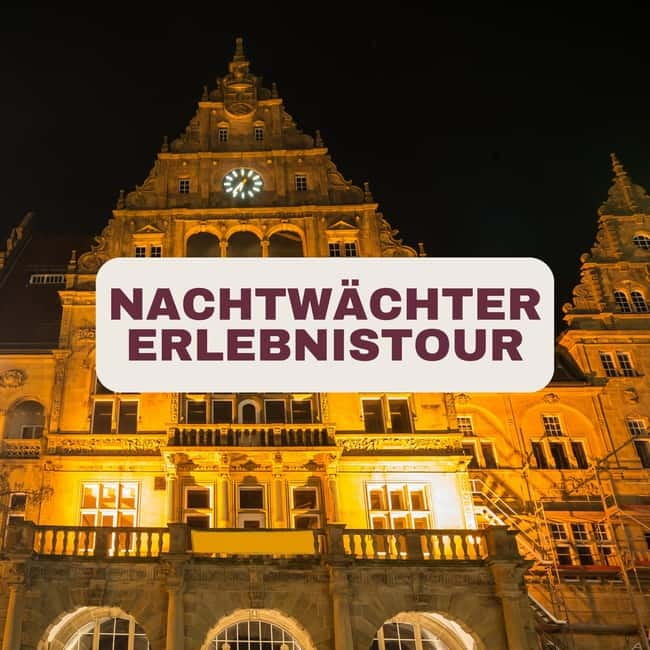
Reviewed · NIGHT WATCHMAN WALKING TOURS
Bielefeld: Night watchman guided tour (adventure tour)
Street sounds turn spooky fast. This Bielefeld night watchman tour mixes live performance with real old-town details, from medieval corners to 18th-century rules. I especially loved how the guide connects the old town at night with stories that make the streets feel purposeful, not random. The one thing to consider is that it runs outdoors in all wind and weather, so you will want proper cold-weather gear.
At just 1.5 hours, it feels like a complete mini-adventure instead of a slow history lecture. You follow the night watchman on a patrol-style route and learn local myths and legends, including the odd regulations citizens had to follow in the darker hours. And yes, the humor and the clear speaking style really matter here, because it keeps the experience fun and easy to follow.
You meet at Niederwall 25 (in front of the old town hall) and the tour is in German with a live costumed performance. It is wheelchair accessible, but it is still a walking tour, so if you are feeling unwell, skip it. If you want lively history in northern Germany with a strong atmosphere, this one is a good fit.
In This Review
- Key moments that make this night patrol worth your time
- Meeting Niederwall 25 in front of Bielefeld’s old town hall
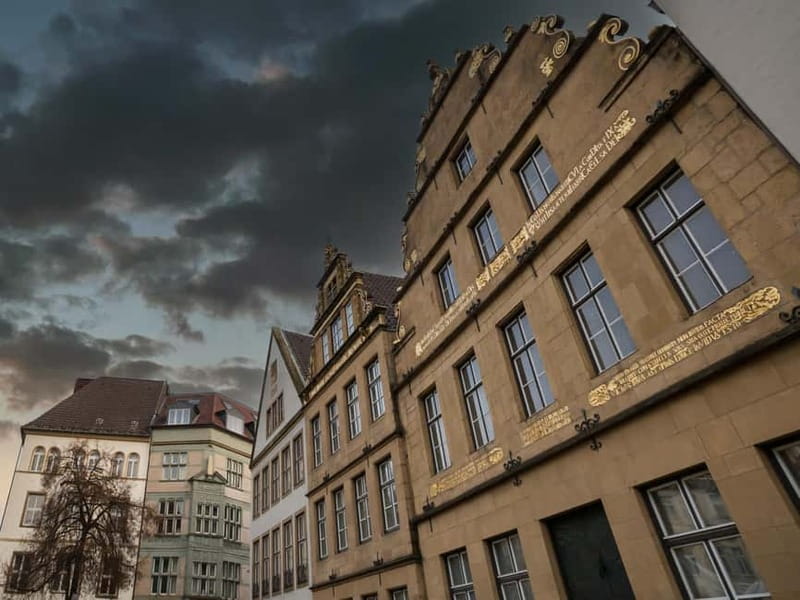
- Old-town at night: the streets, the wall remains, and the 1485 house
- Secret passages and dark alleyways: why the route feels like an adventure
- 18th-century night and alleyway rules, explained like local law
- From myths to linen weavers: how Bielefeld’s identity gets explained
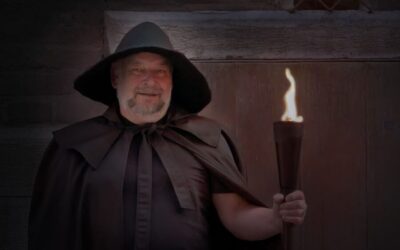
- The night watchman performance: acting with clear humor and pacing
- How long is 90 minutes, and is it too much walking at night?
- Price and value: what $19 buys you in real experience
- Who should book this night watchman patrol, and who should skip it
- Should you book the Bielefeld night watchman tour?
- FAQ
- Where is the meeting point?
- How long is the night watchman guided tour?
- What language is the guide?
- Is the tour wheelchair accessible?
- Are there age limits?
- What should I wear and bring?
- Are pets allowed?
- How does cancellation work and what is the payment option?
Key moments that make this night patrol worth your time
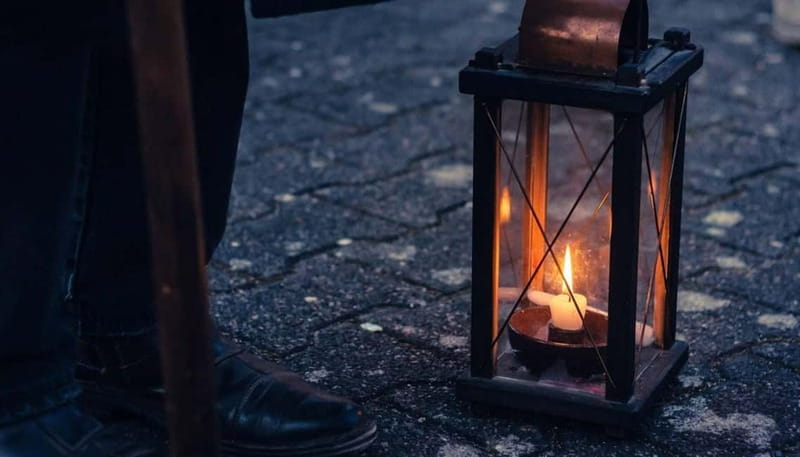
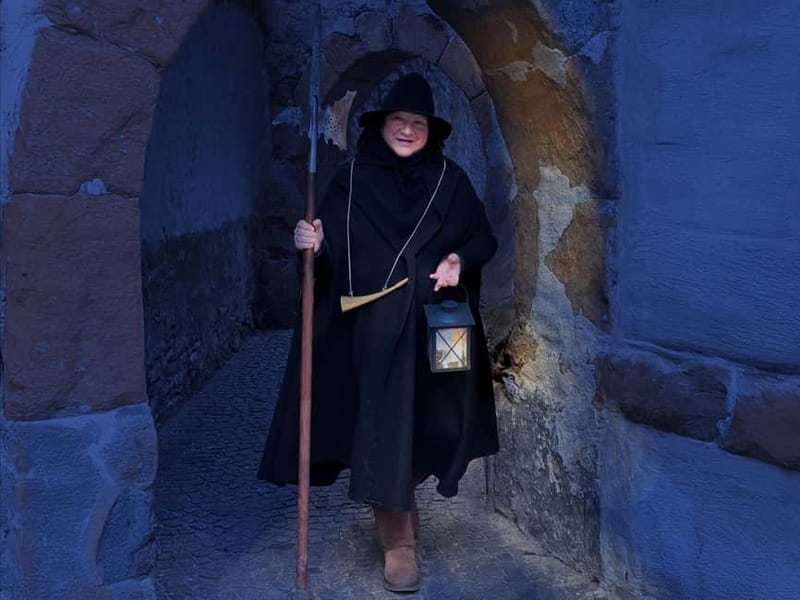
- A costumed night watchman patrol that turns the walk into a moving story
- Old town landmarks after dark, including historic buildings and medieval remains
- Myths and legends of Bielefeld, told in context rather than as random facts
- 18th-century night and alley regulations, where local rules become folklore
- Freemason symbols on the old town hall explained so they do not feel mysterious for mystery’s sake
- Live acting with humor and the right volume, making it easy to stay with the group
Meeting Niederwall 25 in front of Bielefeld’s old town hall
First things first, find your start point: Niederwall 25, right in front of the old town hall. That’s helpful because the tour’s vibe is built around the historic center, and the route makes sense once you begin there.
Bring outdoor clothing. The tour runs in wind and weather, which means you should plan for cold hands, uneven light, and streets that feel darker than you expect. If you hate standing around before a start, go a few minutes early, get your bearings fast, and then let the guide take over.
Also note the tour language is German. If your German is basic, you can still enjoy it for the atmosphere and acting, but you will get the most from it if you can follow spoken explanations. Some parts may be in the original language, so it helps to be ready for that.
Old-town at night: the streets, the wall remains, and the 1485 house
Once you start, the experience stays grounded in the old town area. You are not just passing by buildings. The guide points out details that most people miss when they are sightseeing in daylight.
A highlight is the chance to connect famous old structures to the stories you hear. You might hear about Bielefeld’s oldest town house from 1485, and it becomes more than a date on a sign. When someone frames it as part of the city’s earlier world, it changes how you look at the stonework and layout.
You also get attention drawn to the ruins of the medieval town wall. Seeing wall remnants at night does something strange in a good way. It makes you think about protection, boundaries, and how people moved through the city when darkness actually mattered.
And then there is the Old Town Hall. You learn about the symbols associated with the Freemasons found on the building, and the explanations are the kind that make you feel like you finally understand what you were looking at. If you enjoy symbolism, this stop will be one of your favorites.
Why this matters for you: night tours can go two ways, either atmospheric but vague, or detailed but dull. This one aims for the sweet spot, where atmosphere supports the facts, not replaces them.
Secret passages and dark alleyways: why the route feels like an adventure
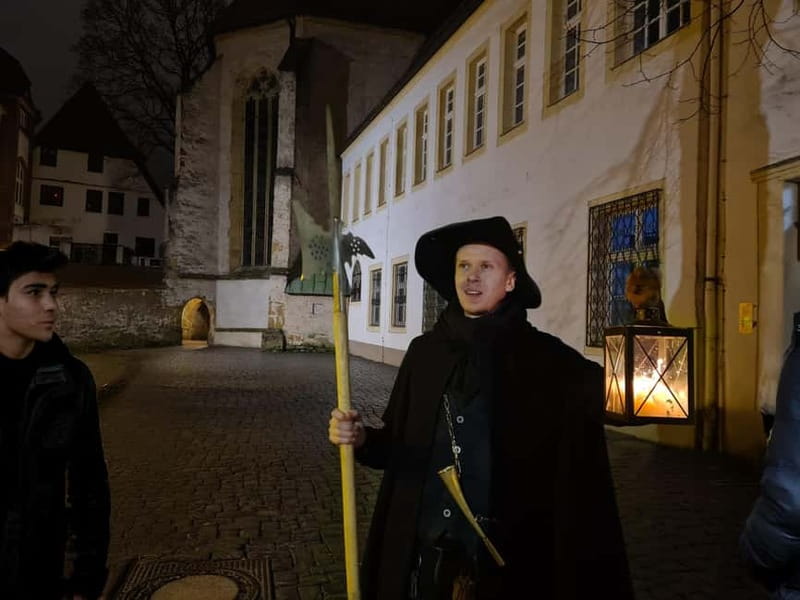
The patrol style does not stay on the main streets only. You are guided toward mysterious places, including things like dark alleyways and spots that feel off the usual walking track.
You should expect a story-driven flow, not a museum checklist. The guide’s job is to take you from landmark to landmark and explain why each one belongs in the city’s nighttime world. That is where the acting helps. Costumes are fun, sure, but the real value is that the performance gives you a mental framework for what you are seeing.
You may also hear about secret passages. Even if you cannot verify every detail visually on the spot, the point is that you start imagining how older Bielefeld worked: where movement would be hidden, why certain spaces existed, and how people used the city’s shape for survival, privacy, or mischief.
There is also an intentional emphasis on myths and legends. That can be hit or miss on tours, but here the stories connect back to specific city features, so it feels like folklore tied to place, not generic spooky talk.
18th-century night and alleyway rules, explained like local law
One of the most interesting parts is the focus on how citizens had to behave in the dark. You learn about the night and alleyway regulations from the 18th century, and the stories make the city feel like it had a daily rhythm that changed after dusk.
This is the kind of detail that turns history from background noise into something you can picture. Rules sound dry until you imagine real consequences: who had permission to be out, how people avoided trouble, and how order was enforced.
If you like history but you do not want textbooks, this section is a win. It is practical history, the kind that teaches you how ordinary life functioned when the world got quieter and riskier.
From myths to linen weavers: how Bielefeld’s identity gets explained
The tour also ties into a key thread about how Bielefeld became known for linen weavers. Even if you already knew Bielefeld as a modern city, this helps you see how work shaped the town’s growth and how trade and crafts can leave long shadows over the streets.
It is not just the occupation itself. The story approach helps you connect textiles to the city’s social structure, its economy, and the way people would have lived near the places where business happened. When the guide brings the linen-weaver narrative into the nighttime setting, it creates a cool contrast: dark streets and daylight labor, all part of the same city life.
This section is also a good match if you enjoy local legends. Myths and legends tend to stick when they explain who a place is. Here, you are not only collecting spooky stories. You are building a sense of why Bielefeld developed the way it did.
The night watchman performance: acting with clear humor and pacing
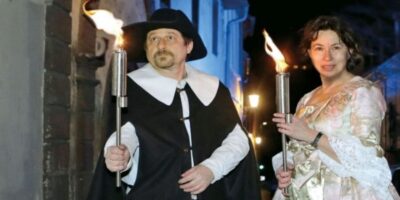
The central engine of this tour is the live performance. You are accompanied by Bielefeld’s night watchman on a patrol, and the guide uses costume and character to carry the story.
What I like most in this type of tour is clarity. If the guide is hard to hear in a group setting, the whole experience slips away. The guide’s speaking style is repeatedly described as competent and with a volume that fits the group, which tells me this is built to be understandable, not performed over everyone’s heads.
Humor shows up too. The vibe is not grimdark the whole time. The night watchman keeps things human, so you stay engaged even when the subject gets historical.
One more detail you might notice during the walk: there can be moments where the group participates, including singing. That is a fun way to keep energy up and build a shared experience. Just keep your own voice reasonable if you want to be polite in a mixed group setting.
How long is 90 minutes, and is it too much walking at night?
At 1.5 hours, you get a serious story chunk without committing to a full evening. That timing matters because night tours can feel long if you are cold or if the route drags.
Here, the structure is tight: short explanations, guided movement, and a variety of stop types, from exterior landmarks to story-focused corners. You are outdoors the whole time, so the comfort issue is weather and footing, not endurance.
If you have mobility limits, the good news is the tour is listed as wheelchair accessible, but it is still a nighttime walking experience. Wear shoes with grip, and think about how you handle uneven pavement after dark.
Price and value: what $19 buys you in real experience
At about $19 per person for roughly 90 minutes, this is priced like a specialty walking tour, not a museum ticket. The value comes from the mix of three things you normally pay separately for:
- A guided walk through the historic center
- Live costumed performance
- Story content that connects legends, architecture, and local history
The acting is not just decoration. It is the method that makes the rules of the 18th century, the meaning behind building symbols, and the textile identity feel connected.
If you are comparing it to generic “photo walk” tours, the payoff is higher because you get interpretation, not just directions. And compared to a standard guided tour that might be all talking, the patrol approach keeps it moving and gives you a reason to look carefully at details like wall remains and symbolic markings.
Who should book this night watchman patrol, and who should skip it
This tour is best for you if you like:
- History with atmosphere, especially at night
- Live acting that turns the guide into a character
- Local legends with explanations tied to real landmarks
- A short adventure you can fit into a busy travel schedule
It is not suitable for children under 6, and it is not a good idea if you are dealing with a cold. Since you will be outdoors in real weather, staying home if you feel sick is the practical choice.
If you are traveling with a wheelchair user, the tour is listed as wheelchair accessible, but you should still plan for outdoor nighttime conditions and possible uneven surfaces.
Where this fits in your Bielefeld day: pair it with daytime sightseeing of the same historic center. You will understand more because you can later compare what you saw in daylight with what you learn after dark.
Should you book the Bielefeld night watchman tour?
If you want a night tour that feels like an actual story, not a lecture, I think you should book it. The strongest reason is the combination of live performance and targeted local knowledge, including things like the 1485 town house, the medieval wall remains, and the Old Town Hall symbols.
The other reason is how it seems built for real comfort and communication. The tour experience is designed to be understandable, with a speaking style that stays at the right level for a group.
The only real “pause” is the weather factor. If you hate cold, wind, and standing outdoors, then this may not be your thing.
If you are okay dressing for the night and taking a focused walk for 1.5 hours, this is a solid choice for an authentic, local-feeling evening in northern Germany. The provider is Walk With Me GmbH, and the tour runs in German with a lively costumed guide.
FAQ
Where is the meeting point?
You meet at Niederwall 25, 33602 Bielefeld, in front of the old town hall.
How long is the night watchman guided tour?
The tour lasts 1.5 hours.
What language is the guide?
The live guide is German.
Is the tour wheelchair accessible?
Yes, the tour is listed as wheelchair accessible.
Are there age limits?
It is not suitable for children under 6 years.
What should I wear and bring?
Wear weather-appropriate outdoor clothing. The tour runs in all wind and weather conditions.
Are pets allowed?
Pets are not allowed, but assistance dogs are allowed.
How does cancellation work and what is the payment option?
You can cancel up to 24 hours in advance for a full refund. There is also a reserve now and pay later option, so you can book without paying immediately.
After the Offices Close
- Hamburg: 90-Minute Evening Lights Harbor Cruise
★ 4.5 · 7,728 reviews - Hamburg: 1-Hour Evening Harbor Lights Cruise
★ 4.4 · 5,073 reviews - Bremen: Walking Tour in German with Night Guard
★ 4.7 · 2,922 reviews - Munich Ghosts and Spirits Evening Walking Tour
★ 5.0 · 1,900 reviews
Behind the Lantern
- Dresden: The Original Night Watchman Tour in Lantern Light
★ 4.6 · 6,653 reviews - Hamburg: Night Watchman’s Tour of St. Pauli in German
★ 4.7 · 4,818 reviews - Leipzig: The Original Night Watchman Bremme Tour
★ 4.5 · 3,815 reviews - Munich: Night Watchman Walking Tour
★ 4.7 · 2,092 reviews
Night Watchman Walking Tours, compared.
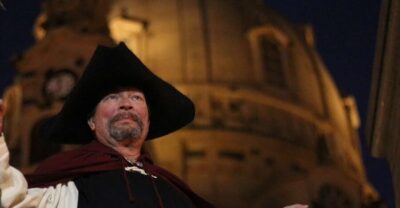
The Original Night Watchman Tour in Lantern Light
Read our review →


Browse the lists this tour appears in