Reviewed · GUIDED
Adventure Darkness – Guided tour in the dark
Dark rooms turn your brain into a detective. You rely on sound and touch as you walk through realistic situations. This is inclusion work you can actually feel, led by blind or severely visually impaired guides with long canes.
I especially like how the experience is built around everyday moments, not abstract guessing games. You’ll meet a dark bar after about 60 minutes of rooms, then chat with your guide over fritz-kola, coffee, or a cold beer. One more strong point: it runs in a small group of up to 8, so your guide can slow down and keep you oriented.
One consideration first: you cannot use cameras, flashlights, or cellphones, and the experience is marked both wheelchair accessible and not suitable for wheelchair users. If you have mobility needs, I’d plan to ask the operator before you book so you’re not disappointed.
In This Review
- Key Things to Know Before You Go
- Ruhr Area Dark Rooms: A 1.5-Hour Reality Check for Your Senses
- Meet Your Guide and Learn the Rules of Moving in Darkness
- The Adventure Rooms: Everyday Scenes, Sporting Challenges, and Crossing Situations
- How Your Brain Responds: Haptics, Sound Cues, Smell, and Taste
- The Dark Bar Debrief: Fritzkola, Coffee, Beer, and Real Conversation
- Price and Value: Why $21 for 1.5 Hours Feels Fair
- Small Group Dynamics: Up to 8 People, One Shared Challenge
- What You Can’t Bring: How the No-Phone, No-Light Rules Shape the Experience
- Wheelchair Notes: Accessibility Info Has a Contradiction
- Who This Tour Fits Best (and Who Might Want a Different Plan)
- Should You Book Adventure Darkness? My Practical Verdict
- FAQ
- How long is the tour?
- Is there a part of the experience after the dark rooms?
- What language is the tour guide?
- How many people are in a group?
- What is included in the ticket?
- Are cameras or phones allowed?
- What should I do when I arrive?
- What is the age recommendation?
- Is it wheelchair accessible?
- What drinks are available at the dark bar?
Key Things to Know Before You Go
- Small groups (up to 8) mean less waiting and more personal guidance in the dark
- Blind and visually impaired guides lead you with a long cane, using real-world confidence techniques
- Ninety minutes in total darkness recreates everyday tasks and special challenges
- Your senses take over (haptic, auditory, plus smell and taste cues) in ways that feel surprising
- A dark bar debrief gives you a chance to process it with a drink and conversation
- Strict “no tech” rules keep the focus on the senses, not recording or light
Ruhr Area Dark Rooms: A 1.5-Hour Reality Check for Your Senses
Adventure Darkness is a guided tour in the dark in Germany’s Ruhr Area, priced around $21 per person. The whole slot runs about 1.5 hours, with 90 minutes specifically spent inside the dark adventure rooms. It sounds simple on paper, but the shift is huge once you step into a space where vision is not part of the plan.
The best part is that you are not left to “figure it out.” Your guide, who is blind or severely visually impaired, helps you move safely through a sequence of rooms that feel like little scenes from life. You get the inclusion goal without lectures, because your brain does the learning the moment the light disappears.
You also get a rare kind of travel skill. Even if you never face vision loss yourself, you learn how much your body depends on information you normally take for granted, like distance, texture, and how sound carries.
Meet Your Guide and Learn the Rules of Moving in Darkness
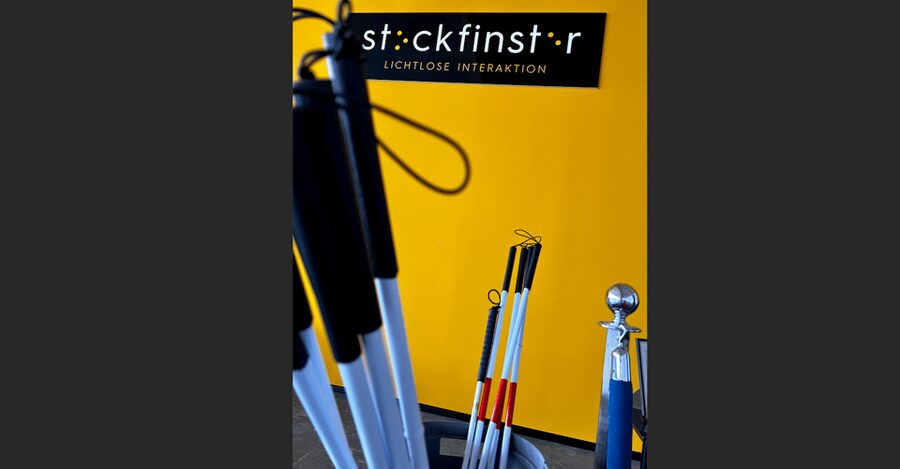
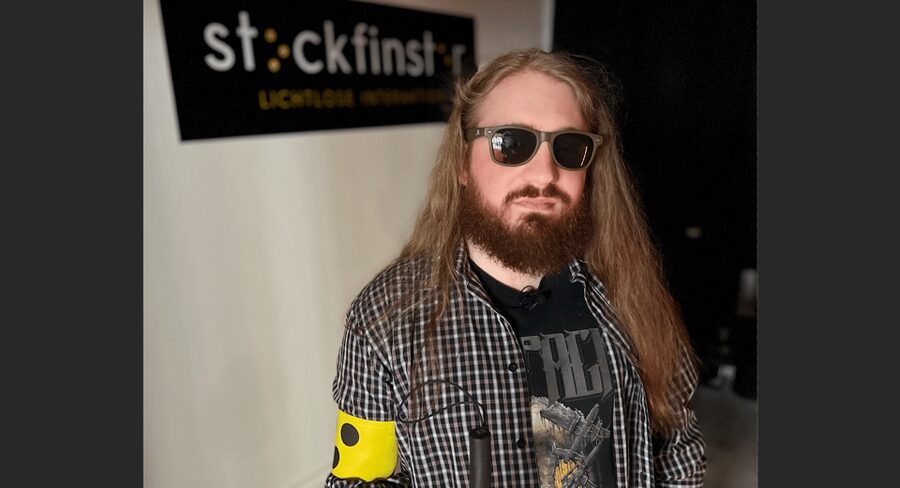
This experience is guided in German by live staff who are blind or severely visually impaired. You’ll start with the basic setup: you’ll be equipped with a long cane, and your guide will lead you through the rooms.
I like this approach because it’s practical. You’re not just listening to theory about accessibility. You’re practicing a movement tool, and you’re doing it in a controlled, guided environment where the goal is understanding, not fear.
The cane matters. In total darkness, it becomes an extension of your hands, giving your body “data” about edges, spacing, and changes in flooring. Your guide’s job is to translate that space for you, step by step, with patience and cues you can actually use.
One guide name you might hear is Florian, and his style shows up in high praise for being personable and good at reading the group’s energy. That kind of guide quality is exactly what makes this work, because calm, clear direction is the difference between learning and frustration.
The Adventure Rooms: Everyday Scenes, Sporting Challenges, and Crossing Situations
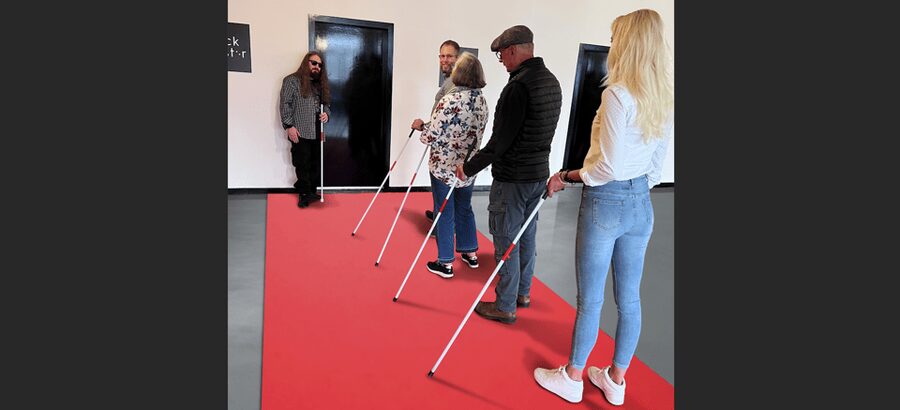
The core of the tour is moving through completely dark adventure rooms. Think of it as a set of themed checkpoints, each designed to trigger specific sensory experiences. The goal is not to trick you, it’s to recreate situations so you can understand what life feels like when sight isn’t reliable.
You can expect a mix of everyday and special scenarios. The tour recreates typical situations, including crossing a road, and it also includes a sporting challenge. These are the kinds of tasks people handle without thinking when they can see, which is why they land so well in a dark setting.
Here’s why this design helps you as a visitor. Each room isolates a skill your brain normally does automatically. In darkness, your body has to slow down and pay attention to cues it usually ignores. That makes the lesson stick.
A drawback to keep in mind is that some parts depend on the room’s sensory programming working correctly. If a sound cue meant for a faked road situation doesn’t play as expected, the “recreation” can feel less convincing. When that happens, you can still learn from the overall structure, but the specific illusion may not hit as strongly.
How Your Brain Responds: Haptics, Sound Cues, Smell, and Taste
When you can’t use sight, your brain reacts fast to targeted stimuli. In this tour, you’re mainly addressed haptically (through touch and movement guidance) and auditorily (through sound cues). You’ll also pick up olfactory and taste-related elements along the way.
This is one of the most praised aspects, and I get why. Many “accessible” experiences are visual demonstrations. This one turns the logic around. You’re forced to notice how your senses overlap, and you start connecting sound, surface textures, and timing into meaning.
You’ll likely realize how much confidence depends on orientation. Even with a cane, you need consistent cues to predict what’s ahead. Guides help you get that predictability, which is a key part of the inclusion lesson.
And yes, it can feel intense at first. Your senses get sharper, but they can also feel overwhelmed. That’s normal. The tour’s value is that you don’t just experience confusion, you also experience guidance and recovery, which mirrors real accessibility situations.
The Dark Bar Debrief: Fritzkola, Coffee, Beer, and Real Conversation
After about 60 minutes of the dark rooms, you reach the dark bar. This part is simple, but it’s important. You get a chance to talk with your guide about what you experienced, instead of walking out still buzzing.
You can enjoy a glass of fritz-kola, coffee, or a cold beer depending on what’s offered for the moment. What matters most is the conversation. Your guide can explain what you were meant to notice, and you can ask questions based on what you felt in your body, not what you guess you “saw.”
This debrief is where the inclusion message becomes personal. You don’t have to pretend you understand everything. You can say what confused you, what felt safe, what felt scary, and what you wish you’d had more of. Then your guide can translate that back into practical understanding.
In a lot of similar experiences, the guide stays off to the side after the activity. Here, the guide is part of the group’s reflection, which helps you connect the sensory moments to human experience and real challenges.
Price and Value: Why $21 for 1.5 Hours Feels Fair
Adventure Darkness is around $21 per person for the full 1.5-hour slot. For Germany, that’s a pretty accessible price point for something that requires trained guides, staged environments, and time-heavy instruction.
What makes it good value is the structure. You’re getting:
- Ninety minutes in the dark, which is a large chunk of uninterrupted experience
- A live German guide who actively leads you, not just narrates
- A dark bar debrief with conversation, which turns the activity into learning
If you measure value by “hours of guided, high-impact interaction,” it stacks up well. You’re not paying for a single photo moment. You’re paying for a guided shift in how you perceive the world.
Also, the small group size of up to 8 is part of the value. When the group is small, instructions and check-ins happen more naturally, and the tour can adapt to pacing.
Small Group Dynamics: Up to 8 People, One Shared Challenge
With a small group limited to 8 participants, the tour keeps a steady rhythm. I like this because you avoid the “herding” effect that sometimes happens in group tours, especially where safety and orientation matter.
In the dark, people react differently. Some become hyper-alert. Others try to be funny. Your guide needs to manage that variety without rushing. A small group helps the guide keep attention on you as an individual, not just a number.
There’s also a social angle. Even though you’re focused on sensory cues, you’re experiencing the same challenge at the same time. That shared uncertainty makes the later conversation at the bar more interesting, because you can compare what you noticed and what you didn’t.
What You Can’t Bring: How the No-Phone, No-Light Rules Shape the Experience
This tour is strict about what is not allowed. Cameras, jewelry, flashlights, and cellphones are off limits. The reason is straightforward: light, recording, and shiny distractions undermine the premise of total darkness.
I’d plan to travel light. Wear comfortable clothing that feels normal to touch. Since you cannot rely on your phone for entertainment or orientation, bring patience instead. If you’re the type who uses your phone to calm down, you might feel uneasy at first, even though the guide will help you through.
Also note that age matters here. It’s not suitable for children under 5 years, so if you’re traveling with kids, check that age threshold carefully before you plan your schedule.
Wheelchair Notes: Accessibility Info Has a Contradiction
Here’s the part I’d treat seriously. The tour information says it is wheelchair accessible, but it also states it is not suitable for wheelchair users. That’s a direct conflict.
So don’t assume it will work for every mobility situation. If you use a wheelchair, reach out before booking and ask how the route and rooms are handled in your case. I’d want clarity on whether wheelchair users can participate safely and meaningfully, rather than just being able to enter a building.
If you don’t use a wheelchair, this detail may not affect you. But if you do, it’s worth confirming early so your expectations match reality.
Who This Tour Fits Best (and Who Might Want a Different Plan)
This is best for people who like learning by doing. If you enjoy hands-on, sensory experiences and you’re comfortable with being guided through unfamiliar environments, you’ll likely have a great time.
It also fits well if you care about inclusion and want to understand what accessibility feels like from the inside. The tour does that in a practical way, using real sensory cues and real guidance from blind or severely visually impaired guides.
If you have anxiety around not being able to see, consider whether you can stay calm without a phone or flashlight. You’re not going to be left alone, but the first moments in total darkness can feel unnerving.
And if you are sensitive to strong sensory input, know that the targeted stimuli are part of the design. You might find it intense, then rewarding, or just intense. Your best bet is to treat it as a guided experience, not a challenge you “must” complete without help.
Should You Book Adventure Darkness? My Practical Verdict
Yes, I think you should book it if you want a compact, high-impact learning experience. For about $21 and 1.5 hours, you get 90 minutes of guided rooms plus a real debrief at the dark bar, with conversation over fritz-kola, coffee, or beer. That mix of action and reflection is the main reason the value feels strong.
Skip it or ask extra questions first if you need to use your phone or flashlight to feel comfortable, or if wheelchair participation is part of your plan. Also, if you expect lots of visual spectacle, remember: the point is that there is no vision, and the activity intentionally removes cameras and light.
If you go with a curious mind, you’ll leave understanding inclusion in a way that doesn’t fade after the tour. You’ll remember specific sensory moments, and you’ll likely notice the world differently afterward.
FAQ
How long is the tour?
The experience runs about 1.5 hours total, including a 90-minute tour in the dark.
Is there a part of the experience after the dark rooms?
Yes. After about 60 minutes in the dark adventure rooms, you reach the dark bar to chat with your guide.
What language is the tour guide?
The live tour guide speaks German.
How many people are in a group?
The group is limited to 8 participants.
What is included in the ticket?
You get the 90-minute guided tour in the dark.
Are cameras or phones allowed?
No. Cameras, flashlights, and cellphones are not allowed during the experience.
What should I do when I arrive?
You need to show your voucher on arrival either in the app or as a printed copy.
What is the age recommendation?
It is not suitable for children under 5 years.
Is it wheelchair accessible?
The information says it is wheelchair accessible, but it also says it is not suitable for wheelchair users. If this affects you, it’s smart to confirm details with the provider before booking.
What drinks are available at the dark bar?
You can have fritz-kola, coffee, or a cold beer.
Guided, compared.

Reichstag, Dome and Government District Guided Tour
Read our review →

1-hr Boat Tour with Bilingual Live Guide (DE/EN)
Read our review →